Europe is full of famous cycling destinations.
But if you’re planning your first cycling holiday, famous isn’t necessarily what you need.
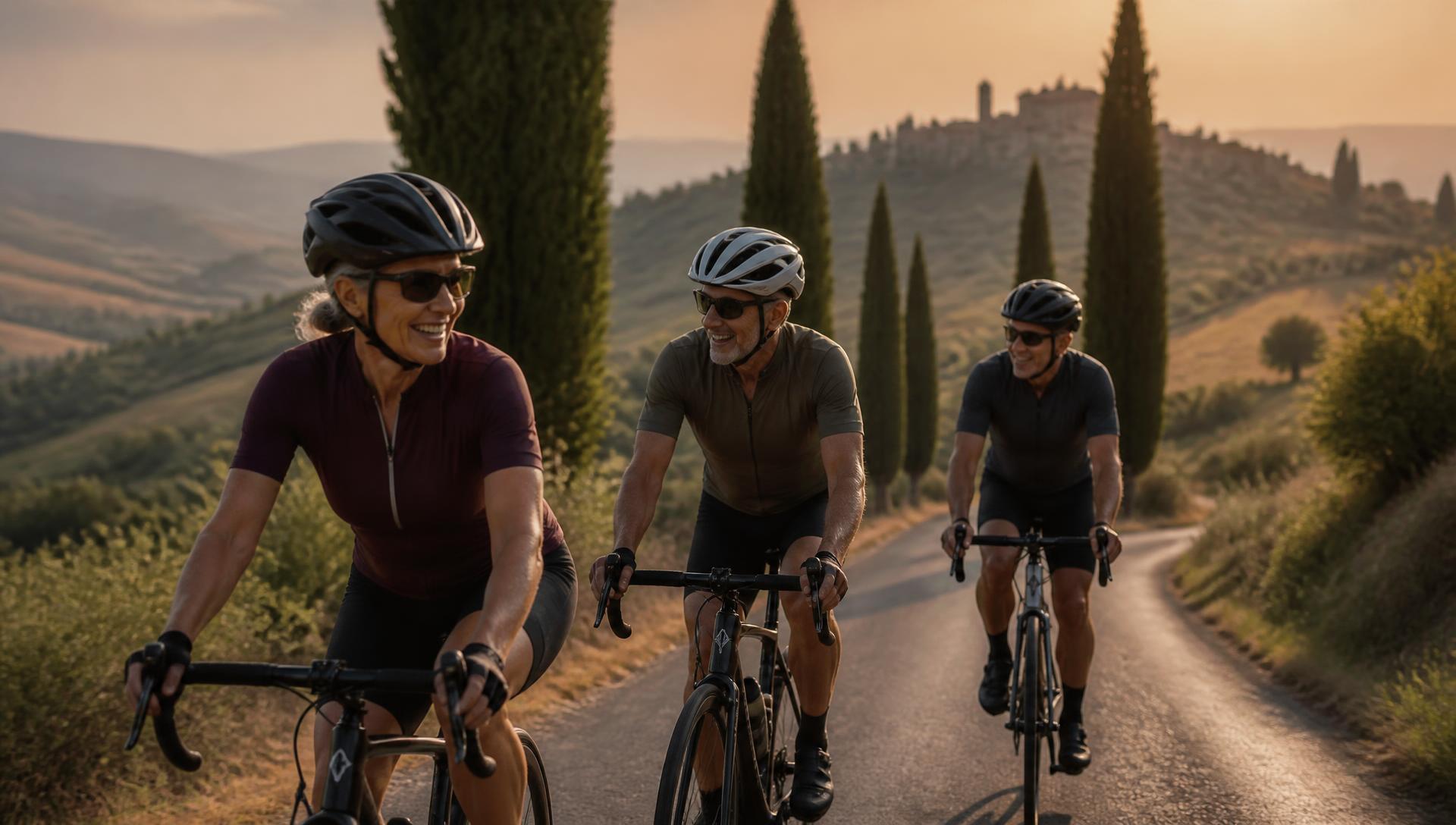
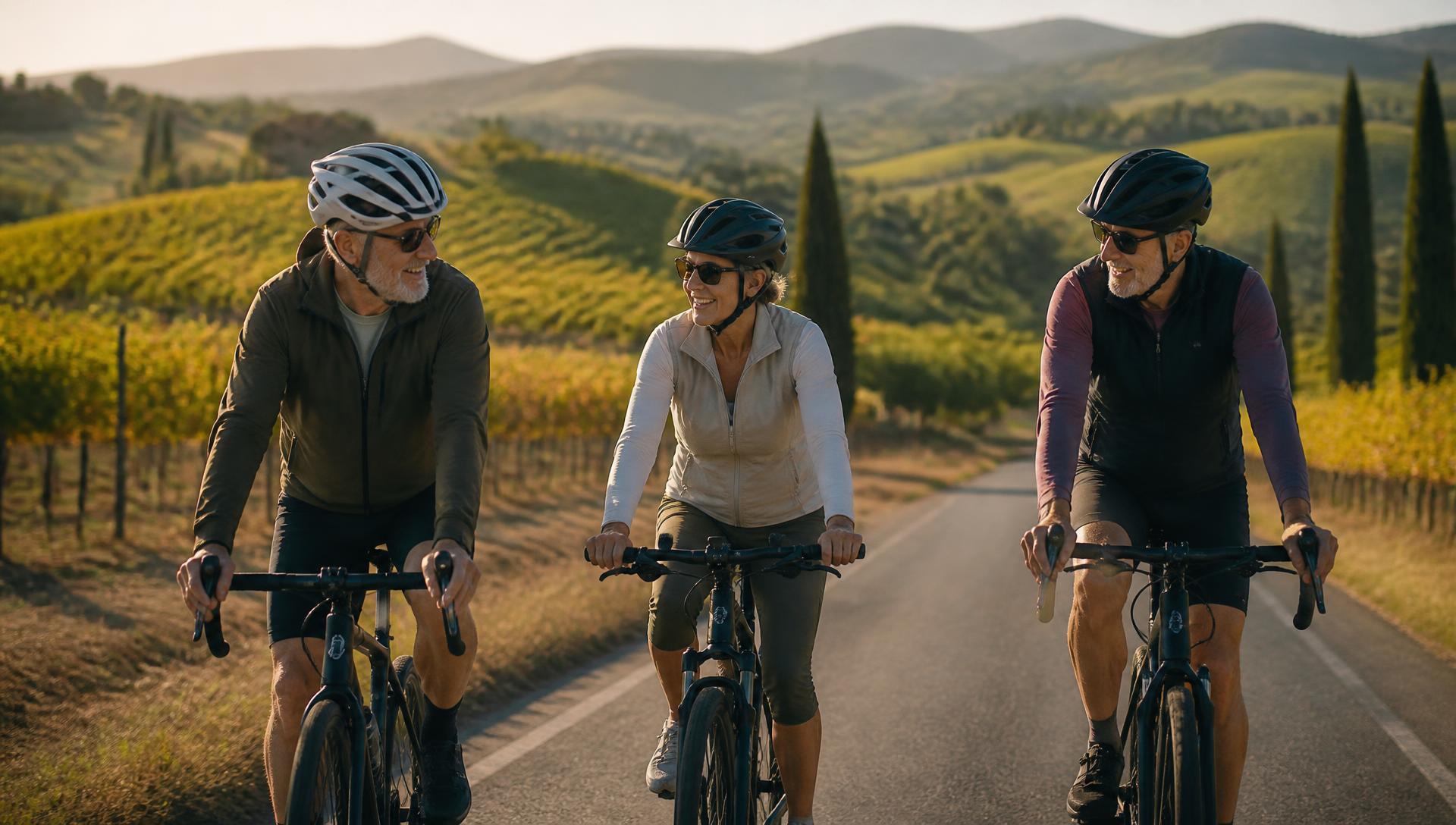
Tuscany may look incredible in the photographs. The Alps may be unforgettable. Mallorca may be a cyclist’s playground.
But your first cycling holiday should leave you thinking:
“I can’t wait to do that again.”
Not:
“What have I gotten myself into?”
The best first cycling holidays aren’t necessarily the flattest or the shortest.
They’re the ones that make cycling feel like part of a great vacation.
Manageable distances. Comfortable accommodation. Beautiful scenery. Good food. Interesting places to stop. Reliable navigation. Luggage that somehow arrives at the next hotel before you do.
And enough flexibility that the trip still feels like a holiday.
That’s what we’re looking for here.
“The best cycling destination in Europe isn’t necessarily the best destination for your first cycling holiday.”
Here are seven European cycling experiences I’d put near the top of the list for someone doing this for the first time.
§ i
What Makes a Great First Cycling Holiday?
Before choosing a country, look at the actual itinerary.
Two cycling holidays in the same destination can be completely different experiences.
One might involve 35–45 kilometres a day on dedicated cycle paths.
Another could cover 70–80 kilometres with considerably more climbing.
Both might be advertised as cycling holidays in the same region.
So what should a first-timer look for?
Terrain
Flat or gently rolling terrain can make a first trip more approachable.
But don’t become obsessed with finding something completely flat.
A few manageable hills can be part of the fun.
Long, sustained climbing is different.
Daily Distance
This may matter even more than terrain.
A flat 80-kilometre day is still an 80-kilometre day.
As a planning starting point, many first-time recreational cyclists may find itineraries around 30–55 kilometres on typical riding days easier to enjoy, provided the terrain is manageable.
But there is no universal beginner distance.
Elevation, surface, weather, wind and consecutive riding days matter just as much as kilometres.
Surface
Dedicated paved cycle paths and quiet country roads usually make a first cycling holiday more relaxing.
Gravel, rough surfaces and technical trails can be wonderful for the right rider, but they’re another variable to consider.
Traffic
This one is easy to underestimate.
If you’re comfortable riding 50 kilometres at home but dislike riding beside traffic, a destination with extensive cycling infrastructure can completely change your experience.
Support
Ask what’s being handled for you.
Luggage transfers?
Navigation?
Mechanical assistance?
Hotel reservations?
Transfers?
Local support?
Removing those responsibilities allows you to spend more time enjoying the trip.
Flexibility
Can you rent an e-bike?
Are shorter routes available?
Can you take a train if needed?
Is there a rest day?
On a bike-and-boat trip, can you remain aboard for a day?
Those options can provide enormous peace of mind.
§ ii
1. Danube Cycle Path: Passau to Vienna
Best Overall First Cycling Holiday
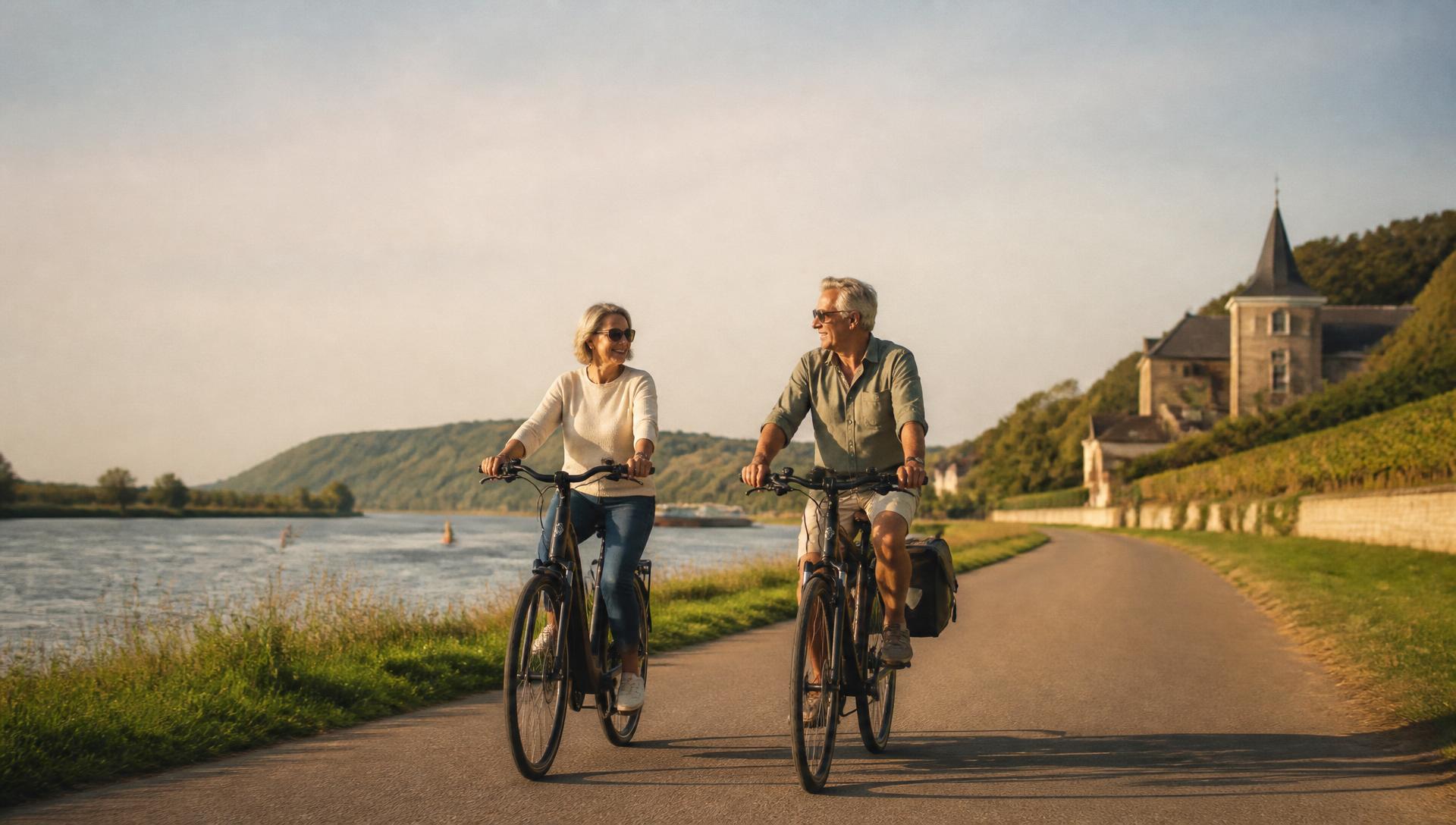
If someone asked me to recommend one classic European cycling holiday for a first timer, Passau to Vienna along the Danube would be very difficult to beat.
You begin around Passau in Germany and follow the Danube through Austria toward Vienna.
Along the way are river landscapes, small towns, vineyards, cafés, historic sites and the Wachau Valley.
And importantly for a first trip, much of the riding follows established cycling infrastructure through relatively forgiving terrain.
Current relaxed itineraries demonstrate what’s possible. Eurobike, for example, offers an easy-going Passau-to-Vienna itinerary averaging about 45 kilometres per day, following flat, well-built cycle paths with luggage transfer and mostly traffic-free riding.
There are also faster versions of this classic route.
That’s important.
The goal isn’t to see how quickly you can reach Vienna.
It’s to enjoy getting there.
Why It Works
The route is established.
Navigation is relatively straightforward.
Organized holidays can take care of luggage transfers.
There are towns and services along the way.
E-bikes are widely available through cycling operators.
And finishing in Vienna gives the trip a genuine sense of arrival.
Best For
Someone who wants the classic first European cycling holiday.
Watch Out For
Don’t assume every Danube itinerary is easy simply because the terrain is relatively forgiving.
Check the daily distances of the actual trip.
Choose the slower itinerary if this is your first cycling holiday.
§ iii
2. Amsterdam to Bruges
Best for Cycling Infrastructure and Confidence
There are places where bicycles are accommodated.
And then there’s the Netherlands.
Cycling is simply part of everyday life.
That makes this part of Europe particularly appealing for someone who loves riding but isn’t comfortable mixing with heavy traffic.
An Amsterdam-to-Bruges cycling holiday gives you something else too.
Two countries.
Dutch towns and countryside.
Belgian villages.
Canals.
Windmills.
Cafés.
And eventually Bruges, one of Europe’s most beautiful historic cities.
The terrain is generally forgiving.
But remember one of the most important lessons in this article:
Flat doesn’t always mean easy.
Wind can matter.
And some itineraries cover considerably more distance than others.
Look carefully at the actual stages before booking.
Why It Works
Excellent cycling culture.
Extensive cycling infrastructure.
Generally forgiving terrain.
Good navigation.
Plenty to see off the bike.
E-bike options.
And multiple ways to experience the route.
Current 2027 Amsterdam-to-Bruges bike-and-barge options are being graded Introductory, with operators describing the riding as mainly flat.
Best For
Someone whose biggest concern is traffic, navigation or confidence riding in another country.
Watch Out For
Wind and longer daily stages.
A 70-kilometre flat ride may still be more cycling than you want on vacation.
§ iv
3. Loire Valley, France
Best for Food, Wine and Culture
Some people want their cycling holiday to be primarily about cycling.
Others want cycling to be the way they experience everything else.
If you’re in the second group, look closely at the Loire Valley.
This is cycling through France at a pace that allows you to notice it.
Châteaux.
Vineyards.
Villages.
Markets.
Riverside landscapes.
Long lunches.
A café that wasn’t on the itinerary but looks too good to ride past.
That’s the appeal.
Many Loire Valley itineraries use flat to gently rolling terrain, dedicated cycle paths and low-traffic roads, but difficulty still varies by itinerary.
For example, one current Loire itinerary is graded Introductory to Moderate, with approximately 40–54 km daily on flat-to-undulating terrain, using dedicated cycle paths and low-traffic side roads. E-bikes are available.
Why It Works
The cycling isn’t the only attraction.
That’s actually one of its biggest strengths.
If you’ve ridden enough after 40 kilometres, there’s still an entire French vacation happening around you.
Best For
Couples and travellers who care as much about food, wine, culture and beautiful places as they do about kilometres.
Watch Out For
Don’t assume every route through the broader Loire region has the same difficulty.
Look for an itinerary with manageable daily distances and terrain that matches your ability.
§ v
4. Lake Constance
Best for Seeing Three Countries
Here’s one that deserves far more attention from first-time cycling travellers.
Lake Constance sits between:
Germany.
Austria.
Switzerland.
A cycling holiday around the lake can let you experience all three without requiring you to become a mountain cyclist.
Much of the established route uses smooth, paved bike paths and quiet side roads.
But this is where our fact-check matters.
Lake Constance should be thought of as mostly approachable rather than universally easy.
Current itineraries describe mostly flat and paved lakeside riding but also note some hilly sections, occasional steeper inclines and sections rated Medium.
And the scenery is exactly what you’d hope for from this part of Europe.
Water.
Mountains in the distance.
Villages.
Harbours.
Vineyards.
Historic towns.
Why It Works
Generally approachable riding.
Strong cycling infrastructure.
Easy-to-understand geography.
Plenty of places to stop.
Three countries.
And enough scenery to make every day feel different.
Best For
Someone who wants their first cycling holiday to feel like a real European journey rather than simply a week of bike rides.
Watch Out For
There can be rolling sections and occasional steeper inclines.
Again:
Choose the itinerary, not simply the route name.
§ vi
5. Netherlands & Belgium Bike-and-Boat
Best for Maximum Flexibility
What if you wake up one morning and don’t feel like cycling?
That’s one of the worries people sometimes have before their first cycling holiday.
A bike-and-boat trip can change the equation.
Instead of packing up and changing hotels every day, your floating accommodation moves with you.
You cycle during the day.
You return to the boat.
Your room is waiting.
Your luggage is waiting.
And depending on the trip, meals may be included too.
Current Amsterdam-to-Bruges bike-and-barge products are graded Introductory and described as relaxed cycling on mainly flat terrain.
On some bike-and-boat itineraries, travellers also have the flexibility to remain aboard instead of completing every planned cycling day.
If it sounds appealing, you can see how bike and river journeys work in practice.
For a nervous first timer, that’s enormously reassuring.
Why It Works
Unpack once.
Ride without luggage.
Built-in social environment.
Generally approachable cycling.
Meals are often included.
E-bikes are commonly available.
And depending on the itinerary, there may be flexibility to skip a cycling day.
Best For
Someone thinking:
“I’d love to try a cycling holiday, but I’m not sure I want to commit to riding every single day.”
Watch Out For
Bike-and-boat trips vary considerably.
Cabin size.
Boat quality.
Meals.
Group size.
Guided versus self-guided riding.
Daily distances.
Compare the complete experience, not simply the route.
§ vii
6. Selected Easy Coastal Routes in Portugal
Best for Sunshine and Coastal Scenery If You Choose the Right Route
Portugal can work beautifully for a first cycling holiday.
But this is one destination where you need to inspect the actual route very carefully.
Some coastal itineraries can provide leisurely riding and beautiful ocean scenery.
Others include mixed surfaces, longer stages, meaningful climbing and more demanding riding.
Don’t assume that “coastal” means “flat.”
That’s why I wouldn’t recommend “Portugal” generally as an easy first cycling destination.
I’d recommend the right Portuguese itinerary.
The reward can be considerable.
Ocean scenery.
Fishing villages.
Beaches.
Portuguese food.
Interesting towns.
Sunshine.
And a completely different atmosphere from cycling beside the Danube or through the Netherlands.
Why It Works
Beautiful Atlantic scenery.
Warmer weather.
Excellent food.
Interesting coastal communities.
And selected itineraries can work well for recreational riders.
Best For
Someone who wants their cycling holiday to feel like a sunny coastal vacation with bicycles involved.
Watch Out For
Check:
Elevation.
Surface.
Daily distance.
Not just the marketing description.
A 45-kilometre Portuguese ride with meaningful climbing can feel very different from 45 kilometres beside the Danube.
§ viii
7. Croatia Bike-and-Boat
Best Mediterranean Adventure, Preferably With an E-Bike
Croatia is spectacular.
Clear water.
Historic towns.
Islands.
Harbours.
Mediterranean food.
Boats.
Cycling.
It almost seems designed for an active holiday.
But I wouldn’t tell a first-time cycling traveller that Croatia is easy.
Current Croatian bike-and-boat itineraries can be graded Moderate, include hilly and mountainous terrain, feature long or steep climbs and reach around 60 kilometres on some days.
That’s where the combination of bike-and-boat plus an e-bike becomes interesting.
For a first cycling holiday in Croatia, I’d strongly favour an e-bike unless you’re already comfortable with sustained climbing.
Even with an e-bike, you should still be prepared for active days.
The payoff is extraordinary Mediterranean scenery and the flexibility of the bike-and-boat format.
Some current itineraries explicitly allow riders to skip a half or full cycling day and remain aboard.
Why It Works
Extraordinary scenery.
Island hopping.
Built-in social experience.
No daily hotel changes.
Flexibility on selected trips.
And e-bikes can make the terrain accessible to a much wider range of riders.
Best For
Someone who wants Mediterranean scenery and adventure and is comfortable using an e-bike to make the riding more manageable.
Watch Out For
Croatia wouldn’t be my first recommendation for someone insisting on a regular bike and wanting almost completely flat riding.
Choose the itinerary carefully.
And strongly consider the e-bike.
§ ix
How the Seven Compare
- Danube: Passau–Vienna
- TerrainMostly flat/gentleBest forBest overallE-bikeAvailable
- Amsterdam–Bruges
- TerrainMostly flatBest forInfrastructure & confidenceE-bikeAvailable
- Loire Valley
- TerrainFlat/gently rolling on selected routesBest forFood, wine & cultureE-bikeAvailable
- Lake Constance
- TerrainMostly approachable with some rolling sectionsBest forThree-country experienceE-bikeAvailable
- Netherlands/Belgium Bike-and-Boat
- TerrainMostly flatBest forMaximum flexibilityE-bikeAvailable
- Selected Portugal coastal routes
- TerrainRoute-dependentBest forCoast & sunshineE-bikeWorth considering
- Croatia Bike-and-Boat
- TerrainRolling/hillyBest forMediterranean adventureE-bikeStrongly consider
| Cycling holiday | Terrain | Best for | E-bike |
|---|---|---|---|
| Danube: Passau–Vienna | Mostly flat/gentle | Best overall | Available |
| Amsterdam–Bruges | Mostly flat | Infrastructure & confidence | Available |
| Loire Valley | Flat/gently rolling on selected routes | Food, wine & culture | Available |
| Lake Constance | Mostly approachable with some rolling sections | Three-country experience | Available |
| Netherlands/Belgium Bike-and-Boat | Mostly flat | Maximum flexibility | Available |
| Selected Portugal coastal routes | Route-dependent | Coast & sunshine | Worth considering |
| Croatia Bike-and-Boat | Rolling/hilly | Mediterranean adventure | Strongly consider |
Don’t choose from the table alone.
Two trips in the same destination can have completely different daily distances, support and difficulty.
Use this as your shortlist.
Then investigate the itinerary.
§ x
How Many Kilometres Should You Ride Each Day?
There isn’t one perfect number.
As a planning starting point, an itinerary with roughly 30–55 kilometres on many riding days may be easier for a first-time recreational cycling traveller to enjoy.
But don’t choose based on kilometres alone.
Forty kilometres with significant climbing, rough surfaces or strong headwinds can be considerably harder than 55 kilometres on a smooth, flat cycle path.
And remember:
This isn’t one Saturday ride.
You’re getting back on the bicycle tomorrow.
And the day after that.
You may also want to stop for lunch.
Visit a château.
Walk around a village.
Have a glass of wine.
Take photographs.
Sit beside the river.
Your cycling holiday doesn’t need to become an endurance test.
If you’re wondering whether you’re physically ready, read How Fit Do You Need to Be for a Cycling Holiday in Europe?
§ xi
Should You Use an E-Bike on Your First Trip?
Maybe.
And there’s absolutely nothing wrong with that.
An e-bike can help:
- Reduce the effect of hills
- Manage headwinds
- Keep riders of different abilities together
- Make consecutive cycling days easier
- Give you confidence to choose a more interesting destination
It doesn’t mean you won’t exercise.
You’re still pedalling.
You’re still outside.
You’re still experiencing the destination by bicycle.
The difference is that you have assistance when you want it.
For destinations such as Croatia or hillier Portuguese itineraries, an e-bike can completely change which trips are realistic.
If you’re undecided, read E-Bike or Regular Bike for a Cycling Holiday in Europe?
§ xii
Guided or Self-Guided for Your First Holiday?
Both can work.
Choose guided if you value:
- Riding with a group
- Having a leader
- Immediate assistance
- Local knowledge
- More structure
- Less responsibility
Choose self-guided if you value:
- Independence
- Riding at your own pace
- Stopping whenever you want
- Travelling primarily with your own companion
- More control over your day
There’s no prize for choosing the more independent option.
And there’s no reason to pay for support you don’t want.
The right answer depends on how you like to travel.
For a deeper comparison, read Guided vs. Self-Guided Cycling Holidays in Europe: Which Is Right for You?
§ xiii
What About the Cost?
The seven holidays in this guide span very different price levels.
A self-guided hotel-to-hotel trip won’t necessarily cost the same as a guided bike-and-boat holiday.
An e-bike can add to the price.
So can a single supplement.
Premium accommodation changes the equation again.
And international airfare usually sits outside the advertised land price.
That’s why you shouldn’t choose a cycling holiday based only on the number on the operator’s website.
For the full budgeting framework, read How Much Does a Cycling Holiday in Europe Cost in 2027?
The important number isn’t simply the advertised tour price.
It’s the complete cost of the vacation you actually want to take.
§ xiv
If You Asked Me Where to Start…
If this were my first cycling holiday and I wanted the safest all-around shortlist, I’d start with the Danube, the Netherlands or the Loire Valley.
They offer three different versions of a great first experience:
Classic riverside cycling.
World-class cycling culture and infrastructure.
Or cycling mixed with food, wine and culture.
From there, here’s how I’d narrow it down.
Choose the Danube
If you want the best all-around introduction to European cycling travel.
Choose Amsterdam to Bruges
If traffic and navigation make you nervous and you want an established cycling environment.
Choose the Loire Valley
If food, wine, villages and culture matter as much as the cycling.
Choose Lake Constance
If the idea of cycling through three countries makes the trip feel like an adventure.
Choose Netherlands & Belgium Bike-and-Boat
If you’re worried about committing to riding every day or love the idea of unpacking once.
Choose a Carefully Selected Portugal Coastal Route
If sunshine, beaches and ocean scenery are part of your dream.
Choose Croatia Bike-and-Boat
If you’re drawn to the Mediterranean, want something more adventurous and you’re open to using an e-bike.
There isn’t one winner for everyone.
There is a winner for you.
§ xv
Don’t Choose Based on Instagram
Beautiful photographs can sell almost any cycling destination.
A road winding through Tuscany.
A rider beneath the Dolomites.
A Mediterranean climb overlooking the sea.
And yes, those experiences can be extraordinary.
But photographs don’t show gradient very well.
They don’t show headwinds.
They don’t show traffic.
They don’t tell you whether tomorrow’s ride is 35 kilometres or 85.
They don’t tell you whether your luggage is being transferred.
And they certainly don’t tell you how your legs will feel on day five.
Use photographs to get inspired.
Then use the itinerary to make the decision.
The goal of your first cycling holiday isn’t to choose the most impressive destination.
It’s to choose the experience that makes you want to take a second one.
§ xvi
Start With the Experience You Want
Before opening a map, ask yourself:
What do I want this holiday to feel like?
Relaxed?
Social?
Independent?
Cultural?
Scenic?
Luxurious?
Adventurous?
Do you imagine riding beside a river?
Stopping at French cafés?
Cycling between countries?
Returning to a boat every evening?
Looking across the Mediterranean?
There isn’t one correct answer.
That’s what makes cycling travel so interesting.
The bicycle is simply the way you move through the experience.
And once you start thinking that way, choosing your first cycling holiday becomes much easier.
It also helps to think about the calendar at the same time, since the best time of year to ride each region varies considerably across Europe.
Already an experienced road cyclist looking for bigger climbs and more challenging riding? Explore the best road cycling holidays in Europe for experienced cyclists.
And if you’re riding into your fifties or sixties and want to think about distance, terrain and support first, read cycling holidays after 50.
§
Before You Book: 10 Questions to Ask
- 1How many kilometres will I ride each day?
- 2How much climbing is involved?
- 3What surfaces will I ride on?
- 4How much of the route is separated from traffic?
- 5Is luggage transferred for me?
- 6Is an e-bike available?
- 7What happens if I don’t want to ride one day?
- 8Is the trip guided, self-guided or somewhere in between?
- 9What support is available if I have a mechanical problem?
- 10What is the complete trip cost once bikes, flights, upgrades and extras are included?
If you can answer those ten questions confidently, you’re much closer to knowing whether the trip actually fits you.
Still comparing your options? The PEDAL & PORT Cycling Holiday Guide brings the key planning guides together in one place.
§
Frequently Asked Questions
What is the best cycling holiday in Europe for a beginner?
For many first-time cycling travellers, the Danube Cycle Path between Passau and Vienna is one of the strongest all-around choices because of its established cycling infrastructure, relatively forgiving terrain, scenery, towns and availability of organized support.
The best trip still depends on your preferred daily distance and travel style.
Where is the easiest place to cycle in Europe?
The Netherlands is one of Europe’s most approachable cycling environments because of its extensive cycling infrastructure and generally flat terrain.
However, daily distance and wind still matter.
An easy destination doesn’t automatically mean every itinerary is easy.
How many kilometres should a beginner cycle each day?
There is no universal beginner distance.
As a planning starting point, an itinerary with roughly 30–55 kilometres on many riding days may be comfortable for an active recreational cyclist if the terrain is manageable.
But kilometres alone don’t determine difficulty.
Elevation, road surface, wind, traffic and riding on consecutive days all matter.
Is the Danube Cycle Path suitable for beginners?
Yes.
Carefully selected Danube itineraries can be excellent for first-time cycling travellers.
Look at the actual daily distances rather than assuming every Danube trip has the same difficulty.
Is the Netherlands good for a first cycling holiday?
Yes.
Its cycling culture, generally flat terrain and abundance of established cycling itineraries make it particularly attractive to first-time cycling travellers.
Amsterdam-to-Bruges and Netherlands/Belgium bike-and-boat trips are two options worth exploring.
Should I use an e-bike on my first European cycling holiday?
An e-bike can be an excellent choice if you’re concerned about hills, consecutive riding days, keeping pace with another rider or simply having enough energy to enjoy the destination after cycling.
It isn’t necessary for everyone.
Is guided or self-guided better for a first cycling holiday?
Neither is automatically better.
Guided trips offer more structure, group interaction and immediate support.
Self-guided trips provide greater independence and flexibility.
Choose based on how you prefer to travel.
Are bike-and-boat holidays good for beginners?
They can be excellent.
Current Amsterdam-to-Bruges bike-and-barge products, for example, are graded Introductory and feature mainly flat cycling.
You also unpack once and return to your floating accommodation after riding.
Check the individual itinerary to see whether skipping a riding day and staying aboard is possible.
How fit do I need to be for a European cycling holiday?
You don’t need to be a competitive cyclist.
But you should be comfortable riding the approximate daily distances of your itinerary on consecutive days.
Terrain, e-bike use and trip support make a significant difference.
How much should I budget for my first cycling holiday in Europe?
For 2027 planning, a complete European cycling vacation can realistically range from approximately C$4,000 to C$13,000+ per person, depending on travel style, destination, airfare, accommodation, bicycle choice and inclusions.
See the PEDAL & PORT 2027 European Cycling Holiday Cost Guide for the complete budgeting framework.