Maybe you’ve seen the photos.
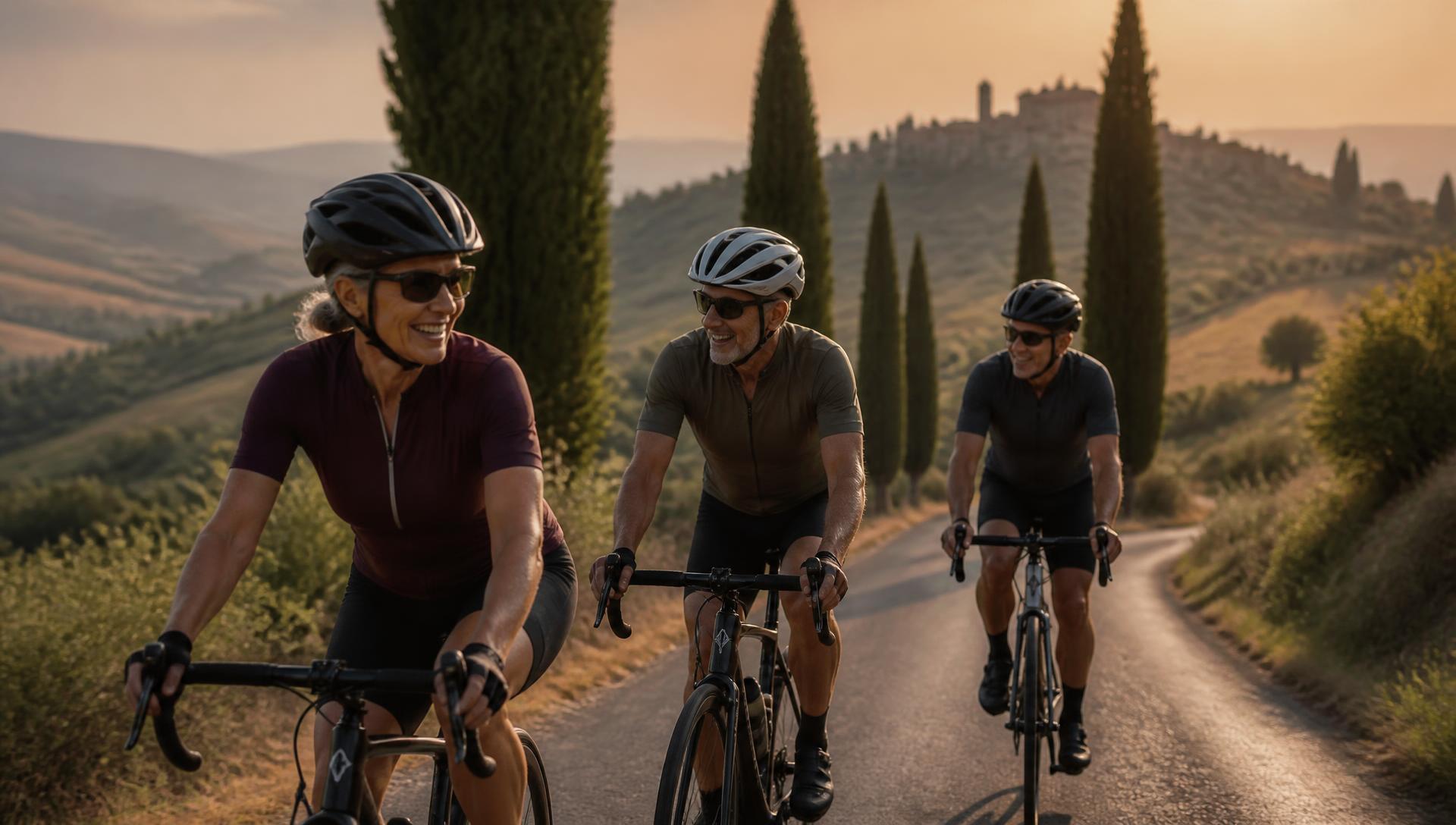
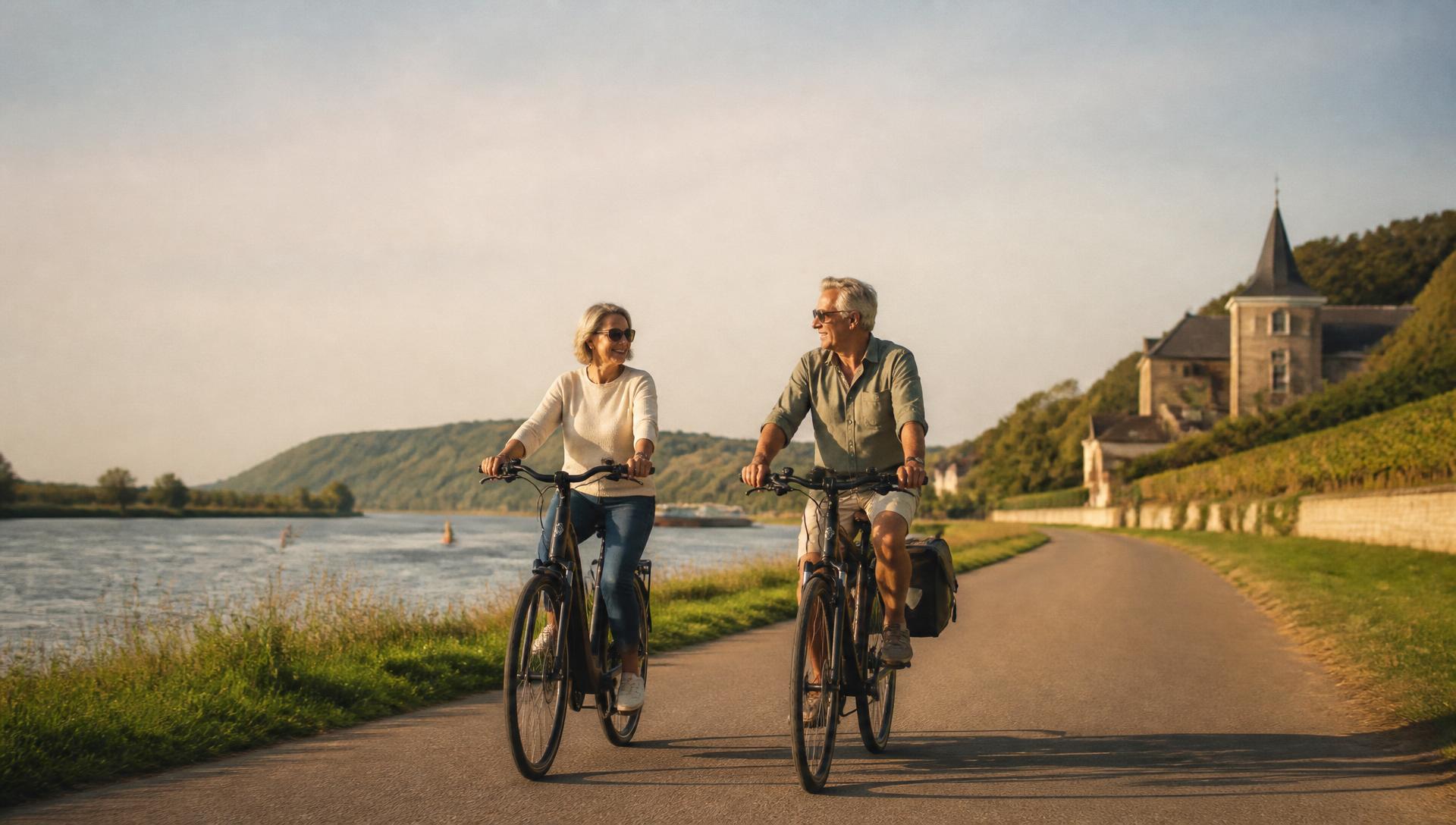
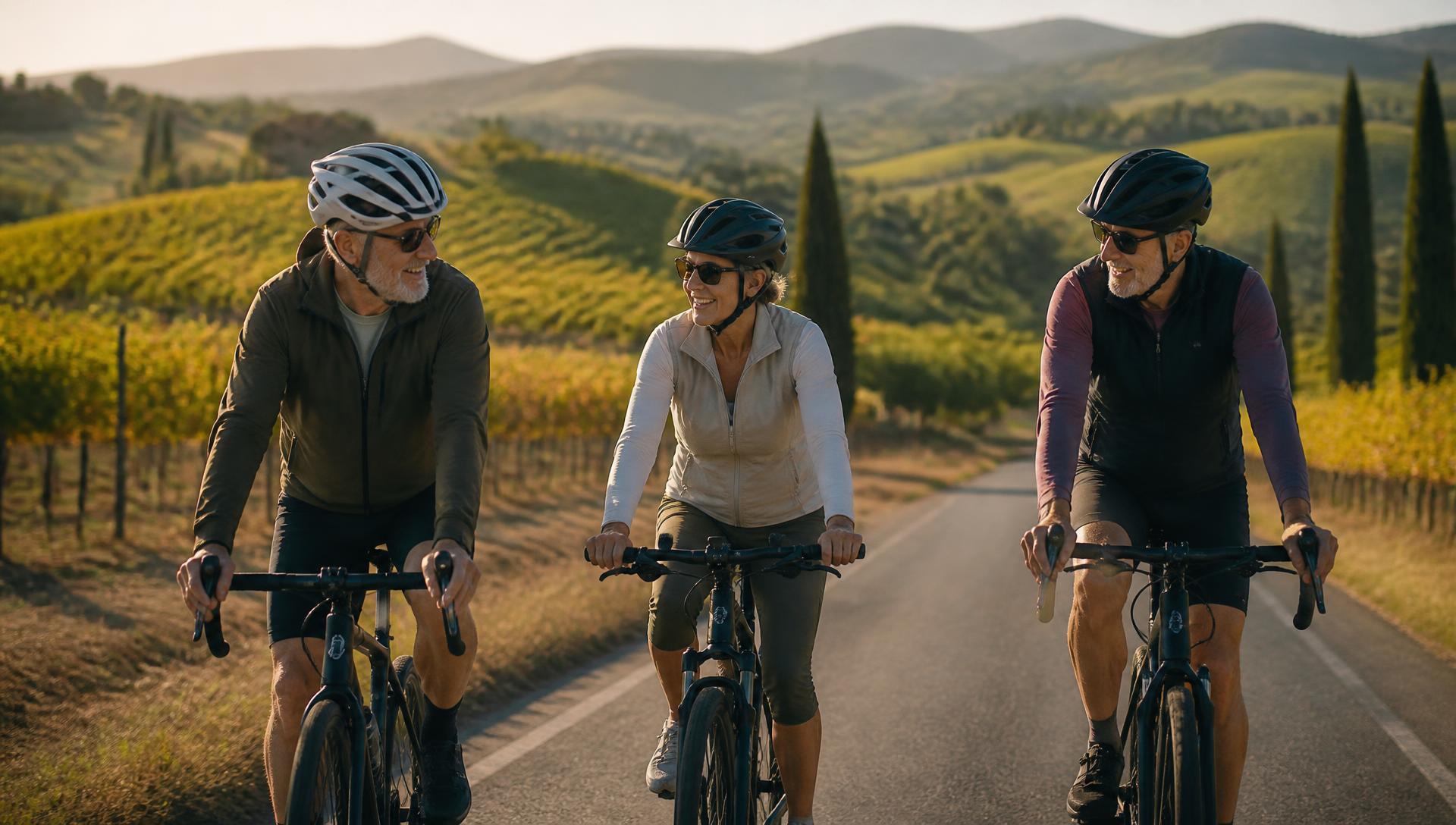
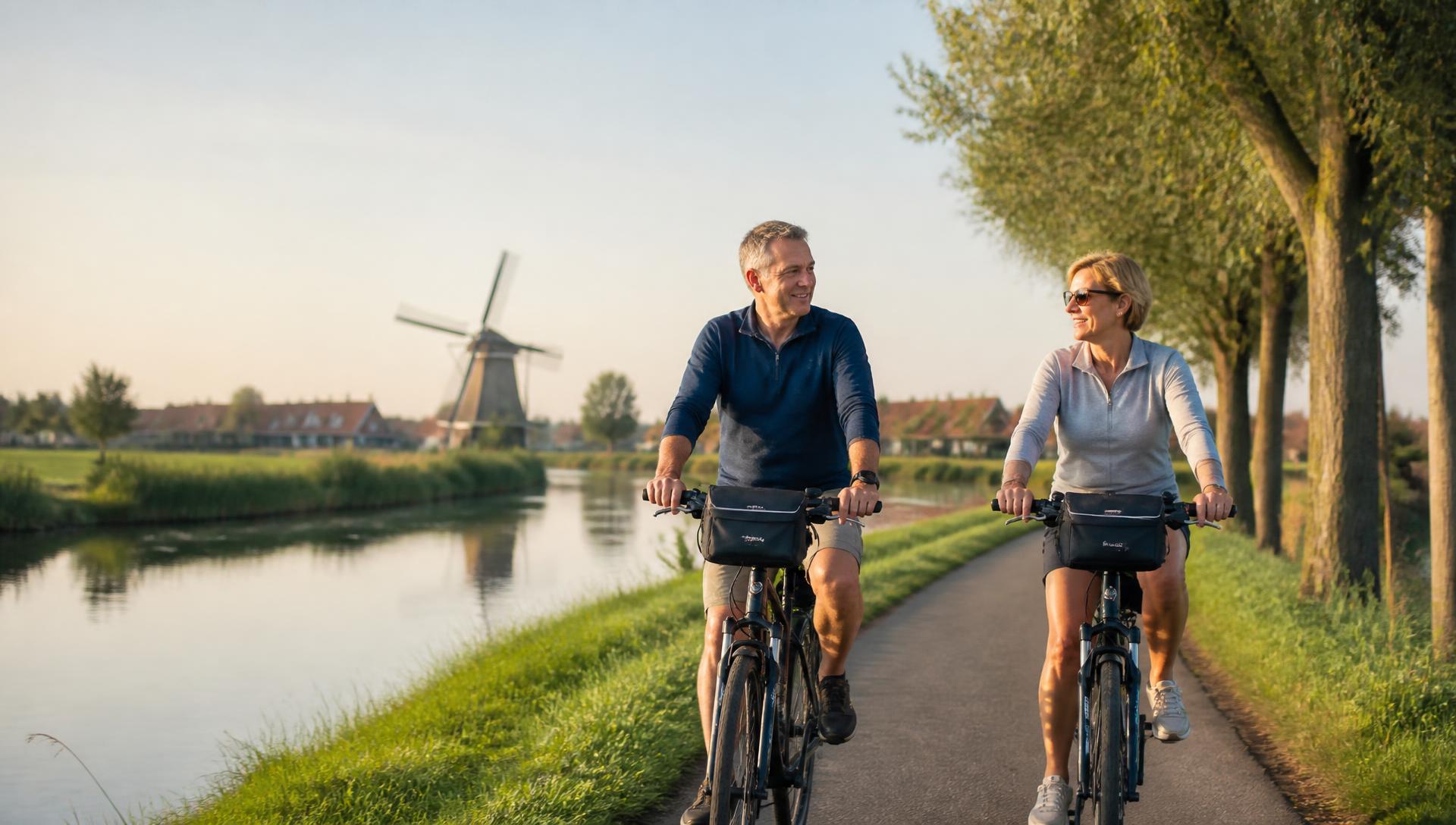
A quiet road winding through vineyards. Bicycles leaning outside a café. A couple riding beside a river somewhere in Europe. A small group rolling into a village that looks like it belongs on a postcard.
And somewhere along the way you’ve thought:
I’d love to do that.
Then the questions begin.
Am I fit enough?
How far do you ride each day?
What happens to my luggage?
Should I use an e-bike?
What if I get lost?
What happens if I can’t finish the day’s ride?
And perhaps the biggest question of all:
Is a cycling holiday really for someone like me?
If you’re asking those questions, this guide is for you.
Your first cycling holiday doesn’t need to be extreme. You don’t need to race, chase personal records or conquer famous mountain passes.
You need the right trip.
One that matches your fitness, your comfort level, your travel style and, most importantly, the way you want to experience Europe.
Here are 15 things worth knowing before you book.
§ i
You Don’t Have to Be a Serious Cyclist
Let’s clear this up first.
A cycling holiday isn’t necessarily a cycling race.
European cycling trips range from challenging mountain routes designed for experienced riders to relaxed journeys along rivers, coastlines, vineyards and dedicated cycling paths.
Some beginner-oriented itineraries are specifically designed around gentler terrain, manageable daily distances, luggage transfers and plenty of time to stop along the way.
That’s an important distinction.
You may love cycling without having any interest in riding as fast as possible.
You might want to spend the morning riding, stop for a long lunch, explore a village and still arrive at your hotel with enough energy to enjoy the evening.
That’s still a cycling holiday.
In fact, for many travellers, that’s exactly the point.
§ ii
Choose the Experience Before the Destination
It’s tempting to begin with a country.
Italy.
Portugal.
France.
Croatia.
The Netherlands.
Austria.
But before asking where should I go?, ask yourself another question:
What do I want my days to feel like?
Maybe you picture quiet roads through vineyards and long lunches.
Maybe you’d love flat riverside paths connecting historic towns.
Perhaps you want a social trip with a group and guide.
Or maybe your perfect day means leaving your hotel with your partner after breakfast and deciding for yourselves when to stop, where to eat and how long to linger.
You might want culture and food with some cycling.
You might want cycling with some culture and food.
Those are not necessarily the same holiday.
§ iii
Understand the Trip’s Difficulty Rating
Words such as easy, leisurely, moderate and challenging can be useful.
But they aren’t universal measurements.
Tour operators use their own grading systems, so an easy trip from one company isn’t necessarily identical to an easy trip from another.
Go beyond the label.
Look at:
- Daily distance
- Elevation gain
- Road or trail surface
- Number of consecutive riding days
- Length of climbs
- Traffic conditions
- Expected riding time
Then compare those numbers with the riding you’re comfortable doing at home.
The goal isn’t to choose the hardest trip you think you can survive.
It’s to choose one you’ll enjoy.
§ iv
Don’t Judge Difficulty by Distance Alone
This is one of the most important things first-time cycling travellers can learn:
“50 kilometres isn’t always 50 kilometres.”
A 50 km ride along a relatively flat river path can feel completely different from 50 km through rolling Tuscan countryside.
Add climbing, gravel, heat, headwinds or several consecutive riding days and the experience changes again.
When comparing trips, don’t ask only:
How far do we ride each day?
Also ask:
How much climbing is there?
And look at the surface.
Smooth pavement, dedicated cycle paths, compact gravel and rougher tracks can all create very different riding experiences.
Your bicycle matters too.
A route that feels demanding on a traditional bike may feel considerably more manageable on an e-bike.
Think of difficulty as a combination of:
distance + elevation + surface + weather + bicycle + consecutive days.
Also look at whether the itinerary includes a rest day, an optional riding day or opportunities to shorten a stage.
Five moderate riding days back-to-back can feel very different from the same amount of cycling spread across a longer trip.
§ v
Be Realistic About Your Fitness
You don’t need to train like an athlete.
But some preparation can make the difference between simply completing your trip and genuinely enjoying it.
The important question isn’t:
Can I ride 40 kilometres once?
It’s closer to:
Can I ride the planned distances comfortably for several days in a row and still enjoy the rest of my vacation?
If your trip is several months away, regular riding can help your legs, cardiovascular fitness and, just as importantly, your comfort in the saddle.
You don’t necessarily need huge distances.
Consistency matters.
And if you’re wondering how much preparation is actually necessary, we’ve gone deeper into that question here: How Fit Do You Need to Be for a Cycling Holiday in Europe?
If you’re planning your first trip in your fifties or sixties, start with cycling holidays after 50.
§ vi
Ask Whether an E-Bike Would Make the Holiday Better
Notice the wording.
Not:
Do I need an e-bike?
Instead:
Would an e-bike help me enjoy the experience more?
That’s a much better question.
An e-bike can help with hills, headwinds, longer days and differences in fitness between travelling companions.
It can also give you some insurance.
Maybe you use very little assistance in the morning and a little more late in the afternoon.
There’s no prize for arriving at your hotel exhausted because you refused electric assistance.
There’s also nothing wrong with choosing a traditional bicycle if that’s what you enjoy.
The objective is to select the bike that gives you the experience you want.
We’ve explored that decision in detail in: E-Bike or Regular Bike for a Cycling Holiday in Europe?
§ vii
Decide How Much Support You Want
Not every European cycling holiday works the same way.
At one end, you can plan everything yourself.
At the other, you can join a fully guided trip where much of the navigation and daily logistics are handled for you.
Between those extremes are self-guided and supported trips.
A self-guided holiday may still include hotels, luggage transfers, GPS routes and local assistance while allowing you to ride independently.
A guided holiday generally provides more immediate support, local knowledge and a built-in social group.
Neither is automatically better.
It depends on how you like to travel.
If you enjoy independence and setting your own pace, self-guided may be ideal.
If you enjoy meeting people and would rather let someone else worry about navigation and logistics, guided may be a better fit.
We break down the differences here: Guided vs. Self-Guided Cycling Holidays in Europe: Which Is Right for You?
§ viii
Understand What Happens to Your Luggage
Here’s one of the things many first-time cycling travellers are happy to discover:
You may not have to carry your suitcase on your bicycle.
On many organized cycling holidays, your main luggage is transferred from one accommodation to the next while you ride.
You leave your bag in the morning.
You carry only what you need during the day.
When you arrive at the next hotel, your luggage is waiting.
That can transform the experience.
But don’t assume luggage transfer is included.
Before booking, check:
- Whether luggage transfer is included
- How many bags are allowed
- Weight or size restrictions
- When bags need to be ready
- When they’re expected to arrive
The details vary by operator and itinerary.
§ ix
Know What Bike You’re Getting
Don’t ask only:
Is a bike included?
Ask:
What bike am I actually going to ride?
A properly fitted bicycle can make a tremendous difference when you’re spending several hours a day in the saddle.
Find out:
- What type of bicycle is provided
- How sizing is determined
- What gearing it has
- Whether e-bikes are available
- What pedals are supplied
- Whether a helmet is included
- Whether you can bring your own pedals or saddle
- What repair equipment comes with the bicycle
If possible, provide your height and any relevant bike-fit measurements before the trip rather than waiting until you arrive.
If you have a saddle you already love, ask whether you can bring it.
The same applies to pedals.
Small familiar comforts can make a big difference over several consecutive riding days.
§ x
Understand How Navigation Works
If you’re taking a self-guided trip, navigation becomes particularly important.
Ask exactly what you’re getting.
GPS device?
Phone app?
GPX files?
Printed route notes?
Road signage?
Ideally, know how the system works before your first morning.
If you’re navigating with your phone, downloading routes or maps for offline use can be valuable.
A secure handlebar mount and portable battery pack can also make life considerably easier.
And always know who to contact if you lose the route.
Getting slightly lost can become a funny travel story.
Being completely lost with a dying phone is less charming.
§ xi
Know What Happens When Something Goes Wrong
Eventually something won’t go exactly according to plan.
You might get a flat.
The weather could change.
You could miss a turn.
Your bike might develop a mechanical issue.
Or your legs might simply decide they’ve done enough for the day.
Before booking, ask what support is actually available.
What happens if I can’t finish today’s route?
Who do I call if my bicycle has a mechanical problem?
Can transportation be arranged?
Is there an emergency contact?
The answers will vary considerably between operators and trip styles.
Knowing them beforehand removes a lot of uncertainty.
§ xii
Think About Who You’re Travelling With
Your travelling companions can shape the trip as much as the destination.
Travelling solo?
A guided trip can provide an instant social group.
Travelling as a couple?
A self-guided trip can give you enormous freedom.
Travelling with friends?
Think about differences in fitness, pace and expectations.
One person may want 70 km and a big climb.
Another may be thinking about lunch.
Neither person is wrong.
The important thing is choosing an itinerary that allows everyone to enjoy the trip.
This is another situation where combining traditional bikes and e-bikes can work extremely well.
§ xiii
Choose the Right Time of Year
There isn’t one universal best month to cycle Europe.
Europe is too diverse for that.
A wonderful cycling month in one destination can be uncomfortably hot, wet, crowded or even snowy somewhere else.
Think about:
- Temperature
- Rainfall
- Daylight
- Tourism crowds
- Seasonal hotel availability
- Mountain conditions
- Wind
- Local events
Shoulder seasons can be particularly attractive in some regions, offering comfortable temperatures and fewer visitors.
But the destination should determine the timing, not a generic rule about Europe. If you want the full picture, we’ve written a guide to when to go in Europe, month by month.
§ xiv
Pack for Comfort, Not for the Tour de France
Your first cycling holiday isn’t the time to discover that your brand-new cycling shorts become uncomfortable after two hours.
Bring clothing and equipment you already trust whenever possible.
Depending on your itinerary, useful items may include:
- Helmet
- Comfortable padded cycling shorts
- Cycling gloves
- Sunglasses
- Sunscreen
- Lightweight layers
- Rain jacket
- Water bottle
- Phone and charging cable
- Portable battery pack
- Comfortable shoes and clothing for evenings
You don’t need to look like you’re starting the Tour de France.
You need to be comfortable.
That’s a much better investment.
§ xv
Remember Why You’re Going
It’s easy to become consumed by numbers.
Kilometres.
Elevation.
Average speed.
Battery range.
But those aren’t usually the things you’ll remember most.
You’ll remember the café you discovered because you decided to stop.
The village you didn’t expect.
The view that made everyone pull over.
The lunch that lasted longer than planned.
And the satisfaction of arriving somewhere under your own power.
The bicycle is how you experience the destination.
You’re not going to Europe to prove how good a cyclist you are.
You’re going to see more, experience more and perhaps discover that some of the best moments happen somewhere between where you started and where you’re going.
The bicycle simply changes how you get there.
§ xvi
Before You Book: 11 Questions to Ask
Before committing to a trip, get clear answers to these questions:
- 1What is the average daily distance?
- 2What is the average daily elevation gain?
- 3What surfaces will I be riding on?
- 4What bicycle is included and how is sizing handled?
- 5Are e-bikes available?
- 6Is luggage transferred between accommodations?
- 7What support is available during the ride?
- 8What happens if I can’t finish a day’s route?
- 9What accommodations and meals are included?
- 10What fitness level do you recommend for this specific itinerary?
- 11What travel insurance or activity coverage should I have for this itinerary?
A good tour operator or travel adviser should be able to help you understand those answers before you book.
Budget matters too. See what a European cycling holiday can realistically cost in 2027, including airfare, bikes and the expenses beyond the advertised tour price.
Once you know the kind of cycling experience that fits you, the next question is where to go. See seven of the best European cycling holidays for first-time cyclists.
Looking for the bigger picture? Explore the PEDAL & PORT Cycling Holiday Guide for destinations, fitness, bike choice, trip style and budgeting.
§ xvii
Frequently Asked Questions
How fit do you need to be for a cycling holiday in Europe?
It depends on the itinerary.
Daily distance matters, but so do elevation, surface, weather and consecutive riding days.
There are European cycling holidays suitable for recreational riders as well as challenging trips designed for experienced cyclists.
How far do you cycle each day?
There is no universal distance.
Beginner-oriented itineraries may have relatively manageable daily stages, while performance-oriented trips can be considerably longer.
Look at each day’s distance and elevation rather than relying only on an overall trip rating.
Are European cycling holidays suitable for beginners?
Absolutely, provided you choose an itinerary appropriate for your ability and comfort level.
Gentler terrain, manageable distances, luggage transfers, appropriate bicycles and good support can make an enormous difference.
Should I use an e-bike for my first cycling holiday?
Maybe.
An e-bike can help with hills, headwinds, longer distances or differences in fitness between travelling companions.
The better question is whether an e-bike would make your holiday more enjoyable.
Is guided or self-guided better for a first cycling holiday?
Either can work.
Guided trips generally offer more built-in social interaction and immediate support.
Self-guided trips offer greater independence and flexibility.
Choose according to your travel personality and comfort with navigation.
What is the easiest European destination for a first cycling holiday?
There isn’t one answer for everyone.
The Netherlands and established river routes such as sections of the Danube are often attractive to first-time cycling travellers because flatter terrain and developed cycling infrastructure can make riding more approachable.
But the specific itinerary matters more than the country name alone.