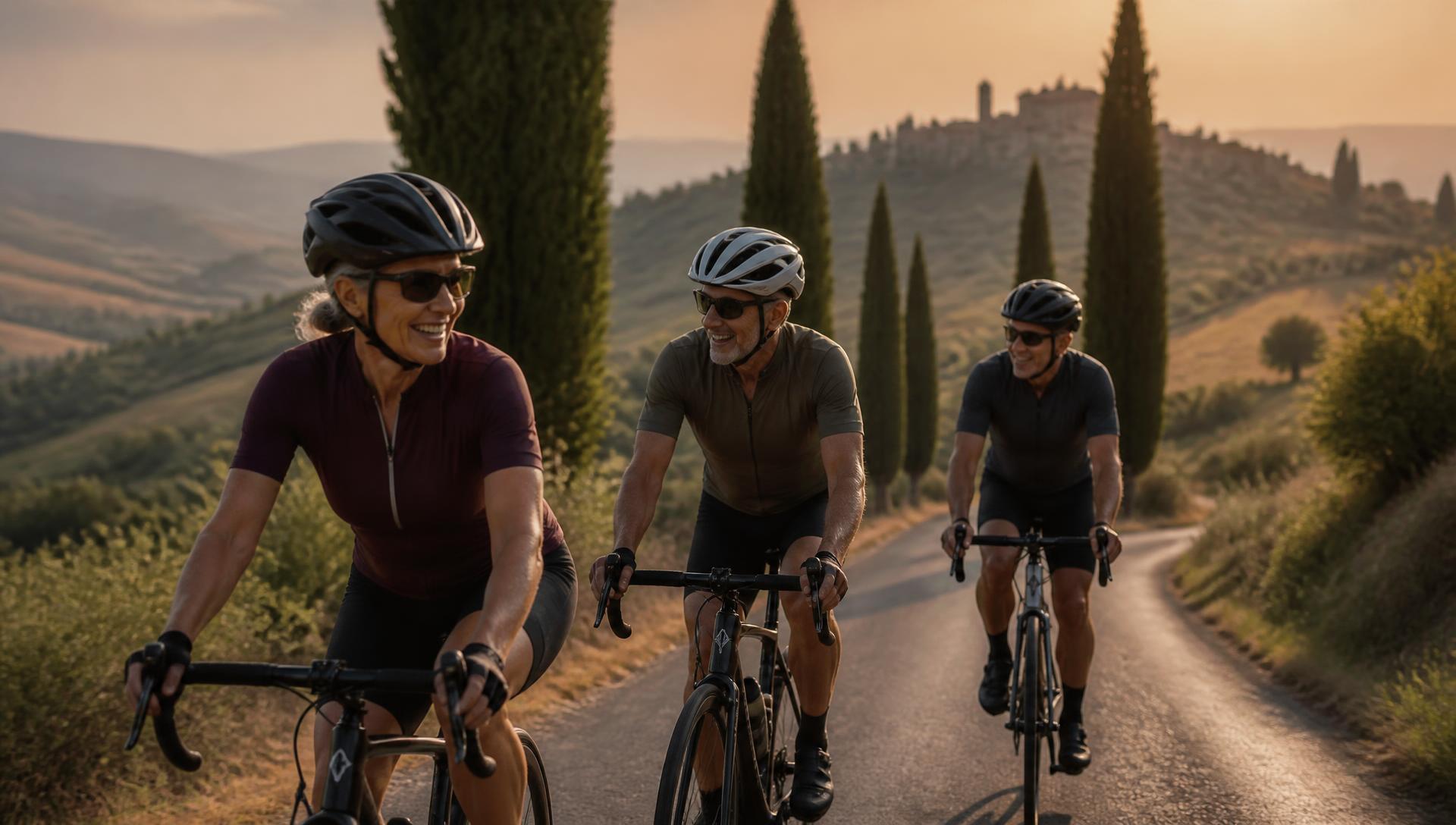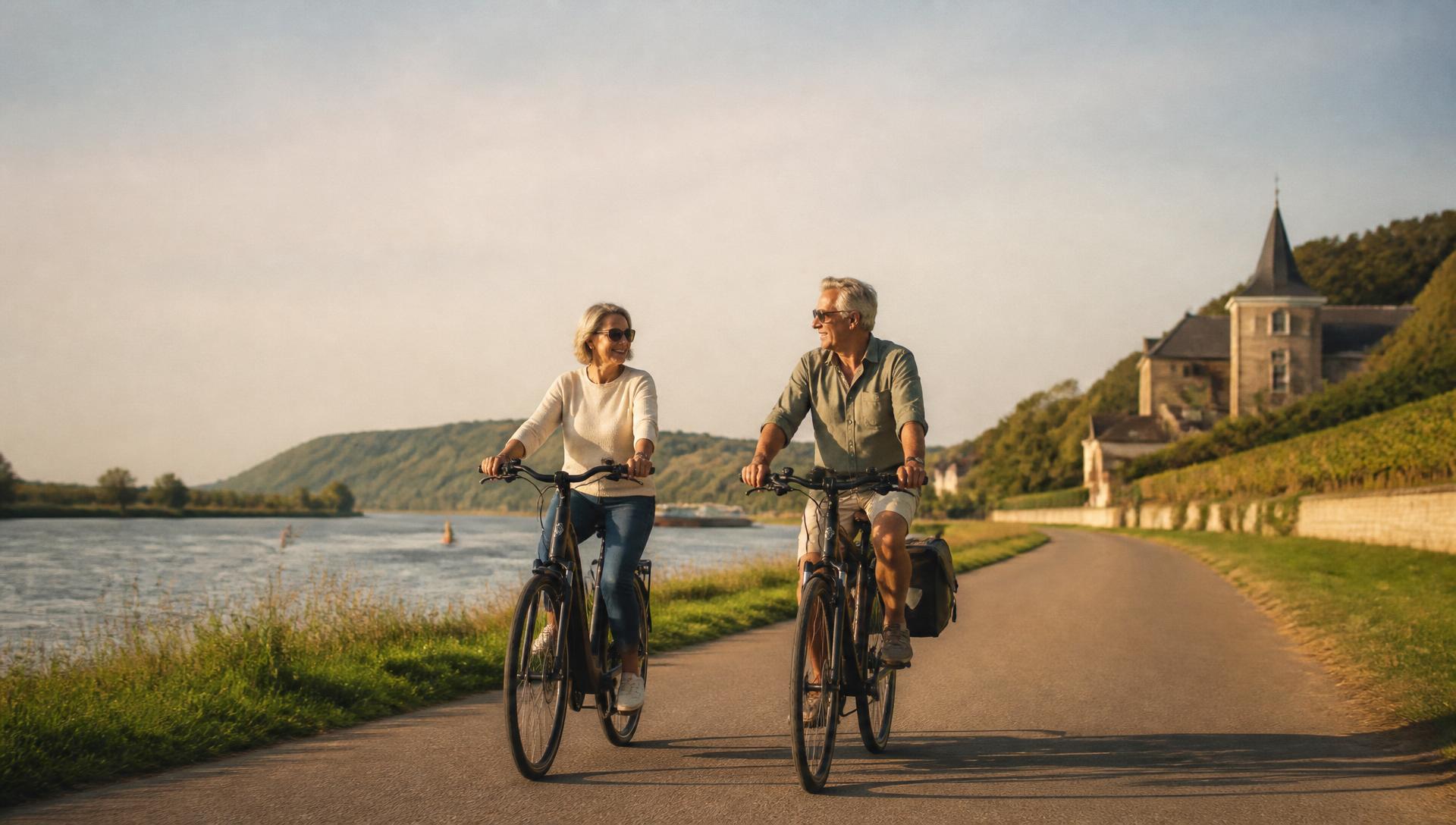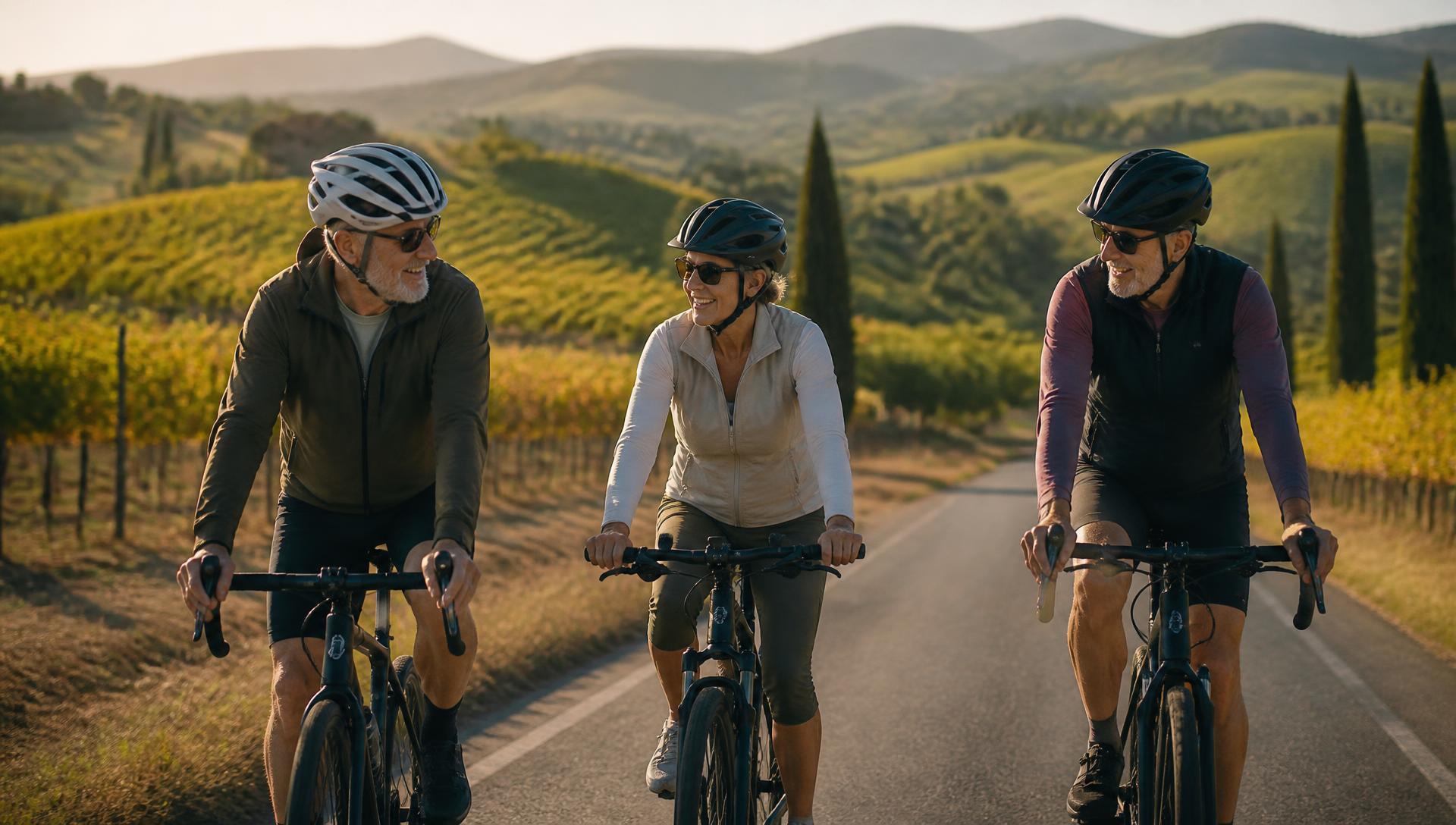
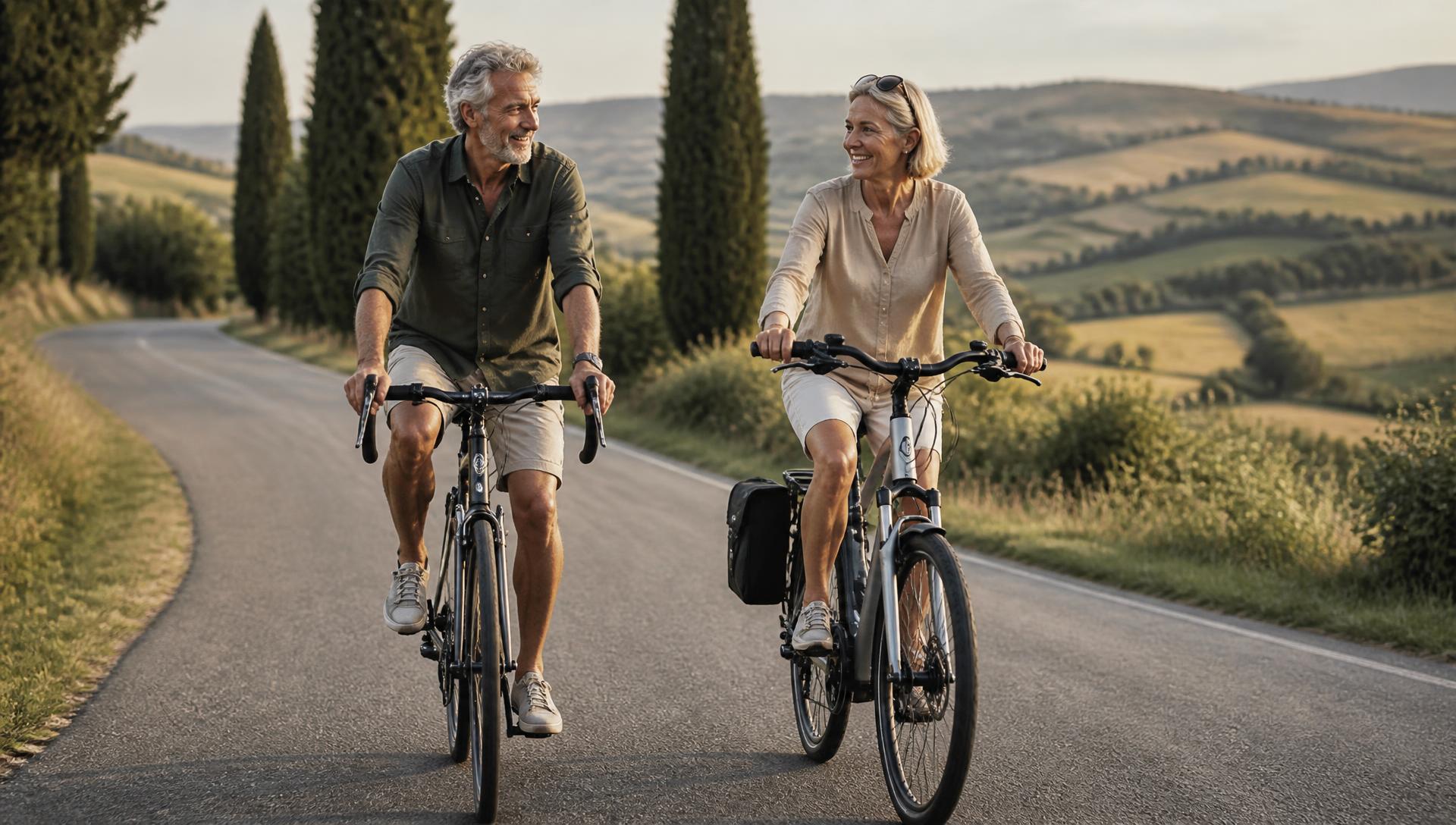
You’re looking at a cycling holiday in Europe.
The route looks incredible. Quiet country roads, riverside paths, vineyards, historic villages and places you’ve wanted to visit for years.
Then you reach the bike selection.
Regular bike or e-bike?
It’s one of several decisions worth thinking through, along with the others covered in your first cycling holiday in Europe: 15 things to know before you book.
For some cyclists, the answer is immediate.
For everyone else, it can feel surprisingly complicated.
Will an e-bike make the trip too easy?
Will a regular bike make the trip harder than it needs to be?
What if you’re travelling with someone who rides more than you do?
And perhaps there’s another question you haven’t said out loud:
Does choosing an e-bike somehow mean you’re less of a cyclist?
No.
The best bike for a cycling holiday isn’t the one that proves how strong you are.
It’s the one that helps you enjoy the kind of holiday you came to Europe to have.
§ i
What Does an E-Bike Actually Do?
An e-bike used on most cycling holidays is still a bicycle.
You pedal.
A battery-powered motor provides assistance while you’re pedalling.
Depending on the bike, you can usually select different levels of assistance. You might use very little while cruising along a flat cycle path and increase it when the road starts pointing uphill.
You’re still steering.
You’re still braking.
You’re still balancing.
And you’re still doing the riding.
The difference is that when you need some help, the bicycle can give it to you.
That relatively simple idea has changed cycling travel.
§ ii
Why Are E-Bikes Becoming So Common on Cycling Holidays?
Because they solve several very practical travel problems.
Maybe you’re perfectly comfortable riding 40 kilometres but aren’t sure about the climbing.
Maybe Day One sounds great, but you’re wondering how your legs will feel on Day Five.
Maybe you want to spend the afternoon walking around a historic town rather than recovering in your hotel room.
Or perhaps the person you’re travelling with simply rides more than you do.
An e-bike can help with hills, longer distances, headwinds and differences in riding ability.
But I think there’s an even bigger reason they’ve become so useful for cycling travel.
They give travellers more choices.
A route you might have dismissed because of the climbing may suddenly become realistic.
A destination you thought was beyond your cycling ability may become possible.
And two people who ride very differently may be able to share the same experience.
That’s a pretty significant change.
§ iii
When a Regular Bike May Be the Better Choice
With all those advantages, why wouldn’t everyone choose an e-bike?
Because some cyclists genuinely prefer riding without assistance.
If you already ride regularly and the distances and elevation comfortably fit your ability, a regular bike may be exactly what you want.
You may enjoy the physical side of cycling.
You may enjoy climbing.
You may like the simplicity and lighter feel of a regular bicycle.
And you may want the riding itself to be one of the challenges of the trip.
There’s something satisfying about reaching the top of a climb knowing your legs got you there.
Sometimes earning the view is part of the experience.
If that’s something you enjoy, there’s no reason to remove it from your holiday.
The point isn’t to make the cycling as easy as possible.
It’s to make it right for you.
§ iv
When an E-Bike May Make More Sense
Now imagine the opposite situation.
You’ve found an itinerary you love, but the elevation makes you hesitate.
Or you know you can handle the distance, but you’re less certain about doing it several days in a row.
Maybe cycling is only one part of the vacation for you.
You want to ride during the day, but you also want enough energy left to walk around town, explore a castle, enjoy dinner or stay out in the evening.
An e-bike may make more sense.
It can also be a good option if you’re travelling with stronger cyclists and don’t want every hill to become a contest.
And sometimes the simplest reason is the best one:
You just think you’ll enjoy the holiday more with some assistance.
That’s reason enough.
§ v
What If Your Partner Is a Stronger Cyclist?
This might be one of the best uses of an e-bike on a cycling holiday.
Imagine one person rides 80 or 100 kilometres regularly.
The other enjoys cycling too, but prefers 30 or 40 kilometres at a relaxed pace.
Put both riders on regular bikes on a hilly itinerary and something predictable can happen.
One person spends the day waiting.
The other spends the day trying to keep up.
That’s not much of a shared adventure.
An e-bike can sometimes bring two different riding abilities much closer together.
The stronger cyclist can ride a regular bike.
The other can use electric assistance when needed.
Suddenly they’re spending much more of the day riding together.
As I wrote when we looked at cycling-holiday fitness:
You’re travelling together to experience Europe. You’re not auditioning for a cycling team.
That’s especially true when you’re travelling with someone important to you. It’s also worth thinking about whether you’d rather ride with a group or set your own pace — something I look at in guided vs. self-guided cycling holidays, and in my guide to cycling holidays after 50.
§ vi
Will an E-Bike Make Hills Easy?
Easier?
Absolutely.
Effortless?
Not necessarily.
You’re still riding a bicycle uphill.
The amount of assistance you receive depends on the bike and the setting you’re using, while the difficulty of the climb still depends on things such as steepness, distance and road surface.
The bicycle itself is also heavier than a regular bike.
What changes is the amount of effort required.
On a long climb, that can make an enormous difference.
Instead of wondering whether you’ll make it to the top, you may find yourself looking around and actually enjoying where you are.
And on a cycling holiday, I think that matters.
§ vii
Are You Still Getting Exercise on an E-Bike?
Yes.
You’re still pedalling and spending hours riding a bicycle.
The motor assists your effort rather than replacing the act of cycling.
But I wouldn’t choose an e-bike or regular bike based on which one produces the “better workout.”
You’re on vacation.
Think instead about the experience you want.
With an e-bike, you can often decide how much assistance you want throughout the day.
On an easy section, you may use very little.
When the road climbs, you may use more.
That flexibility is part of what makes an e-bike useful for travel.
§ viii
There's One Difference You'll Notice: Weight
There is a trade-off.
E-bikes are generally heavier than regular bicycles because they carry a motor and battery.
While you’re riding with assistance, that additional weight may not concern you very much.
You’ll notice it more when you’re manoeuvring the bicycle at low speed, parking it, getting on and off, moving it around or having to lift it.
That’s worth knowing before your trip.
If you’ve never ridden an e-bike before, getting comfortable with one before tackling a full day of European cycling is a good idea whenever possible.
§ ix
What About the Battery?
This is one of the first questions people ask.
How far will it go?
Unfortunately, there isn’t one useful universal answer.
Battery range varies with the bicycle, battery capacity, assistance level, terrain, rider, weather and other factors.
A rider using minimal assistance on relatively flat terrain may have a very different experience from someone using high assistance through a day of climbing.
So instead of focusing on a generic battery-range number you found online, ask questions about your actual trip.
What range should I expect on this itinerary?
How and where is the battery charged?
Is overnight charging handled for me?
What happens on the longest or hilliest riding day?
The tour operator knows the route and the equipment they’re providing.
Their answer is much more useful than a general number.
§ x
Are E-Bikes Available Everywhere?
Don’t assume they are.
E-bikes have become widely available on European cycling holidays, but availability still depends on the tour, destination, operator and departure.
There may also be a limited number available.
If you think you want an e-bike, make that part of your trip planning.
Don’t wait until you’ve arrived and hope one is available.
The bike is an important part of a cycling holiday.
Choose it with the same care you’d give the itinerary.
§ xi
The PEDAL & PORT Bike Choice Check
Still undecided?
Here’s a simple way to think about it.
Choose the Regular Bike If…
You enjoy the physical side of cycling.
The itinerary comfortably matches the way you currently ride.
You enjoy climbing without assistance.
You want cycling itself to be part of the challenge.
You prefer a lighter and simpler bicycle.
Consider the E-Bike If…
You’d appreciate some help on hills.
You’re concerned about longer or consecutive riding days.
You’re travelling with someone who rides more strongly than you.
You’d rather conserve some energy for exploring after the ride.
You love the destination but aren’t excited about proving you can conquer every climb without assistance.
Neither list is a test.
They’re simply different ways of travelling by bicycle.
“Choosing an e-bike isn’t lowering the standard of your holiday. It may simply be choosing the right tool for the holiday you actually want.”
§ xii
Don't Choose Based on Ego
Cyclists can be funny about e-bikes.
For years, there was a tendency in some cycling circles to treat them as somehow less legitimate.
But you’re planning a holiday, not establishing your position in the cycling hierarchy.
If you love climbing and want to test yourself, take the regular bike.
If an e-bike means you’ll enjoy Tuscany instead of spending the afternoon worrying about Tuscany’s next hill, take the e-bike.
If you want assistance only occasionally, use it occasionally.
If you want more assistance, use more.
There are plenty of opportunities in life to prove how tough you are.
Your vacation doesn’t necessarily have to be one of them.
And if two cyclists arrive at the same café overlooking the Tuscan countryside, one on a regular bike and one on an e-bike, I’m not sure either one has won.
“You’re both in Tuscany.”
That sounds pretty good to me.
§ xiii
So Which Bike Should You Choose?
Before making the decision, look at the actual holiday.
How far will you ride each day?
How much climbing is involved?
What’s the longest day?
How many days will you ride consecutively?
How much cycling do you currently do?
Who are you travelling with?
How important is the physical challenge to you?
And what would you like enough energy left to do when the riding finishes?
Answer those questions honestly and the choice often becomes much clearer.
If the regular bike makes you excited about the trip, choose it.
If the e-bike makes you more excited about the trip, choose that.
The best bike isn’t the one that makes the holiday harder or easier. It’s the one that makes the holiday better for you.