You don’t need to be a serious cyclist to enjoy a cycling holiday in Europe.
You don’t need to ride at racing speed, own an expensive road bike or spend every weekend doing 100 kilometre rides.
What you do need is a cycling holiday that matches the way you like to ride.
That distinction matters.
If you’re still at the beginning of the planning, it’s worth starting with your first cycling holiday in Europe: 15 things to know before you book.
A relaxed ride beside the Danube, a bike and barge journey through the Netherlands and a week of climbing through the mountains of Italy might all be called cycling holidays, but physically they can be completely different experiences.
So perhaps the better question isn’t:
Am I fit enough for a cycling holiday?
It’s:
What kind of cycling holiday am I fit enough to enjoy?
And that’s a much easier question to answer.
§ i
You Don't Have to Be a Serious Cyclist
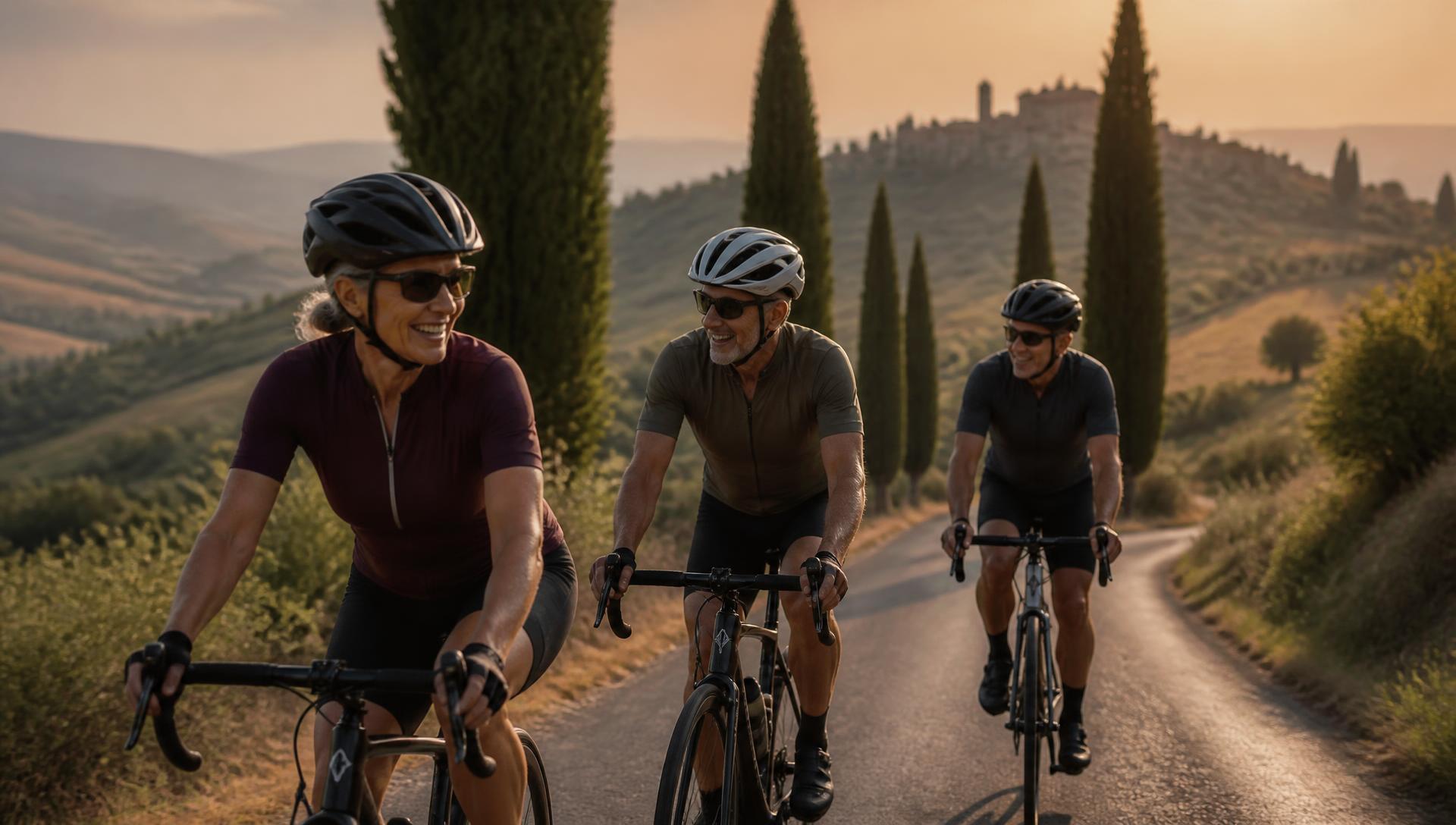
When some people picture a cycling holiday in Europe, they imagine tight cycling jerseys, steep mountain passes and groups of experienced riders moving quickly through the countryside.
Those trips certainly exist.
But they represent only one end of a very large spectrum.
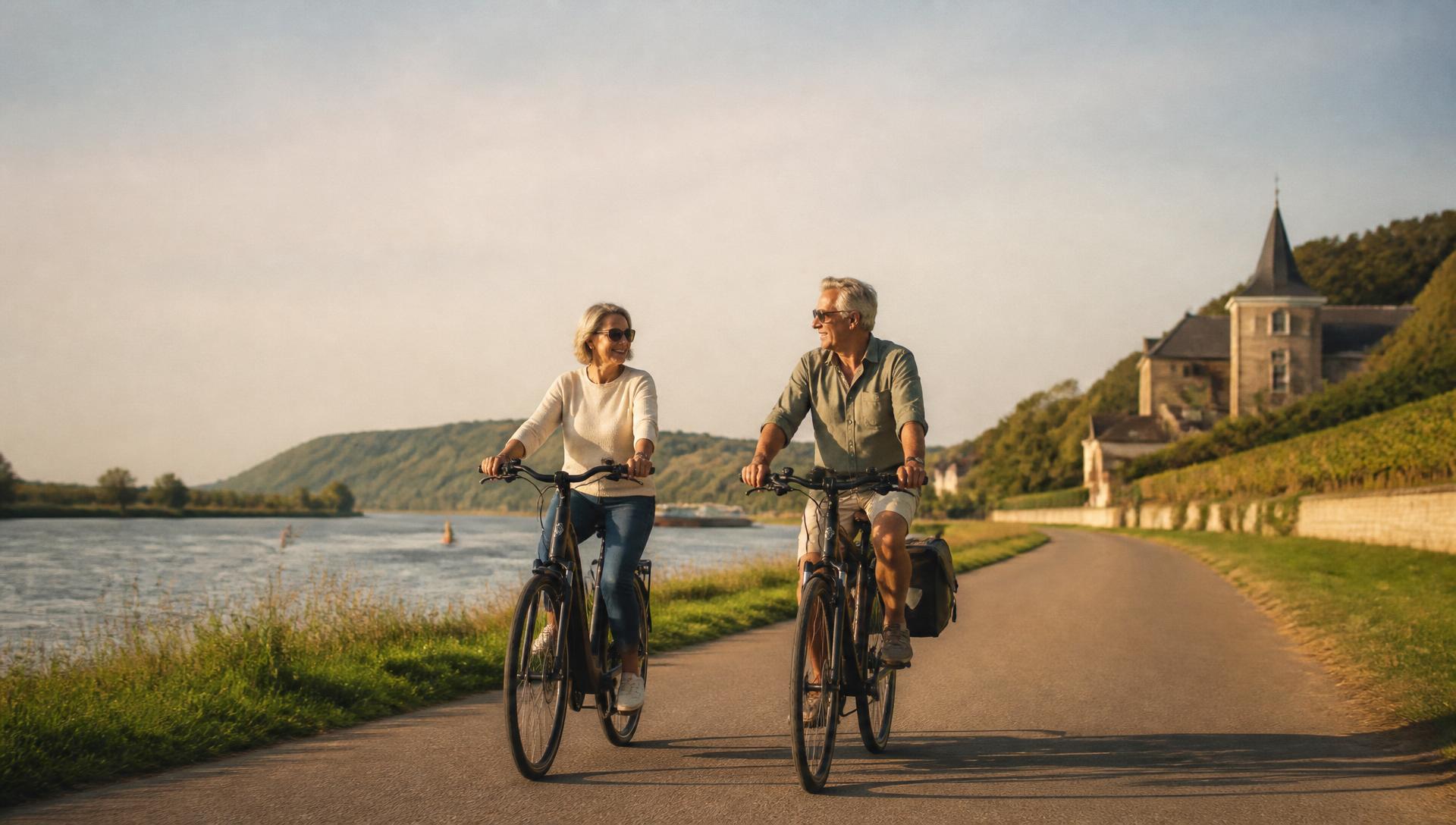
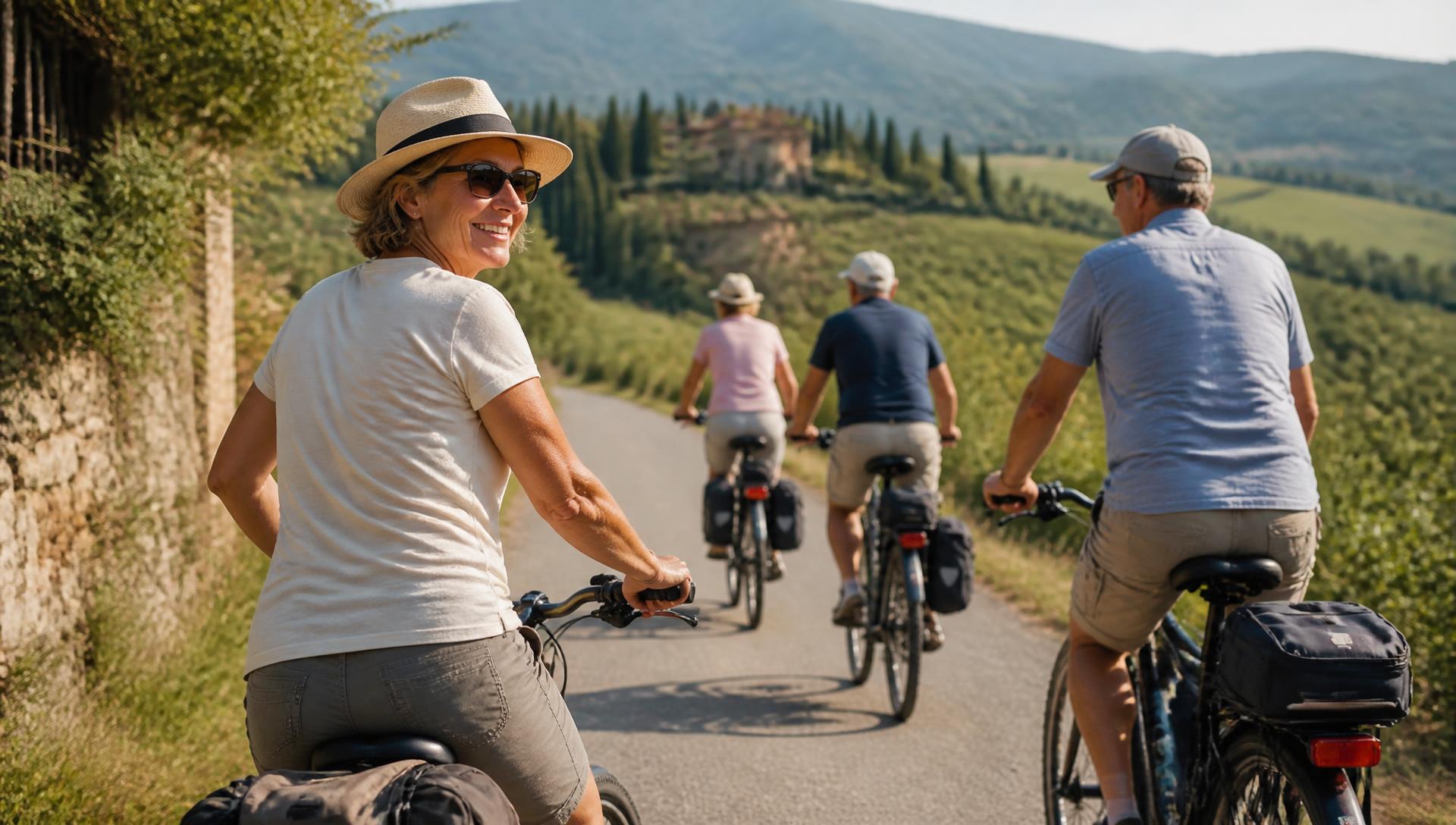
A cycling holiday can also mean riding at a comfortable pace beside a river, stopping for lunch in a small village, exploring vineyards and historic towns, or returning to a boat that moves on to the next destination while you sleep.
There are guided trips, self guided trips, bike and barge journeys, e-bike holidays and leisurely cycling itineraries designed around sightseeing rather than speed.
That is why your regular cycling speed tells us relatively little about whether a cycling holiday is right for you.
The first step is understanding the trip.
§ ii
What Does "Easy" Actually Mean?
This is where things can get confusing.
There is no single universal definition of an easy, moderate or challenging cycling holiday.
One company may call a route easy while another uses terms such as leisurely, recreational or easy to moderate.
Current cycling operators also use different combinations of daily distance, elevation, road surface and expected time on the bike to determine their difficulty grades.
As a useful reference point, some easier European cycling itineraries can involve approximately 20 to 40 kilometres of riding in a day. Other recreational trips may go farther.
But kilometres by themselves don’t tell the whole story.
Thirty kilometres on a flat riverside cycle path can feel very different from thirty kilometres of repeated climbing.
Forty kilometres with a leisurely lunch, coffee stops and most of the day available can feel very different from forty kilometres ridden quickly.
And forty kilometres on one Saturday morning is different again from riding forty kilometres Monday, Tuesday, Wednesday and Thursday.
When you look at a cycling holiday, look beyond the distance.
§ iii
Five Things That Matter More Than Your Average Speed
If you’re trying to decide whether a cycling holiday suits you, I would pay attention to five things.
1. Daily Distance
How far will you actually ride on a typical cycling day?
Don’t look only at the average. Look for the longest day too.
If most days are around 30 kilometres but one day is 65 kilometres, you want to know that before you arrive.
2. Elevation
This is one of the most important numbers on any cycling itinerary.
A relatively short ride with substantial climbing can be considerably more demanding than a longer ride on flat terrain.
If hills aren’t something you enjoy, don’t assume you simply need to become fitter.
You may be happier choosing a flatter destination.
3. Time in the Saddle
Distance doesn’t always tell you how long you’ll be riding.
Road surface, sightseeing stops, hills and riding pace all affect your day.
For recreational travellers, comfort on the bike can sometimes matter as much as cardiovascular fitness.
4. Consecutive Riding Days
This one is easy to overlook.
You might comfortably ride 50 kilometres at home and feel great afterwards.
The important question is how you’ll feel when breakfast finishes the next morning and it’s time to get back on the bike.
A cycling holiday usually isn’t one big ride.
It’s a series of rides.
5. Terrain and Surface
Smooth paved cycle paths, country roads, gravel tracks and uneven trails create very different experiences.
Look closely at the itinerary rather than relying only on words such as “easy.”
§ iv
A Simple PEDAL & PORT Rider Check
I don’t think travellers need another complicated fitness test.
Instead, think about which of these descriptions sounds most like you.
The Comfortable Rider
You enjoy cycling recreationally and prefer a relaxed pace.
You like stopping, sightseeing, having lunch and enjoying where you are rather than watching your average speed.
Flatter routes, shorter riding days, bike and barge experiences and easier cycling itineraries may be a great place to begin.
The Active Rider
You ride fairly regularly and are comfortable spending several hours on a bicycle.
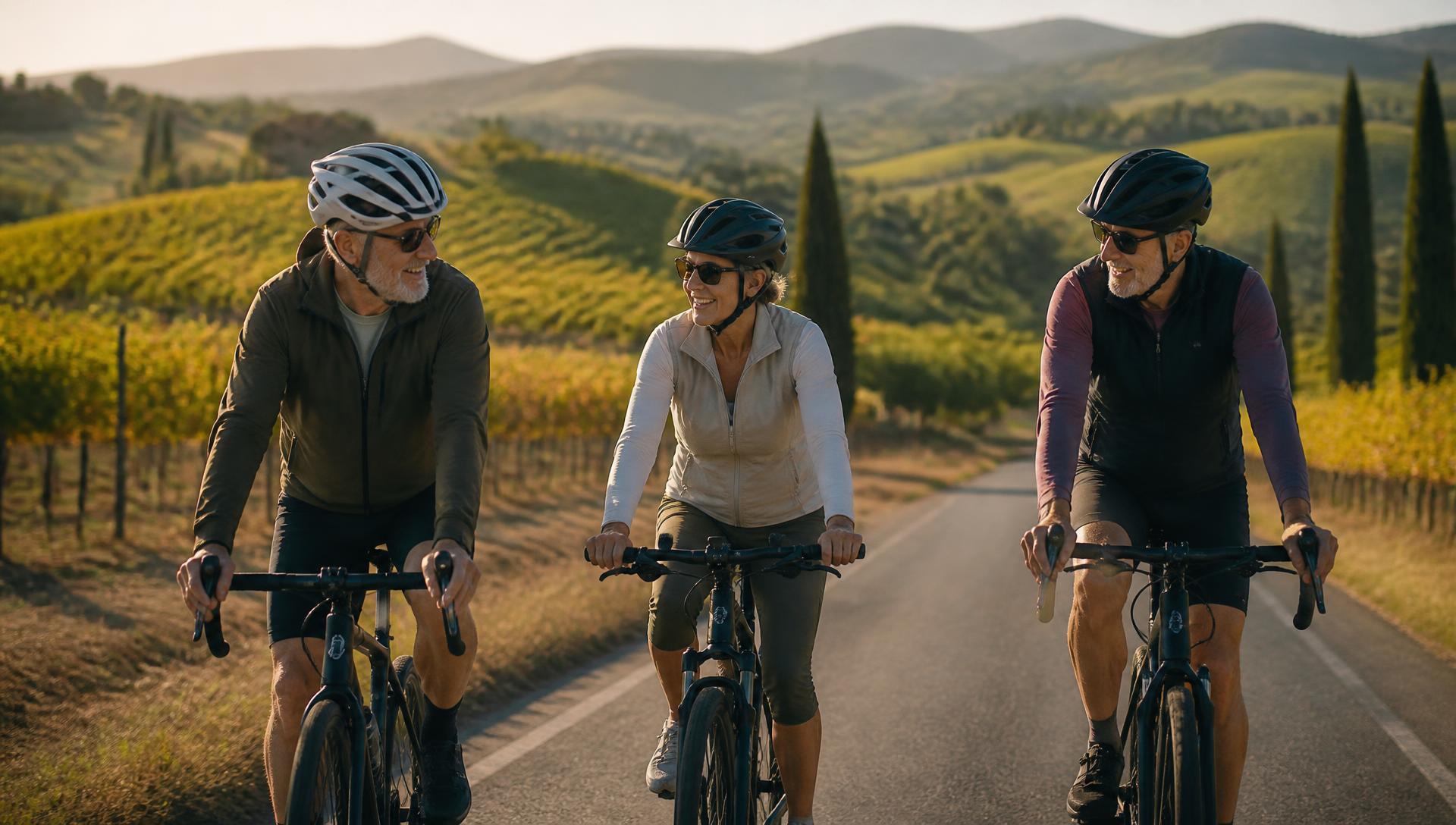
Moderate distances and rolling terrain don’t concern you, and you’re happy doing some climbing when the destination makes it worthwhile.
You’ll probably have a much wider selection of cycling holidays available to you.
The Experienced Rider
Longer distances and challenging terrain are part of the attraction.
You might actively seek mountain routes, bigger climbing days or itineraries where the riding itself is one of the primary challenges of the holiday.
Europe can certainly give you plenty of those.
The E-Bike Explorer
You want the experience of travelling by bicycle but would appreciate assistance with hills, longer distances or keeping pace with someone who rides differently than you do.
That doesn’t make the experience less meaningful.
It may simply make a different kind of cycling holiday possible.
These aren’t official cycling grades. They’re just a useful way to start thinking about what kind of experience would make you excited to get on the bike each morning.
§ v
Can You Comfortably Ride 30 or 40 Kilometres?
For someone considering an easier European cycling holiday, this can be a useful question.
If you can comfortably ride approximately 30 to 40 kilometres at a recreational pace, take a break, have something to eat and still feel reasonably good afterwards, that gives you a useful starting point when looking at easier itineraries.
It isn’t a pass or fail test.
A flatter 40 kilometre route might be easier than a hilly 25 kilometre route.
An e-bike changes the equation.
So does luggage support.
So does the weather.
And so does having an entire day to complete the ride instead of trying to squeeze it into a two hour training window at home.
Use distance as a reference point, not a verdict.
§ vi
The Question People Forget: Can You Do It Again Tomorrow?
This may be the best test of all.
A cycling holiday is different from your usual weekend ride because your body may be doing something similar again the following morning.
You don’t necessarily need to start doing huge training distances.
Instead, as your trip approaches, try riding on consecutive days.
Ride Saturday.
Then ride again Sunday.
Notice how your legs, hands, shoulders and backside feel when you get back on the bicycle.
You may discover that you’re completely comfortable.
Or you may discover that your legs are fine but your bike setup needs attention.
That’s useful information to learn at home rather than on Day Three somewhere in Europe.
For a cycling holiday, consistency can matter more than one big ride.
§ vii
Hills Can Change Everything
Distance is easy to understand.
Elevation is where many travellers get surprised.
Imagine two 40 kilometre rides.
One follows a river valley.
The other climbs through vineyards and hilltop villages.
Same distance. Completely different day.
When you’re comparing cycling holidays, look for elevation information along with daily kilometres.
If an itinerary doesn’t provide enough information about the terrain, ask.
And if you love the destination but don’t love the climbing, there may be another answer — sometimes it’s simply choosing a cooler month, when the same hills feel considerably kinder.
§ viii
Does an E-Bike Mean You Don't Need to Be Fit?
E-bikes have changed cycling travel.
Many European cycling operators now offer electric bikes on a wide range of itineraries, from relaxed river routes to more demanding trips.
But an e-bike isn’t a motorcycle.
You’re still pedalling.
You’re still spending time on a bicycle.
You’re still steering, braking, balancing and riding through the landscape.
What electric assistance can do is make hills more manageable, reduce the physical cost of longer distances and help riders with different abilities enjoy the same trip together.
That last point may be particularly important.
§ ix
What If Your Partner Is a Stronger Cyclist?
This is one of the most practical reasons to consider an e-bike.
Cycling partners aren’t always evenly matched.
Maybe one person rides several times a week while the other enjoys an occasional recreational ride.
Maybe one loves hills and the other would happily remove hills from the planet.
That doesn’t mean they need different vacations.
Electric assistance can sometimes close that gap and allow two people to share the same cycling experience without one person constantly waiting or the other constantly chasing.
“After all, you’re travelling together to experience Europe. You’re not auditioning for a cycling team.”
§ x
How Should You Prepare for Your First Cycling Holiday?
You don’t necessarily need a complicated training program.
You need familiarity.
Ride regularly before you leave.
Gradually spend more time on the bicycle.
If your itinerary includes hills, include some hills in your rides at home.
Try a few longer rides.
Try riding on consecutive days.
Make sure you’re comfortable shifting gears, braking and handling the type of bicycle you’ll be using.
And perhaps most importantly, don’t wait until two weeks before departure to discover that sitting on a bicycle for several hours feels unfamiliar.
You aren’t training to win anything.
You’re preparing your body so the cycling enhances the holiday instead of becoming the only thing you think about.
If you’re planning a cycling holiday in your fifties, sixties or beyond, that’s also the starting point for choosing a cycling holiday after 50.
§ xi
Some Cycling Holidays Are Much Easier Than Others
Europe gives cyclists an enormous range of choices.
If this is your first cycling holiday, you don’t have to begin with the hardest one.
Flat river corridors, dedicated cycling paths, parts of the Netherlands and leisurely bike and barge routes can provide wonderful introductions to cycling travel.
Other destinations offer rolling countryside and moderate climbing.
And then there are places where the mountains are very much part of the story.
None is inherently better.
The question is which experience fits you.
This is one reason I like the idea of cycling travel so much.
The bicycle allows you to experience a destination at a completely different speed.
You’re moving fast enough to see somewhere new every day, but slowly enough to notice the villages, landscapes, cafés, people and little moments you’d miss through the window of a tour bus.
The riding is part of the experience.
It doesn’t have to dominate it.
§ xii
So, Are You Fit Enough?
Probably a better question is:
What cycling holiday would you enjoy right now?
If you enjoy recreational cycling, there are European cycling experiences designed for recreational cyclists.
If you want more challenge, there are plenty of those too.
If hills make you nervous, look at flatter routes.
If distance concerns you, look at shorter stages.
If you love a destination but aren’t sure about the physical demands, consider an e-bike.
And if you aren’t sure how to interpret all the distances, elevation numbers and difficulty ratings, ask someone to help you compare them.
“The goal isn’t to be fit enough for every cycling holiday. It’s to find a cycling holiday that’s right for you.”
Because the best cycling holiday isn’t the one with the biggest climbs, longest distances or fastest average speed.
It’s the one where you finish the day already looking forward to getting back on the bike tomorrow.