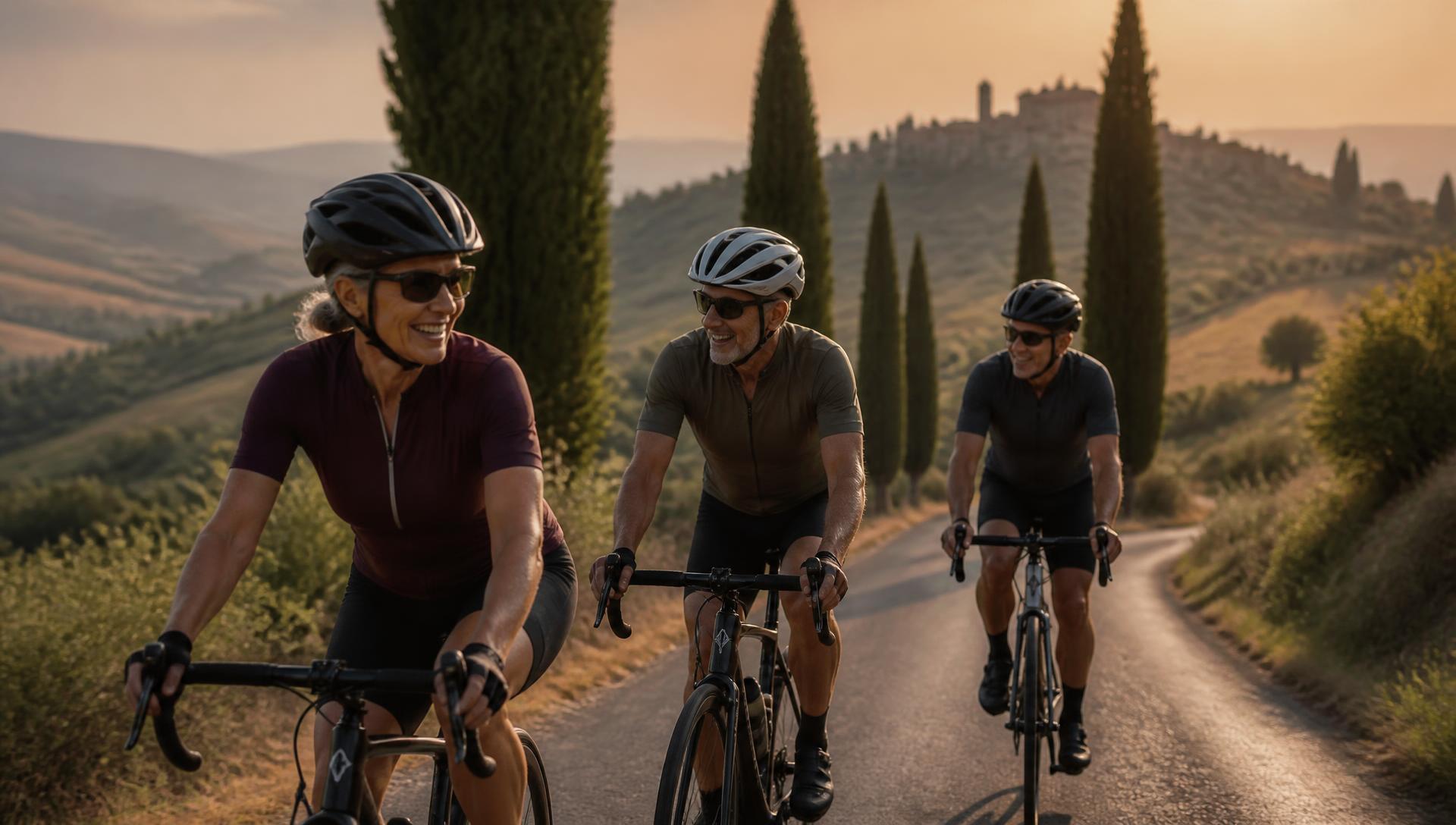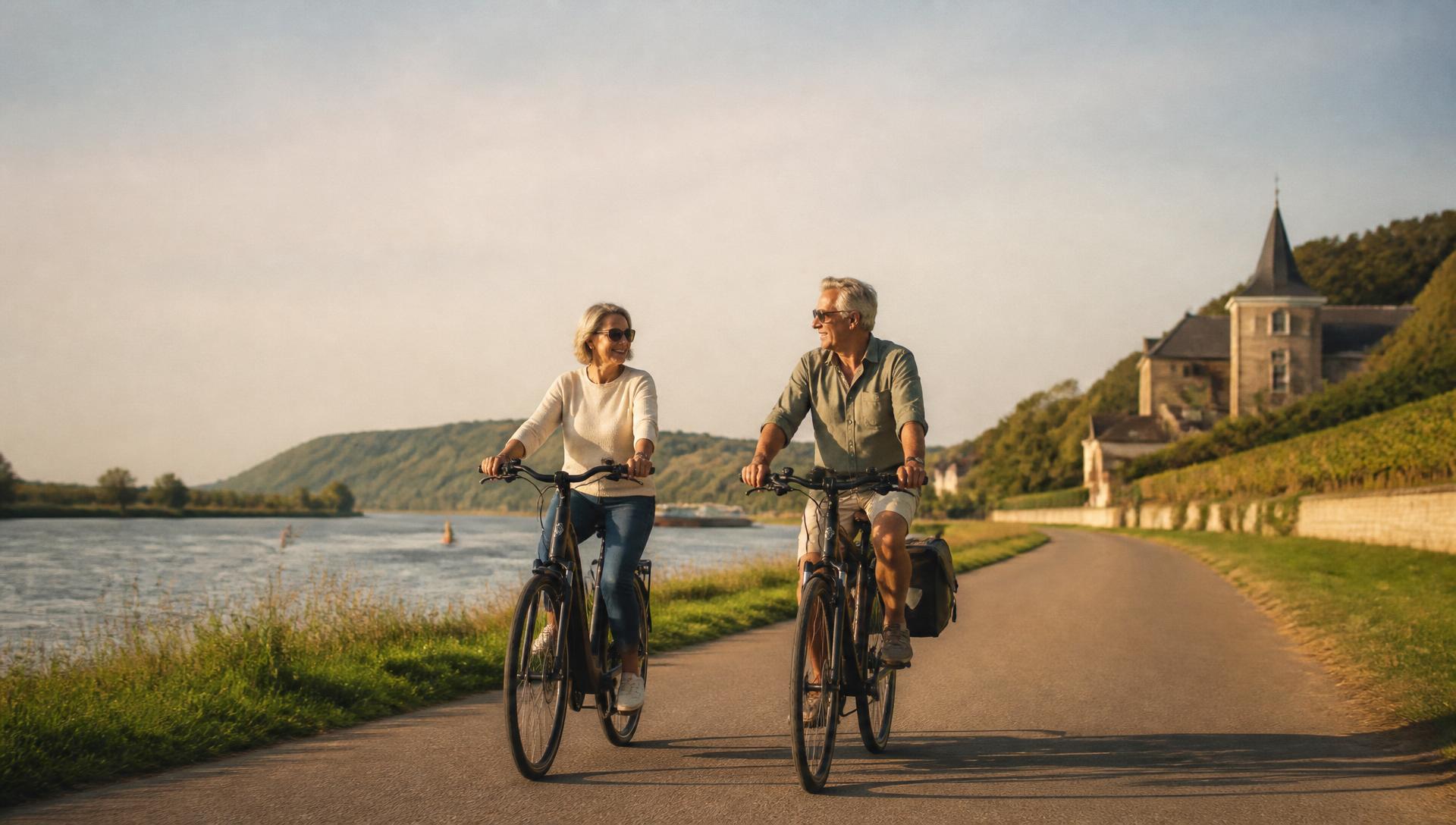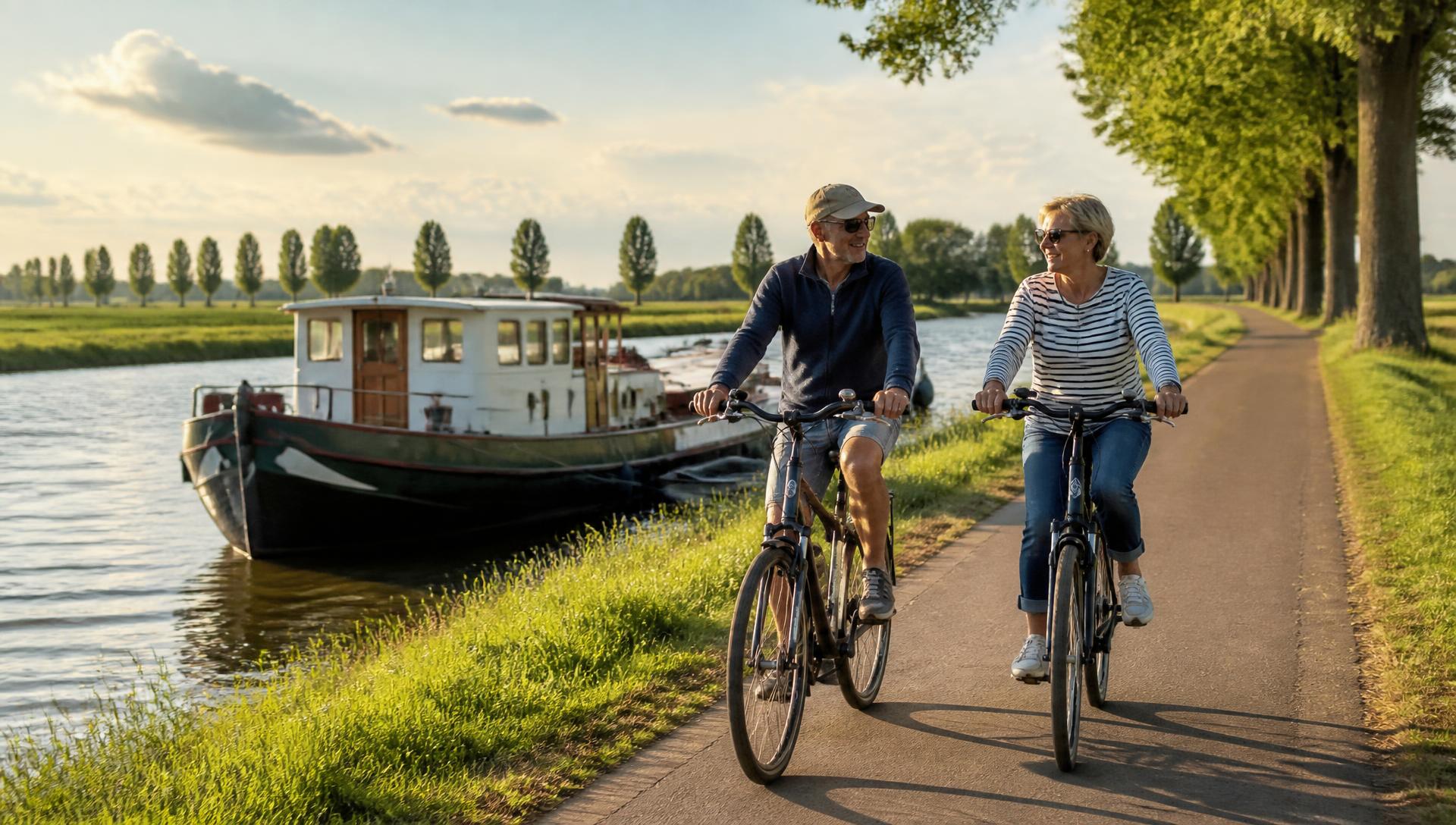
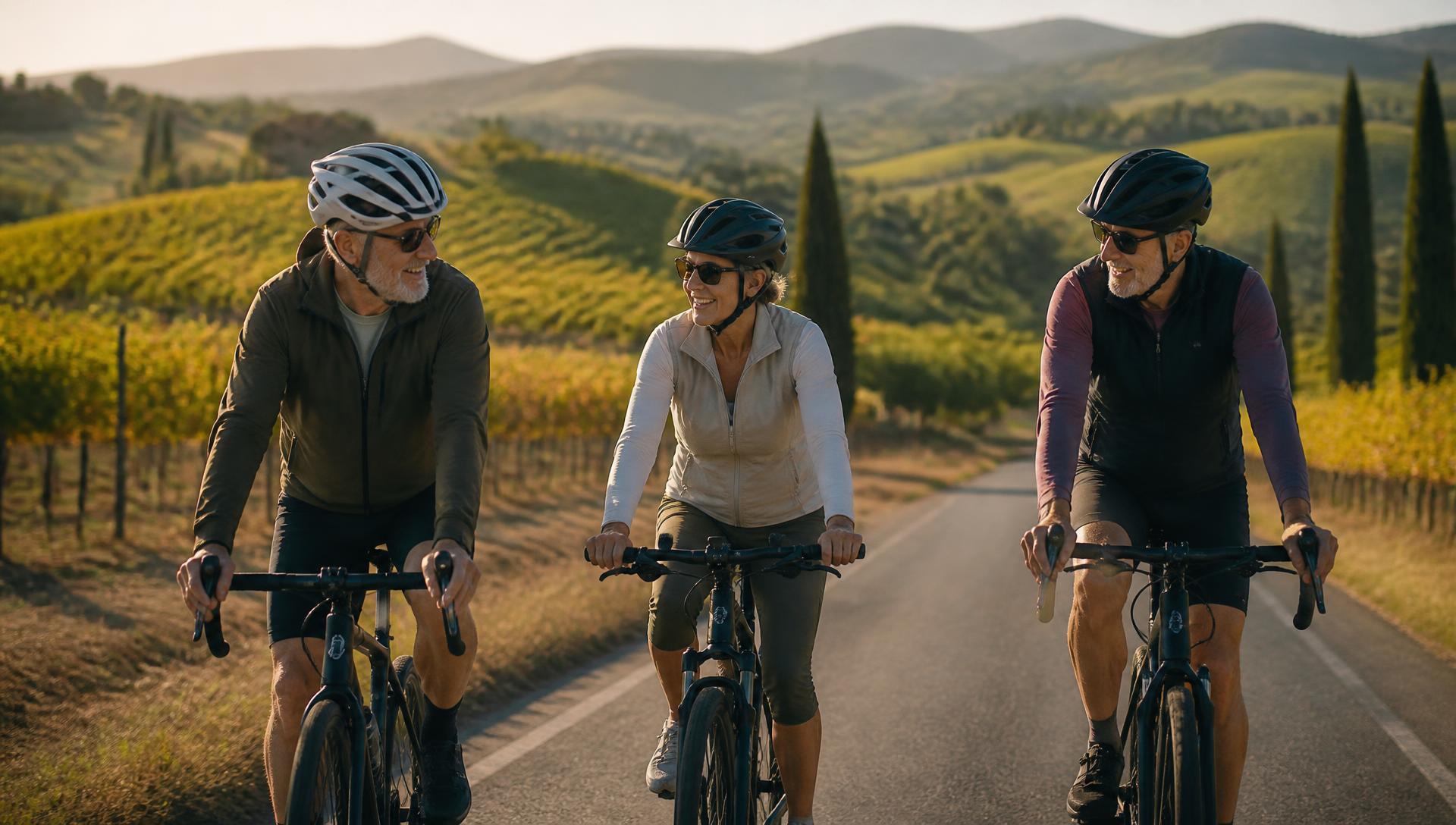
There is something special about seeing Europe from a bicycle.
The pace is slower. The scenery feels closer. A village becomes somewhere you stop rather than somewhere you pass. A vineyard, café or riverside path becomes part of the journey.
There is no single best month to cycle Europe. February in southern Spain can offer fantastic riding while northern Europe is still deep in winter.
The better question is: where in Europe should you cycle at different times of the year? That’s what this guide is designed to help you answer.
For most recreational cyclists, May and September are two of the best months for a cycling holiday in Europe. Temperatures are often comfortable for riding, many popular cycling regions are fully operating, and you can avoid some of the heat and crowds of peak summer.
The best time to ride through Tuscany isn’t necessarily the best time to climb in the Dolomites. Mallorca, Portugal, the Danube and Scandinavia each have their own ideal windows.
And as European summers become hotter, choosing the right destination for the right month matters more than ever.
Here’s how to find your cycling sweet spot.
§ i
The Short Answer: When Is the Best Time to Cycle in Europe?
For most recreational cyclists, May and September are two of the strongest overall choices.
Both months tend to sit in the space between the cold and the crowds — long enough days to ride comfortably, mild enough temperatures to enjoy several hours in the saddle, and destinations that are fully awake rather than fully overwhelmed.
If you remember one principle, make it this one:
- Follow the temperature. Ride southern Europe in spring and fall. Head north or higher into the mountains during summer.
Almost everything else in this guide is a refinement of that single idea.
§ ii
Europe Cycling Calendar at a Glance
A month-by-month view of where the riding tends to be at its best. Ratings are editorial guidance for recreational cycling travellers, not a weather forecast.
- January
- Overall★★Where to rideCanary Islands, southern Spain
- February
- Overall★★★Where to rideCanary Islands, Mallorca, Algarve
- March
- Overall★★★½Where to rideMallorca, Andalusia, Algarve
- April
- Overall★★★★½Where to rideMallorca, Tuscany, Portugal, southern Europe
- May
- Overall★★★★★Where to rideItaly, France, Spain, Portugal, Central Europe
- June
- Overall★★★★½Where to rideAlps, Danube, Slovenia, northern Europe
- July
- Overall★★★Where to rideAlps, Dolomites, Scandinavia
- August
- Overall★★★Where to rideAlps, Scandinavia, northern Europe
- September
- Overall★★★★★Where to rideTuscany, Mallorca, France, Danube, Portugal
- October
- Overall★★★★Where to rideItaly, Spain, Portugal, Mediterranean
- November
- Overall★★½Where to rideSouthern Spain, Portugal, islands
- December
- Overall★★Where to rideCanary Islands and southern destinations
| Month | Overall | Where to ride |
|---|---|---|
| January | ★★ | Canary Islands, southern Spain |
| February | ★★★ | Canary Islands, Mallorca, Algarve |
| March | ★★★½ | Mallorca, Andalusia, Algarve |
| April | ★★★★½ | Mallorca, Tuscany, Portugal, southern Europe |
| May | ★★★★★ | Italy, France, Spain, Portugal, Central Europe |
| June | ★★★★½ | Alps, Danube, Slovenia, northern Europe |
| July | ★★★ | Alps, Dolomites, Scandinavia |
| August | ★★★ | Alps, Scandinavia, northern Europe |
| September | ★★★★★ | Tuscany, Mallorca, France, Danube, Portugal |
| October | ★★★★ | Italy, Spain, Portugal, Mediterranean |
| November | ★★½ | Southern Spain, Portugal, islands |
| December | ★★ | Canary Islands and southern destinations |
PEDAL & PORT Picks
- Best overall month: September
- Best spring month: May
- Best for southern Europe: April, May, September and October
- Best for the Alps and Dolomites: late June through early September
- Best for avoiding peak summer heat: May and September
- Best for a winter cycling escape: Canary Islands, southern Spain and Portugal
§ iii
Why Europe Doesn’t Have One Cycling Season
Europe is often discussed as though it were a single climate. It isn’t. For cycling purposes, it helps to think of four broad regions, each with its own rhythm.
Mediterranean and Southern Europe
Italy, Spain, Portugal, southern France, Mallorca, Greece and the islands. This is where the cycling year starts earliest and finishes latest. Spring and fall generally offer the most comfortable riding, while midsummer can bring significant heat, particularly inland.
Central Europe
Austria, Germany, the Czech Republic, Slovenia, Hungary and the Danube corridor, along with the Netherlands and Belgium farther west. These destinations tend to offer a broad and forgiving window from roughly May through September.
The Alps and Dolomites
High mountain cycling has the shortest season of all. Roughly late June through early September is when the higher passes and mountain routes are most reliably in season. Earlier or later, altitude and weather begin making the decisions for you.
Northern Europe
Denmark, Sweden, Norway and the Baltic coast become increasingly attractive during June, July and August, when days are long and temperatures are pleasant for riding.
Which leads to the point most travellers miss.
“July and August are not bad cycling months. They are months when destination selection matters much more.”
§ iv
April: Europe’s Cycling Season Awakens
April is when southern Europe begins to feel like cycling country again.
Mallorca fills with riders. Portugal and Andalusia offer warm but rarely punishing days. Tuscany turns green. Sicily and southern Italy are often already comfortable.
What April gives you:
- Green landscapes before the summer dries them out
- Lower crowds in destinations that become busy later in the year
- Comfortable spring temperatures for several hours of riding
- Wildflowers, blossom and the particular light of early season
What to weigh:
- Rain is a genuine possibility, particularly in the north of the region
- Weather can swing considerably from one day to the next
- High mountain roads and passes may still be closed
Verdict
★★★★½
§ v
May: One of Europe’s Great Cycling Months
If you are planning a first European cycling holiday, May is one of the easiest months to recommend.
Tuscany, Mallorca, Portugal, Provence, the Loire Valley, Burgundy and the Danube cycling routes are all in good form. The landscapes are green, the days are long enough for an unhurried ride, and summer crowds haven’t yet arrived in full.
The temperature point matters more than most travellers expect. A day that feels pleasant while walking a city can feel very different after three or four hours on a bicycle. Moderate conditions aren’t simply nicer — they change how much of the day you actually enjoy.
One honest caveat: recent European weather has shown that significant heat can occasionally arrive earlier than travellers expect, so May should be treated as reliably pleasant rather than guaranteed cool.
Verdict
★★★★★
§ vi
June: Long Days and Expanding Possibilities
June is when the European cycling map begins moving northward and upward.
Austria, Slovenia, the Danube, the Netherlands, Belgium, northern France and the lower Alpine regions are all excellent, and by later in the month the Dolomites begin coming properly into season.
The days are among the longest of the year, which gives you room to start early, stop often and still arrive with the afternoon ahead of you.
The tradeoff is that southern Europe can increasingly experience early summer heat, so a June trip to inland Spain or southern Italy deserves more thought than the same route in May.
Verdict
★★★★½
§ vii
July and August: Choose Your Destination Carefully
Peak summer is not a write-off. It simply asks you to be more deliberate.
Where midsummer tends to shine:
- The Dolomites, French Alps and Swiss Alps, when the high routes are properly in season
- Austria and higher-elevation Central Europe
- Denmark, Sweden and Norway, where long days and moderate temperatures suit cycling well
And where the heat is a factor, the adjustments are practical rather than dramatic: ride earlier in the day, choose shaded or higher-elevation routes, shorten distances where it makes sense, take hydration seriously, and consider a supported trip so the hard logistics aren’t yours to solve in the afternoon sun.
An e-bike can also change the character of a hot, hilly week entirely. If you’re weighing that decision, it’s worth reading about choosing an e-bike or a regular bike before you commit to a summer itinerary.
Verdict
★★★
§ viii
September: Europe’s Cycling Sweet Spot
If I had to choose one month, this would be it. Summer heat often begins easing while warm days remain common. Mountain routes may still be accessible. School holiday pressure decreases. And the wine regions move into harvest, which changes the atmosphere of an entire village.
Tuscany, Mallorca, Portugal, France, Austria and the Danube, northern Italy and selected Alpine regions are all strong.
“September may be the closest Europe gets to a cycling sweet spot.”
A fair qualification: September has become well known, so it isn’t automatically quiet or inexpensive. Popular routes and small-group departures can fill early, and harvest season brings its own visitors. September is the best balance for many travellers, not a secret.
Verdict
★★★★★
§ ix
October: Europe’s Underrated Cycling Month
October is quietly one of the most rewarding months to ride in southern Europe. Portugal, Mallorca, Andalusia, Tuscany, Sicily and southern France often hold comfortable temperatures well into the month, and the light is at its most beautiful.
The tradeoffs are real but manageable: shorter days, more variable weather the farther north you go, and seasonal reductions in some services and accommodation as the season winds down.
It’s also a lovely month to combine cycling with the water. If that idea appeals, read about October in Portugal’s Douro Valley.
Verdict
★★★★
§ x
Choose the Experience First
Sometimes the easiest way to choose a month is to start with the kind of holiday you actually want.
- Comfortable weather without extreme heat: May or September
- Vineyards, food and harvest atmosphere: September or early October
- Alpine climbs: late June through early September
- Green landscapes and spring flowers: April and May
- The longest days: June and July
- Cycling plus the Mediterranean coast: May, June or September
- Bike and river travel: May, June or September
- A winter escape: the Canary Islands, southern Spain or Portugal
If this is your first time, the destination shortlist matters as much as the calendar — our guide to the best cycling holidays in Europe for first-time riders is a good place to begin.
If the water appeals as much as the road, Bike & River Cruise journeys travel beautifully in the shoulder months, when the riverside routes are mild and the ports are unhurried.
And the month can also influence how much independence you want. A hot July week and a soft September week ask different things of a traveller, which is part of the guided or self-guided decision.
§ xi
Is Shoulder Season Always Cheaper?
No.
Shoulder season used to be shorthand for quieter and less expensive. That has changed. May and September have become two of the most popular months for active travel in Europe, and popular months are rarely bargain months. Well-regarded departures can sell out, and the best small-group trips often go first.
The more useful question isn’t which month is cheapest. It’s which month gives you the most for what you spend: comfortable riding, destinations at their best, and a week you actually enjoy rather than endure.
For a fuller picture of where the money goes, see what a European cycling holiday costs.
§ xii
Europe’s Warmer Summers Are Changing Cycling Travel
Recent European summers have included periods of intense heat, and it has changed how thoughtful active travellers plan. This isn’t cause for alarm. It’s cause for planning.
Worth considering before you book a summer trip:
- The regional climate, not simply the country
- Elevation, which often matters more than latitude
- Route difficulty and total climbing
- Shade along the route
- Your daily departure time
- Hydration and refuelling options
- Daily distance
- Whether support is available if the day turns difficult
“The traditional European summer vacation calendar isn’t necessarily the ideal European cycling calendar.”
§ xiii
What About Active Travellers Over 50?
Travellers who are retired, semi-retired, self-employed or otherwise flexible hold a genuine advantage: they can travel outside school holiday periods.
That flexibility is worth using. It generally means milder riding, more room on the roads and paths, easier access to the good restaurants and small hotels, and a pace that leaves space for the rest of the day.
Because the ride is only part of it. The market in the morning, the long lunch, the hill town in the late afternoon — that’s the holiday too.
“The goal isn’t to survive the ride. The goal is to enjoy it.”
The bicycle is part of the experience, not the entire experience.
And if the honest question underneath all of this is whether you’re ready, that has a clearer answer than most people expect. Read how fit you need to be for a cycling holiday before you rule anything out.
§ xiv
Does Your Type of Cycling Change the Best Time to Go?
It does. Considerably.
Road Cycling
Longer distances and sustained climbing make heat the deciding factor. Spring and fall in the south; midsummer in the mountains and the north.
Recreational Cycling
Shorter days in the saddle open the calendar considerably. April through October works across much of Europe, provided the destination suits the month.
E-Bike Touring
An e-bike widens the range of terrain you can comfortably enjoy, which makes hillier regions accessible earlier and later in the season. But there’s a limit worth remembering.
An e-bike helps with the hills. It doesn’t eliminate heat.
Bike and Boat or Bike and River Travel
River and canal routes tend to be gentler and flatter, and the season generally runs from spring into autumn. May, June and September are usually the sweet spots. If the format is new to you, start with bike and boat tours in Europe, then consider how active an active river cruise really is before deciding which side of that line suits you.
§ xv
So, When Should You Go?
For most recreational cyclists, start with May and September.
Going south? Consider spring and fall.
Going north? Summer becomes more attractive.
Heading into the mountains? Wait until the higher routes are properly in season.
The best cycling holiday isn’t necessarily the one with the hottest weather, the longest distance or the most famous climb.
It’s the one where the weather, destination, route and pace all come together.
Where you finish the ride tired enough to know you’ve had an adventure, but with enough energy left to enjoy where the bicycle brought you.
That’s when cycling becomes more than exercise.
It becomes a way to experience the world.
§
Frequently Asked Questions
What is the best month for a cycling holiday in Europe?
For many recreational cyclists, May and September are two of the strongest overall choices. Both can offer comfortable riding conditions across numerous European cycling regions. The ideal month ultimately depends on the destination.
Is September a good month for cycling in Europe?
Yes. September is one of the strongest overall months for cycling across large parts of Europe, particularly in Italy, France, Portugal, Mallorca, Austria and many Central European destinations.
Is July too hot for cycling in Europe?
It can be in southern and inland Mediterranean destinations. But July can be excellent for cycling in the Alps, Dolomites, Scandinavia and other northern or higher-elevation regions.
When is cycling season in Europe?
The broad European cycling season runs approximately from April through October, but it varies significantly by region. Southern destinations can offer winter cycling, while high Alpine routes have a much shorter summer season.
Is May a good time to cycle in Europe?
Yes. May is one of Europe's strongest cycling months, particularly across southern and central Europe. Temperatures are often comfortable, landscapes are green and peak summer tourism has not yet reached full intensity.
Where can you cycle in Europe during winter?
The Canary Islands are one of Europe's strongest winter cycling destinations. Southern Spain and parts of Portugal can also offer excellent opportunities depending on regional weather.