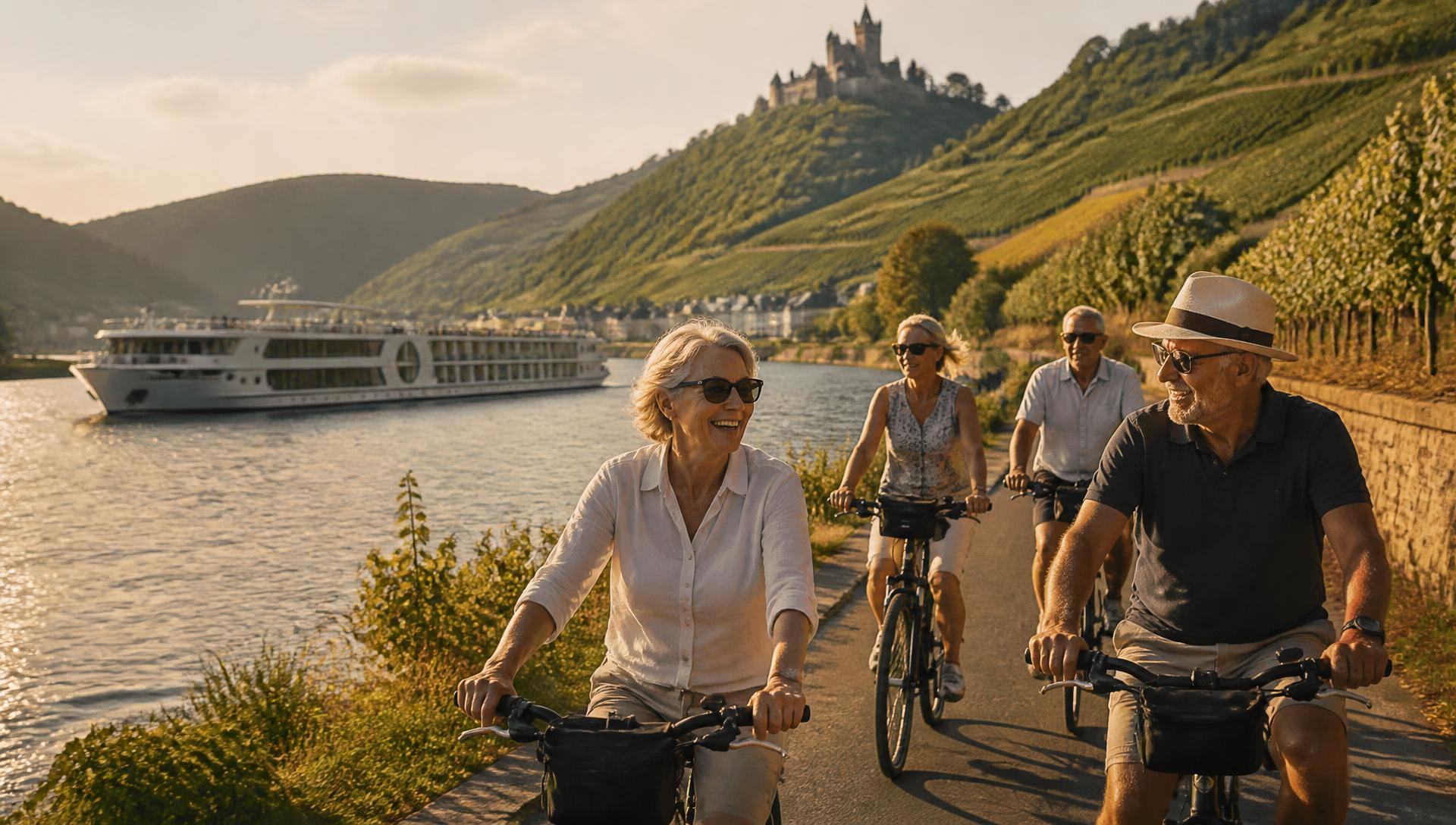
When I first started looking more seriously at river cruising, one of my questions was pretty simple:
Would it be active enough for someone like me?
I love cycling. I enjoy exploring on foot. When I travel, I don’t want to spend the entire trip watching the world go by. I want to get out into it.
What I discovered is that “active river cruising” can mean very different things depending on the river, cruise line, itinerary and sailing.
And understanding that difference can completely change how you choose a river cruise.
§ i
Active Doesn’t Have to Mean Athletic
One of the things I like about active travel is that there doesn’t need to be a single definition of what “active” means.
For one traveller, a great day might mean exploring a European town on foot, climbing to a viewpoint and wandering through a local market.
Someone else might want to get on a bicycle and ride through the countryside.
Another traveller may prefer a leisurely excursion in the morning followed by an afternoon enjoying the ship.
They’re all travelling actively. They’re simply doing it at different levels.
For PEDAL & PORT, I like to think about those differences in three broad categories.
Relaxed
You enjoy moving and exploring, but activity isn’t the centre of your vacation.
Think easy walking, sightseeing, exploring towns and villages and plenty of time to enjoy the ship and destination.
Active
You intentionally look for opportunities to move.
Longer walks, hiking, casual cycling, exploring on foot and, where offered, activities such as kayaking might appeal to you.
Active Plus
Activity becomes a significant part of the travel experience.
Longer cycling excursions, more demanding hikes and dedicated active or multi-activity itineraries become part of why you chose the trip in the first place.
This is a PEDAL & PORT way of thinking about travel, not an official cruise-industry rating system.
And that’s important because activity levels and available excursions can vary significantly by cruise line, ship, itinerary, destination, season and sailing.
The best question isn’t:
“Is river cruising active?”
It’s:
“Can I find a river cruise that matches the way I like to travel?”
Increasingly, the answer can be yes.
§ ii
River Cruising Has Changed
The traditional picture of river cruising is pretty easy to imagine.
Beautiful scenery. Historic towns. Guided sightseeing. Great meals. A comfortable ship carrying you from one destination to another.
All of that still exists.
But some river cruise companies now offer much more choice in how travellers experience those destinations.
AmaWaterways, for example, promotes guided hiking and cycling among its excursion choices on selected itineraries.
Avalon Waterways organizes many of its excursion choices around Classic, Discovery and Active experiences. Depending on the itinerary, active options can include activities such as cycling, hiking and kayaking.
That means two people can potentially experience the same destination quite differently.
And I think that’s where river cruising becomes particularly interesting for active travellers.
§ iii
Yes, Cycling Can Be Part of River Cruising
This was naturally one of the first things that caught my attention.
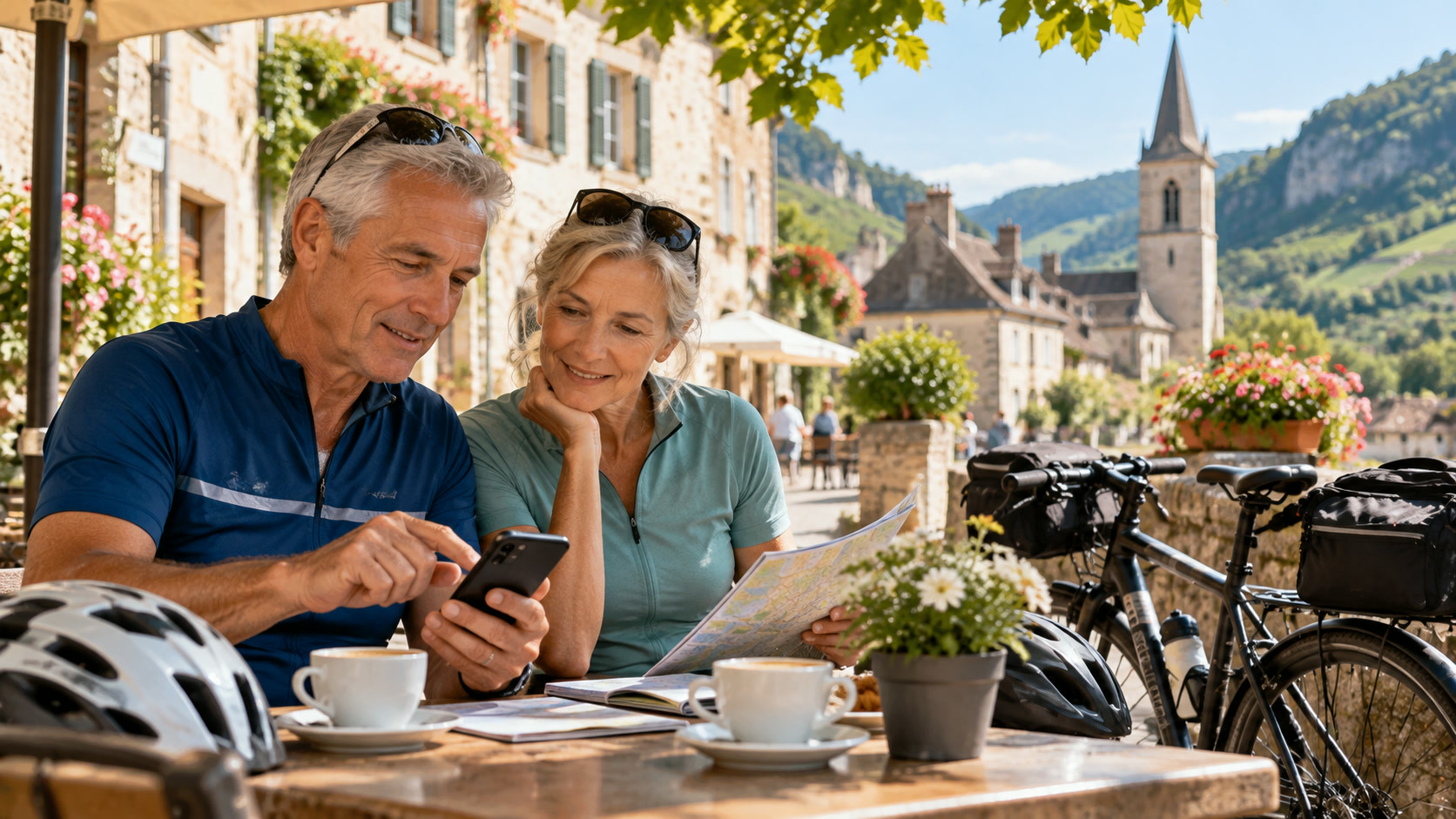
Imagine waking up somewhere along a European river, having breakfast aboard the ship and then heading out to explore part of the region by bicycle.
Later, you return to the ship and continue your journey.
That’s a very different experience from simply seeing the countryside through a bus window.
But there’s an important distinction.
A river cruise with a cycling excursion isn’t necessarily the same thing as a cycling vacation that uses a river cruise ship or boat as its travelling base.
At one end, cycling may be one optional activity among many.
At the other, cycling is one of the primary reasons you’re taking the trip.
Companies such as Backroads operate dedicated river cruise cycling journeys where riding is a major component of the overall experience.
Both can be fantastic.
They’re simply designed for different travellers.
If you’re curious about how cycling and river cruising can complement one another, I’ve explored that idea further in Why River Cruising and Cycling Are the Perfect Pair.
§ iv
Walking and Hiking May Matter Even More
Cycling gets a lot of my attention for obvious reasons, but active travel doesn’t begin and end with a bicycle.
Europe’s river regions naturally lend themselves to exploring on foot.
Historic city centres.
Vineyards.
Riverfront paths.
Castles.
Hillside villages.
Markets.
Viewpoints.
Sometimes the most memorable part of a day isn’t a major excursion at all. It’s simply having enough freedom to walk, explore and discover something you weren’t expecting.
For many travellers, that’s the sweet spot.
You don’t necessarily want a strenuous adventure holiday.
You just don’t want to be passive.
§ v
You Don’t Have to Do Everything Together
This may be one of the most overlooked advantages of having activity choices.
Imagine two people travelling together.
One loves cycling.
The other would rather take a walking tour.
Or perhaps one person wants a more demanding excursion while the other prefers something relaxed.
That doesn’t automatically mean they need completely different vacations.
On itineraries offering multiple excursion choices, they may be able to choose different experiences during part of the day and reconnect later aboard the ship.
For couples and friends with different interests or activity levels, that flexibility can matter more than finding the most active cruise possible.
Choice is often the real luxury.
§ vi
Does the River Make a Difference?
Absolutely.
Different European rivers create very different travel experiences.
The Douro
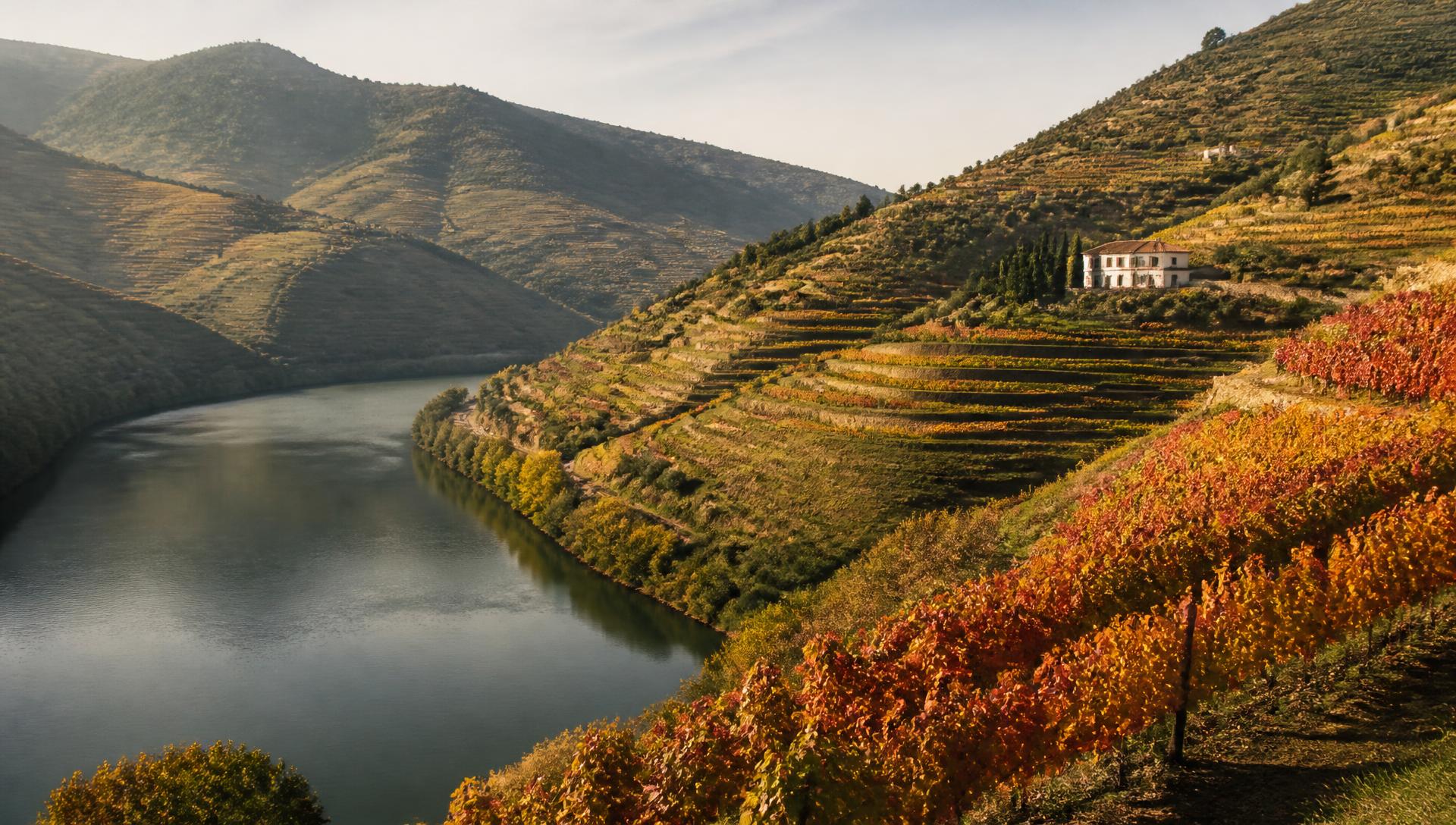
Portugal’s Douro Valley combines river scenery, vineyards, historic communities and dramatic landscapes.
It’s one reason I’ve become increasingly interested in Portugal as an active travel destination.
If the Douro has caught your attention too, you can explore our Portugal Collection, including my look at travelling the Douro in October.
The Rhine
The Rhine offers an entirely different atmosphere with castles, historic towns, vineyards and major European cities along the broader journey.
Some Rhine itineraries offer active excursion choices alongside traditional sightseeing.
The Danube
The Danube connects an extraordinary collection of cities, towns and landscapes across Central Europe and offers a broad range of itinerary styles.
If you’re deciding between two of Europe’s best-known rivers, I’ve put together a separate guide: Rhine vs. Danube: Which European River Cruise Is Right for You?
There isn’t a universal winner.
The better river is the one that fits how you want to experience Europe.
§ vii
What About the Cruise Lines?
This is where research becomes important.
Different river cruise companies approach active travel differently.
AmaWaterways offers active excursion choices such as hiking and cycling on selected itineraries.
Avalon Waterways has developed its Classic, Discovery and Active approach, giving travellers different ways to experience destinations on many itineraries.
Emerald Cruises also offers active experiences through its EmeraldACTIVE program on selected journeys.
And then there are companies such as Backroads where cycling or hiking can be central to the trip itself.
I wouldn’t choose a cruise line simply because its website uses the word active.
Look at the actual sailing.
What excursions are offered?
How difficult are they?
How frequently are they available?
Are bicycles provided?
Are there alternatives?
That’s where the details matter.
§ viii
Who Is Active River Cruising Really For?
I think this style of travel can be particularly interesting for people who enjoy both activity and comfort.
You might love cycling without wanting to cycle every day.
You might enjoy hiking but also appreciate a great dinner and a comfortable place to sleep.
You may want to explore several destinations without packing and unpacking constantly.
And you might enjoy sharing those experiences with other people.
That’s a very different proposition from choosing between an “active vacation” and a “cruise.”
You can potentially have elements of both.
For active adults who want to continue exploring as they travel, that’s an exciting combination.
§ ix
Five Questions I’d Ask Before Booking
If staying active matters to you, don’t rely solely on the words “active excursion” in a brochure.
Ask more specific questions.
1
What active excursions are actually offered on my sailing?
Look at your specific itinerary rather than the cruise line generally.
2
How difficult are they?
A leisurely bicycle ride and a challenging hill ride are very different experiences.
3
Are bicycles or e-bikes provided?
Availability, equipment and policies vary.
4
Do active excursions need to be reserved in advance?
Some experiences may have limited capacity.
5
What if the people I’m travelling with prefer different activity levels?
Look for itineraries offering genuine choice rather than requiring everyone to experience the destination the same way.
Those five questions can tell you much more than whether a cruise is marketed as “active.”
§ x
The Best Trip Is the One That Fits You
I’ve learned something through cycling that applies equally well to travel:
The best experience isn’t necessarily the hardest one.
It’s the one that makes you want to get out there.
For some people, that means riding through European countryside.
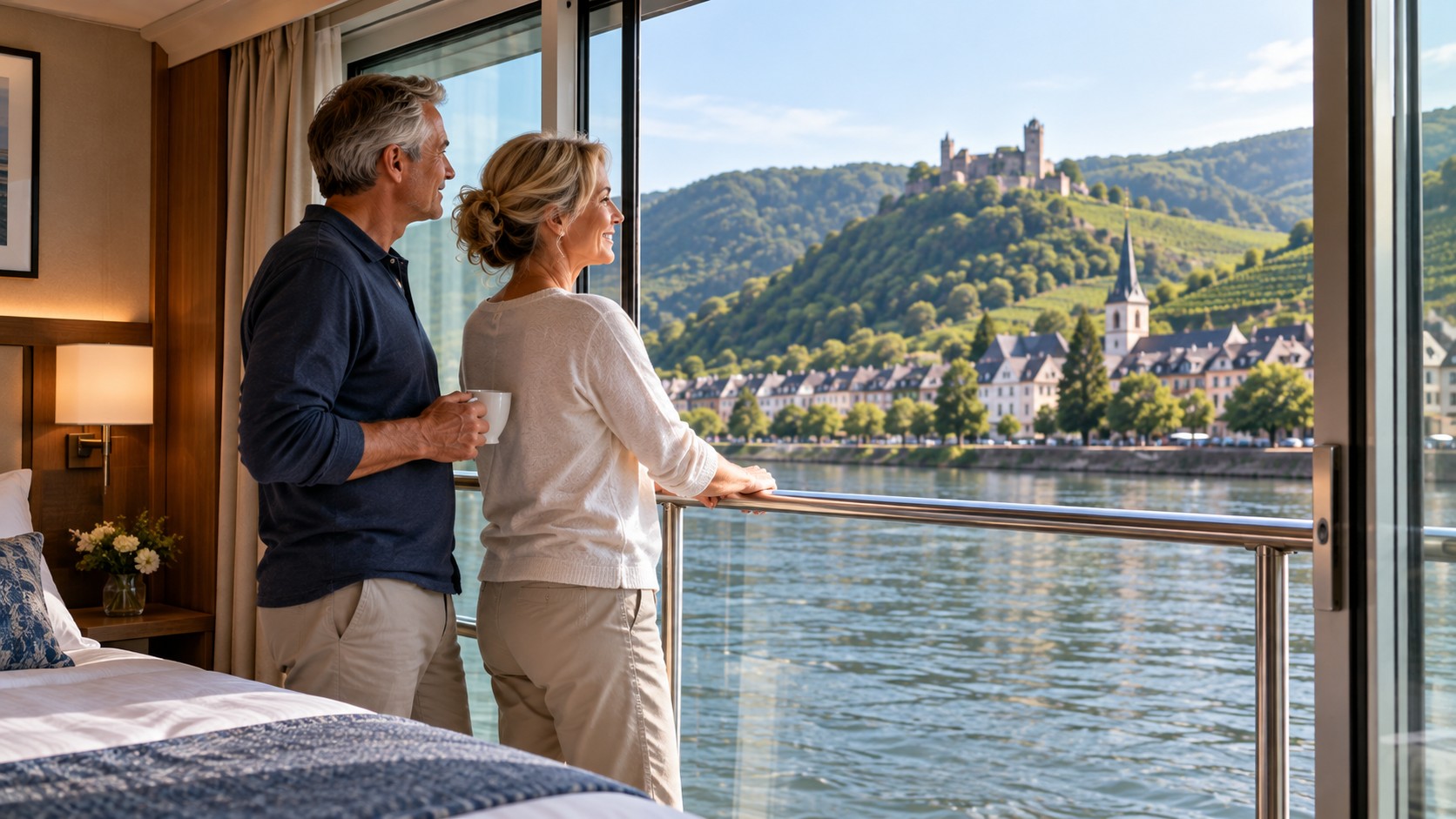
For someone else, it’s walking through a village, discovering a café and spending the afternoon watching vineyards drift past from the ship.
And sometimes it’s both on the same day.
That’s what interests me about active river cruising.
It isn’t about turning every vacation into a fitness challenge.
It’s about having the freedom to move, explore, discover and still enjoy the journey.
And that’s very much what PEDAL & PORT is about.