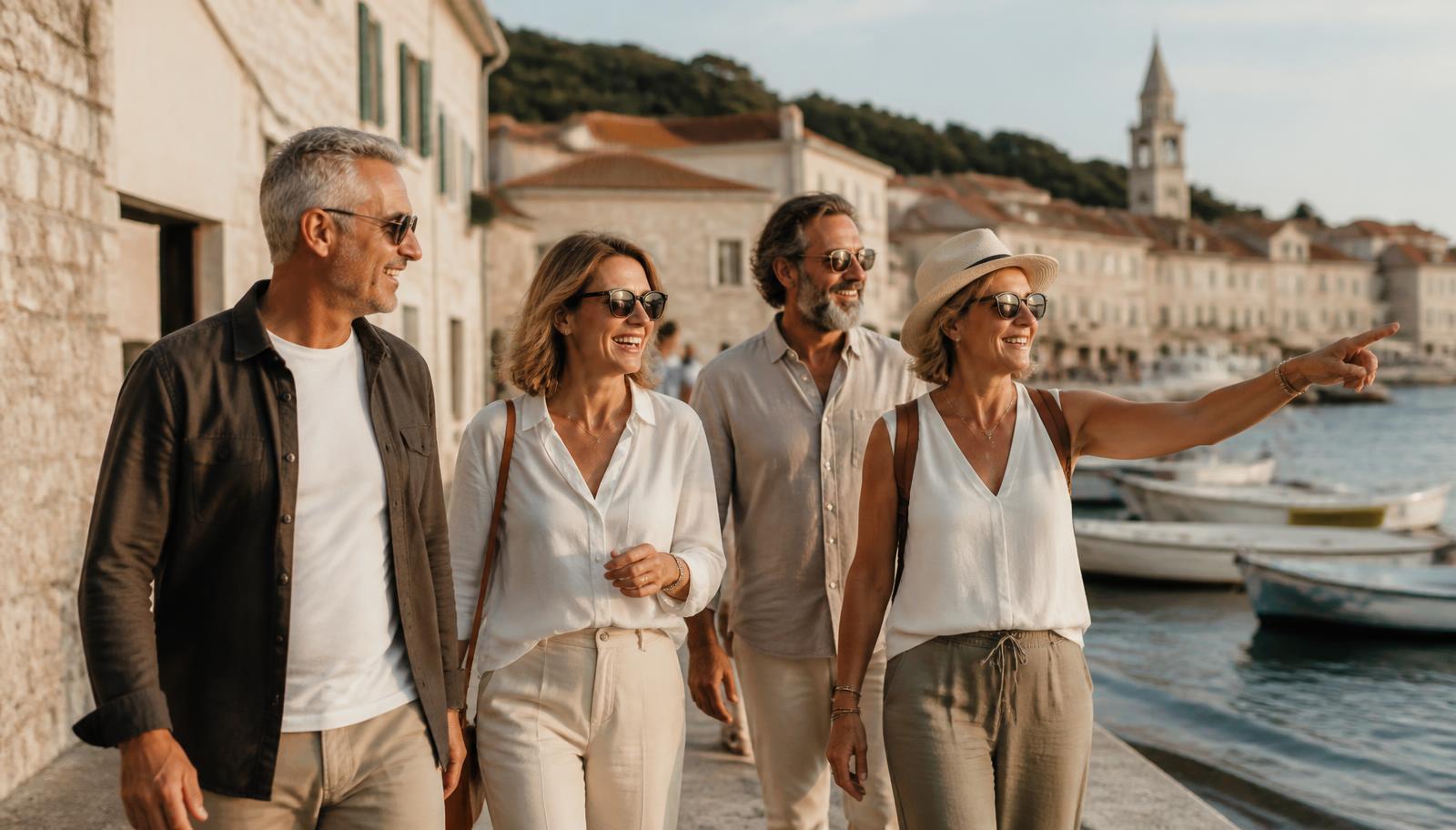
There is a strange assumption that seems to follow us once we pass a certain birthday.
Slow down.
Take it easy.
Choose the comfortable option.
Maybe sit on the bus and let someone else show you the sights.
But a lot of people in their 50s, 60s and beyond don’t recognize themselves in that picture at all.
We’re still working out. We’re cycling, walking, hiking, travelling, learning, meeting new people and thinking about places we haven’t seen yet.
We may appreciate a comfortable bed more than we once did. We may be less interested in racing through six cities in seven days. And we’re probably more selective about where we spend our time and money.
But slowing down?
Not necessarily.
AARP’s 2026 Travel Trends research found that 64% of adults 50 and older surveyed expected to travel during the year. Those travellers took an average of 4.2 trips in 2025, more than they had originally planned.
The desire to travel isn’t disappearing.
What’s changing is what we want from travel.
§ i
We don’t need “senior travel.” We need the right travel.
Age is a poor way to determine what kind of trip someone will enjoy.
Two people who are both 62 can have completely different ideas of a great vacation.
One might want a quiet resort, a good book and absolutely nowhere to be.
The other might be up at 7:00 a.m. looking for a walking route, a bike, a local market or a trail to explore before breakfast.
Neither is travelling incorrectly.
They’re simply different travellers.
So perhaps the better question after 50 isn’t:
“Is this trip appropriate for my age?”
It’s:
“Does this trip fit the way I want to travel?”
Think about your preferred pace. How much activity feels enjoyable? How much free time do you want? Do you enjoy travelling with a group or having more independence? How important are food, culture, nature, fitness, comfort and social connection?
Those answers tell us far more than age ever could.
§ ii
Active doesn’t have to mean extreme
The word adventure can create the wrong mental picture.
It doesn’t have to mean climbing Kilimanjaro or spending ten days sleeping in a tent.
Adventure can be surprisingly ordinary.
Walking through a neighbourhood you’ve never seen before.
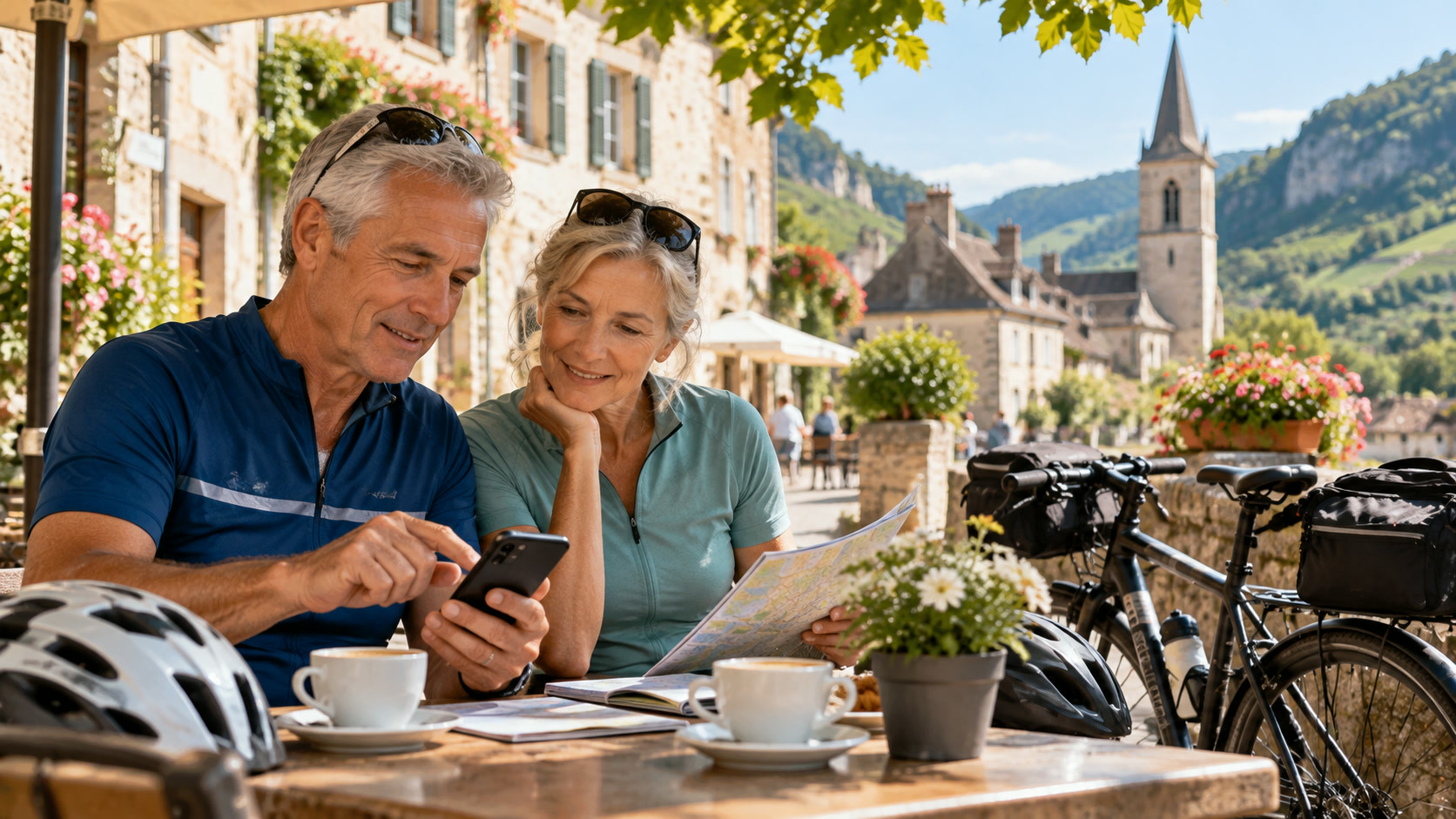
Cycling between small villages.
Kayaking along a coastline.
Swimming in the Mediterranean.
Trying food you can’t pronounce.
Taking a cooking class.
Getting off a cruise ship and exploring a town on foot instead of immediately boarding a sightseeing bus.
Taking the road that wasn’t on your original itinerary.
Current adventure travel research reflects this broader definition. The Adventure Travel Trade Association reports that travellers continue to prioritize new experiences, cultural connection and exploration beyond the obvious tourist route. Activities attracting interest include hiking, culinary experiences, e-bike cycling, cultural experiences and wellness-focused travel.
That’s an important distinction.
Active travel isn’t necessarily about doing more. It’s about participating instead of only observing.
§ iii
We want comfort without being cocooned by it
At this stage of life, there are some things many of us are perfectly happy to leave behind.
The terrible hotel mattress.
The shared bathroom down the hall.
The 5:00 a.m. airport connection that saves forty dollars.
The vacation schedule so exhausting that we need another vacation when we get home.
Comfort matters.
But comfort and adventure aren’t opposites.
There’s nothing wrong with spending the day walking, riding, swimming or exploring and coming back to a great room, having a good shower, enjoying an excellent meal and sleeping in a comfortable bed.
Maybe the ideal formula is:
Great bed. Great shower. Great meal. Then get me back outside tomorrow morning.
That’s not slowing down.
That’s learning how we like to travel.
§ iv
We want experiences, not just sightseeing
There is a difference between seeing a destination and experiencing it.
You can see Tuscany through a bus window.
Or you can walk through a village, stop at a café, talk with someone who lives there and wonder what is around the next corner.
You can see Croatia.
Or you can swim off its coast.
You can visit Portugal.
Or you can spend an afternoon wandering through a neighbourhood with no particular destination in mind.
You can photograph a market.
Or you can shop in it.
For many experienced travellers, the second version becomes increasingly appealing.
Current adventure travel research identifies new experiences, cultural connection and off-the-beaten-path exploration as continuing priorities among travellers.
Perhaps that’s because after we’ve travelled a little, collecting destinations becomes less important.
We start collecting moments instead.
§ v
We want enough structure to make travel easy and enough freedom to make it ours
There is a wonderful middle ground between organizing every detail yourself and being told where to stand every minute of the day.
Someone else handles the complicated parts.
Transportation. Hotels. Reservations. Transfers. Tickets.
The things that can turn an exciting trip into twenty browser tabs and a spreadsheet.
But once we’re there?
Give us some room.
Let us wander.
Let us choose a restaurant occasionally.
Let us sit at the café for another half hour.
Let us skip something if we’re tired.
Let us discover something that wasn’t printed on the itinerary.
The sweet spot is simple:
Take away the logistical stress without taking away the feeling of discovery.
§ vi
The people can matter almost as much as the destination
Sometimes our lifelong friends don’t share our travel interests.
Our spouse or partner may not want to cycle, hike, cruise or explore the same destinations we do.
Friends may still be working.
Family schedules don’t line up.
One person wants Europe. Someone else wants the cottage.
And waiting until everybody is available can mean waiting a very long time.
That’s one reason group travel can become attractive even to people who consider themselves highly independent.
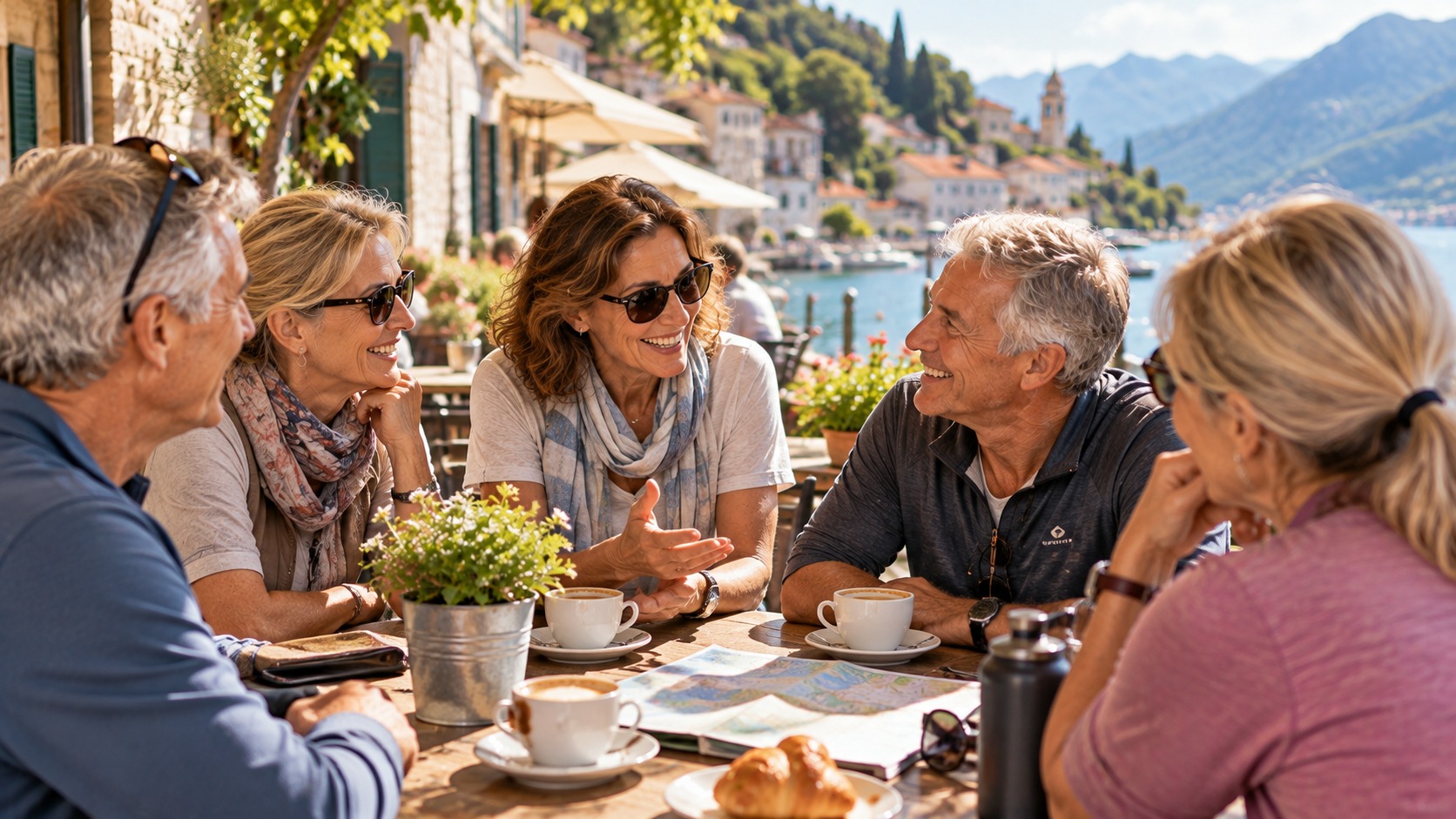
The right group gives you people to have dinner with, laugh with and share an experience with, without requiring you to convince six friends at home to take the same vacation.
But there’s an important qualification.
It has to be the right group.
Most of us aren’t simply looking for people who share our birth decade.
We’re looking for people who share our curiosity.
People who want to explore.
People who enjoy being active.
People who appreciate good food.
People who are interested in the world.
People who can laugh when something doesn’t go according to plan.
People who occasionally say:
“Why not?”
That’s a much better way to define a travel community than age alone.
§ vii
Travelling solo doesn’t have to mean travelling alone
Maybe your partner doesn’t want to go.
Maybe you’re single.
Maybe your friends keep saying, “Someday.”
Maybe you’ve simply decided you’re done waiting for everybody else’s calendar.
Going on your own doesn’t necessarily mean spending the entire trip alone.
There is another option.
Arrive independently.
Have your own room.
Join a thoughtfully chosen group.
Share the experiences you want to share.
Have dinner together.
Explore together.
Then take some time for yourself when you want it.
You get both independence and connection.
For someone who has always postponed travel because they couldn’t find the right person to go with, that can be incredibly freeing.
§ viii
Staying active changes how we travel
Health matters more as we get older. But that doesn’t necessarily mean doing less.
Sometimes it simply means travelling smarter.
Maybe we choose an e-bike instead of a traditional bike.
Maybe we plan a walking day followed by an easier day.
Maybe we choose fewer hotel changes.
Maybe we spend a little more for a direct flight.
Maybe we arrive a day early instead of beginning a trip exhausted.
We don’t have anything to prove.
The goal isn’t to complete the hardest itinerary.
The goal is to come home thinking:
I’d do that again.
And perhaps wellness is becoming less separate from travel anyway.
Walking all day in a new city is movement.
Cycling through the countryside is exercise.
Exploring outdoors gives us fresh air and sunlight.
Trying something new stimulates our minds.
Sharing meals and laughing with new friends creates connection.
Travel can contribute to our wellbeing simply because we’re moving, learning, connecting and experiencing something different.
Maybe the best trips aren’t simply the ones where we return with the most photographs.
Maybe they’re the ones where we return feeling more alive.
§ ix
The best trip is the one that fits who you are now
We don’t have to travel like we’re 25.
There were some wonderful things about travelling at 25.
There were also airport floors.
Questionable hostels.
Backpacks that weighed approximately as much as we did.
And itineraries that seemed to consider sleep a sign of weakness.
We don’t have to recreate that.
We’ve earned the right to travel differently.
More comfortably.
More intentionally.
More selectively.
Perhaps a little slower in some places so we can experience them more deeply.
The objective isn’t to prove that we’re still young.
It’s to recognize that we’re still curious.
So before booking your next trip, instead of asking:
Where should someone my age travel?
Try asking:
How do I want to feel while I’m there?
Do I want to move every day?
Do I want culture? Nature? Food? History?
Do I want a little adventure?
Do I want to meet people?
How much comfort matters to me?
How much structure?
How much freedom?
Those answers can completely change the trip you choose.
§ x
Don’t wait for “someday”
Perhaps the most dangerous word in travel is someday.
Someday when work slows down.
Someday when everybody’s schedules align.
Someday when your friend is ready.
Someday when you retire.
Someday when things become less complicated.
Someday has a habit of moving.
There will never be a perfect year to see everything we want to see.
There will always be reasons to postpone something.
But there is something wonderful about having a trip on the calendar.
A destination to research.
A route to imagine.
A restaurant someone told you about.
A suitcase waiting to be packed.
An experience ahead of you.
Maybe that’s really what active travel after 50 is about.
Not refusing to grow older.
Not chasing our younger selves.
And certainly not proving anything.
It’s recognizing that we still have places we want to see, things we want to learn, people we haven’t met and experiences we haven’t had yet.
We don’t want to slow down.
We want to travel differently.
Not like we’re 25.
Not like somebody else thinks a person our age should travel.
Like ourselves.
Active Lifestyle. Shared Adventures.