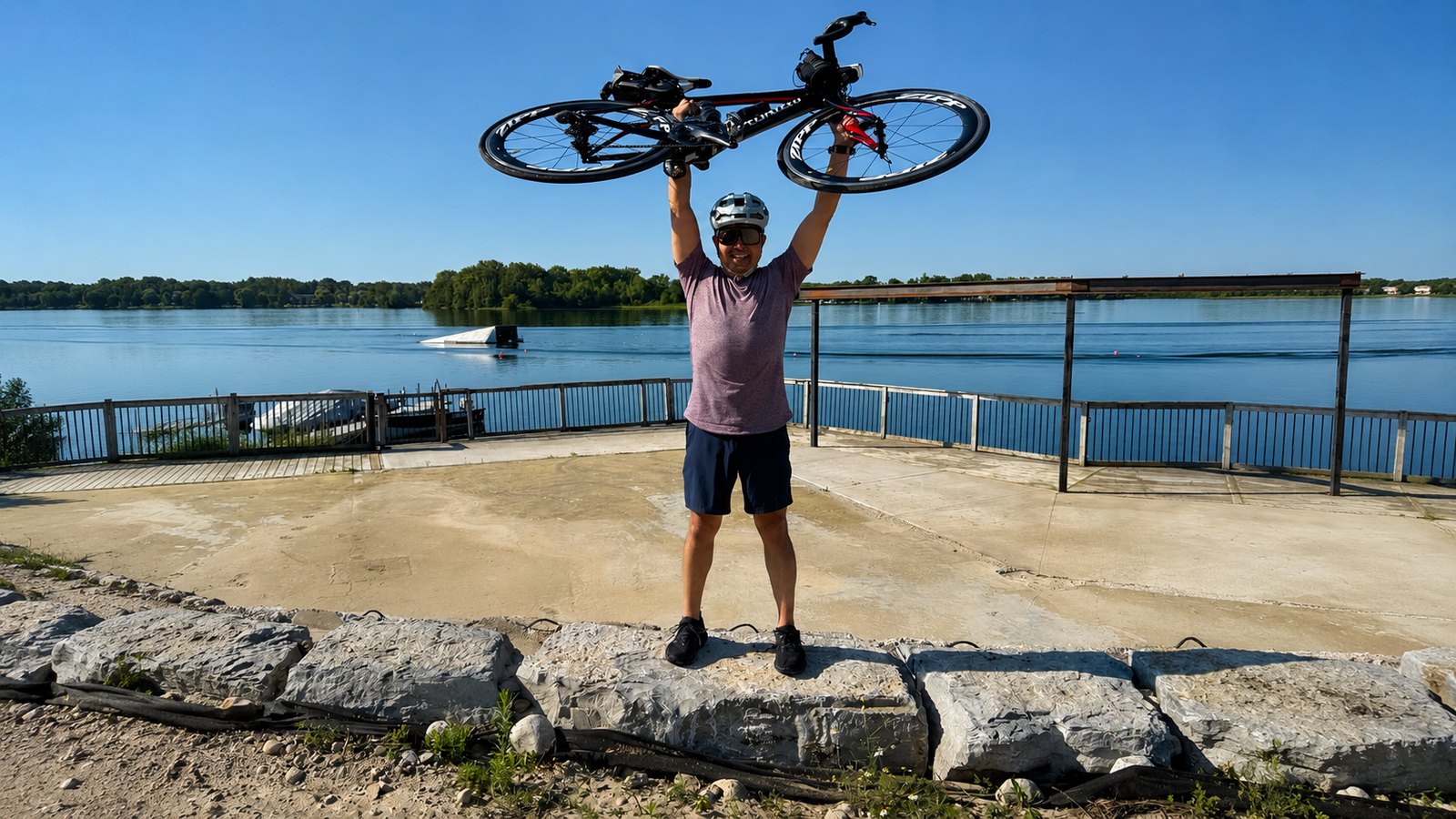
There is something I notice more and more when I look around at the people I ride with.
We aren’t riding because we’re trying to be twenty-five again.
We’re riding because we still can.
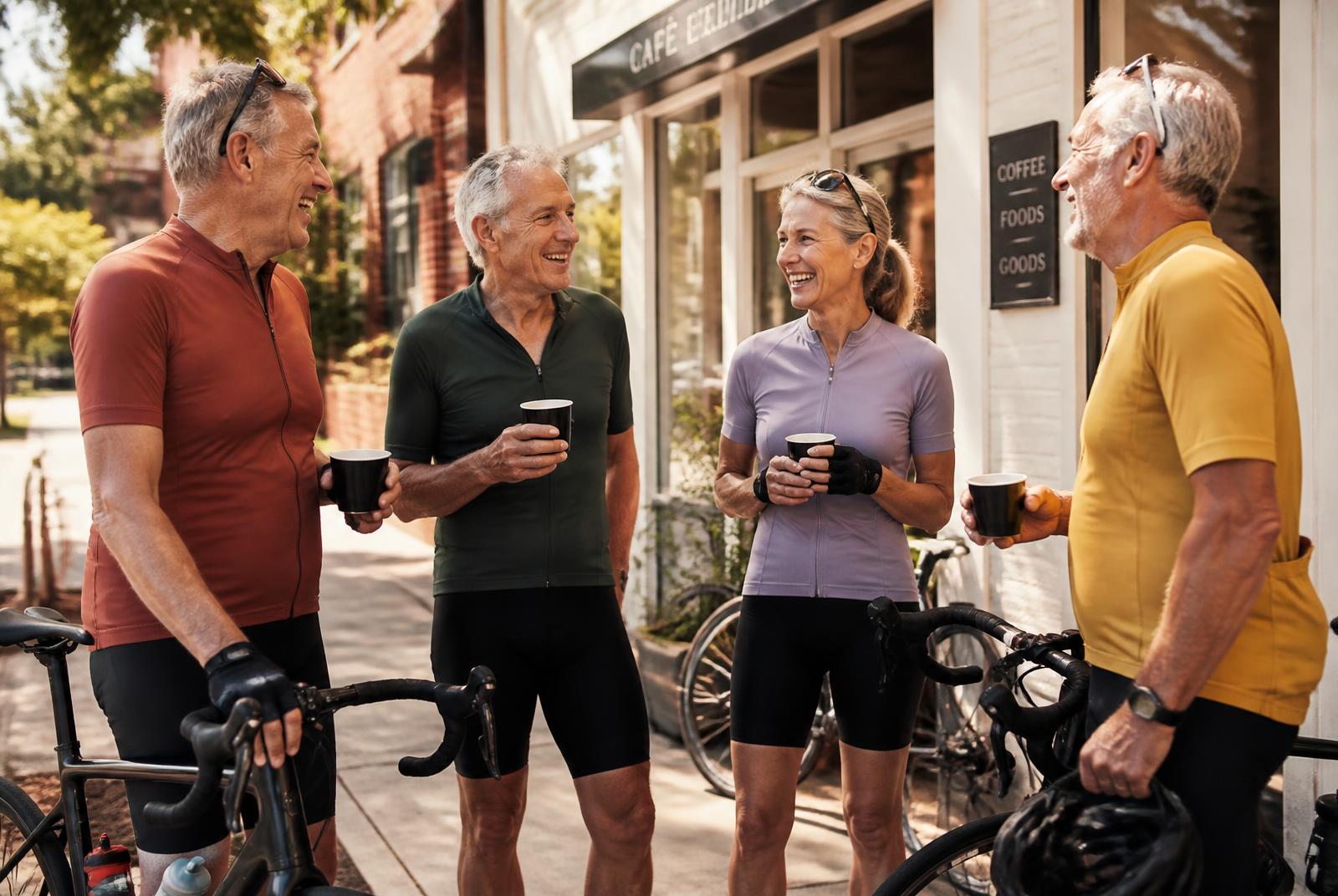
We meet up. We ride thirty, forty or fifty kilometres. We chase each other up a hill occasionally. We stop for coffee. We laugh. We talk about the next ride, the next trip and somewhere we’d like to cycle someday.
And I’ve started to think that maybe this is what aging well actually looks like.
Not trying to stay young.
Trying to stay capable.
§ i
Ride
Cycling is one of those activities that can grow with you.
You can ride hard or easy. Twenty kilometres or a hundred. You can chase speed, explore a rail trail or spend an afternoon riding through the countryside with friends.
Over time, the reason we ride may change too.
Performance still matters to some of us. Nobody likes being dropped on the hill.
But increasingly, the bigger reward is having a body capable of doing something we love.
Cycling builds cardiovascular fitness and endurance while getting us outside and engaged with the world around us.
There may be cognitive benefits too. Research involving adults aged 50 to 83 found improvements in aspects of executive function after eight weeks of outdoor cycling. Interestingly, benefits were seen among both conventional cyclists and e-bike riders.
Think about everything happening during a ride.
You’re watching traffic, reading the road, shifting gears, choosing a line, navigating and reacting to other cyclists.
Sometimes you’re doing all of that while the cyclist beside you is telling you a story.
Cycling isn’t simply moving your legs.
It’s an experience.
§ ii
But the Bike Isn’t Enough
This is something I’ve come to appreciate as I’ve gotten older.
I love cycling, but I don’t rely on the bicycle for all of my fitness.
Three or four times a week, you’ll also find me doing Group Power, Group Active or working with free weights in the Y Pit at my YMCA.
I’m not doing that because I’m training to become a powerlifter.
I’m doing it because I want to keep riding my bicycle.
And travelling.
And climbing hills.
And carrying my own luggage.
And doing the things I enjoy for as many years as possible.
Cycling is tremendous aerobic exercise, but because it is largely non-weight-bearing, it doesn’t provide the same stimulus to our bones and muscles as resistance and weight-bearing activities.
Research in older adults consistently shows that progressive resistance training can meaningfully improve muscular strength. Evidence also suggests it can help maintain or improve bone mineral density, although individual results vary.
That’s especially relevant for cyclists.
You can be extremely cycling fit without necessarily developing every physical quality you need for healthy aging.
§ iii
Being Cycling Fit Isn’t the Same as Being Life Fit
For those of us who love cycling, there’s always a temptation during cycling season.
It’s beautiful outside.
Your friends are riding.
You’ve already ridden three times this week.
Do you really need to go lift weights?
For me, the answer is yes.
Not everyone needs to strength train three or four times a week. That’s simply what works for me.
But maintaining resistance training alongside cycling may be one of the better investments we can make in our future selves.
I think of it this way:
“Cycling develops the engine. Strength training helps us maintain the rest of the machine.”
And the objective isn’t just another personal best.
It’s independence.
§ iv
Connect
There’s another part of cycling that doesn’t show up on your Garmin.
The people.
I’ve met people through cycling whom I probably never would have met otherwise.
That’s one of the things I love most about group riding.
Someone organizes the ride.
Someone suggests a route.
Someone gets a flat.
Someone attacks a hill after promising it was going to be a relaxed ride.
And eventually everyone ends up somewhere drinking coffee and talking about doing it again.
The bicycle gets us out of the house.
The group gives us a reason to show up.
Fitness matters.
So does belonging.
§ v
Explore
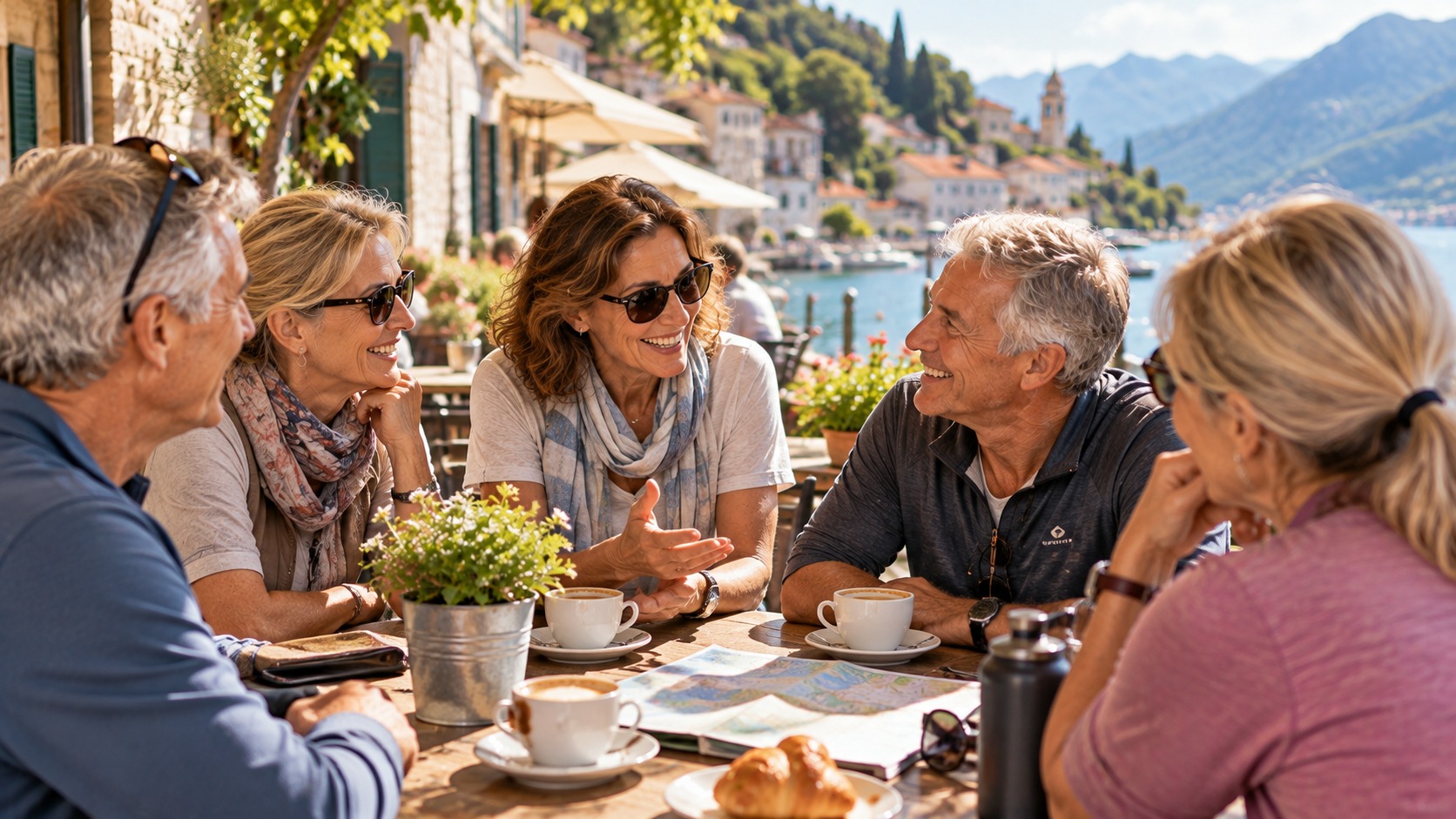
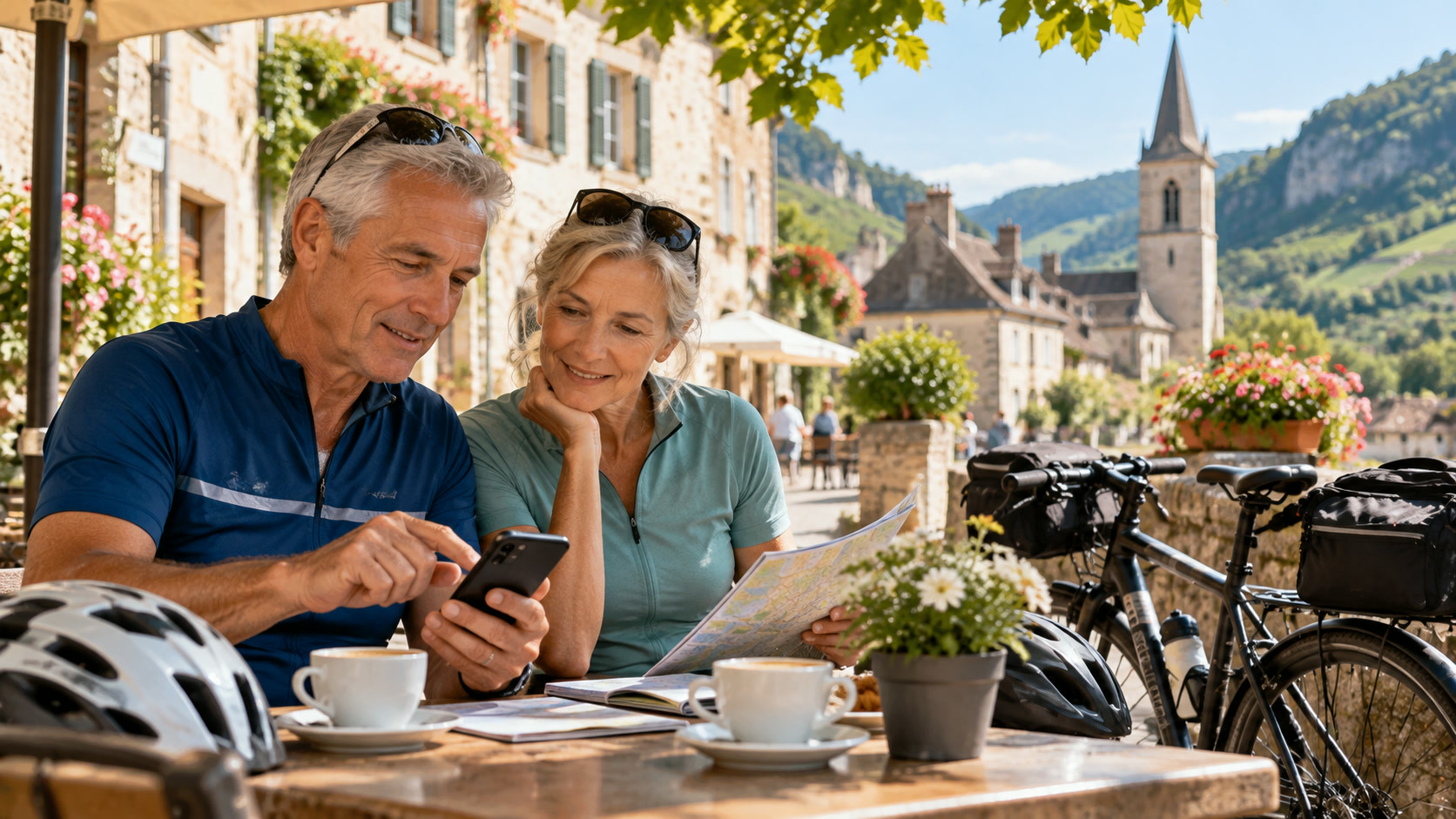
Cycling has also changed the way I think about travel.
Once you discover cycling, you start looking at destinations differently.
You don’t just see a road through Tuscany. You wonder what it would be like to ride it.
You don’t just see the Danube. You imagine cycling alongside it.
A beautiful road along the Mediterranean becomes something you want to experience from a bicycle rather than through a window.
And something interesting happens.
Travel gives you another reason to remain fit.
You’re no longer exercising simply because someone told you exercise is good for you.
You’re training because there are still places you want to go and things you want to experience.
That’s a completely different motivation.
§ vi
Keep Going
Eventually, most of us will have to adapt.
Maybe we won’t ride quite as fast.
Maybe we’ll choose different distances.
Maybe recovery will take a little longer.
And maybe one day an e-bike becomes part of the equation.
I don’t see anything wrong with that.
Research involving older adults has found cognitive and well-being benefits among e-bike riders as well as conventional cyclists.
If pedal assist eventually allows someone to keep riding with friends or exploring destinations for another five or ten years, I wouldn’t call that cheating.
I’d call that winning.
The objective isn’t to prove that we can ride exactly the same way forever.
The objective is to keep going.
§ vii
Train for Your 70s
Here’s a question I’ve started thinking about differently:
What do I want to be able to do ten years from now?
And ten years after that?
I want to ride my bicycle.
I want to travel.
I want to walk around a city all day.
I want to climb stairs without thinking about it.
I want to carry my own suitcase.
I want to try things I’ve never done before.
And when somebody says, “Want to go for a ride?” I want my answer to still be:
Absolutely.
That’s what fitness increasingly means to me.
It’s not just about how much weight I can lift or how fast I can ride today.
It’s about protecting my ability to participate in life tomorrow.
It’s also why I wrote a practical guide to cycling holidays after 50.
§ viii
Ride for the Long Run
Maybe aging well isn’t about fighting age at all.
Maybe it’s about building a life that gives us reasons to keep moving.
Ride.
Lift.
Explore.
Connect.
Keep going.
The bicycle can be a wonderful part of that life.
But perhaps the real goal isn’t simply to become a better cyclist.
It’s to build a body, a community and a life that allow us to keep doing the things we love for as long as possible.
The goal isn’t to stay young.
The goal is to stay capable.
And there are still a lot of roads left to ride.
Research References
- Leyland LA, Spencer B, Beale N, Jones T, van Reekum CM. The effect of cycling on cognitive function and well-being in older adults. PLOS ONE. 2019. View on PubMed
- Liu CJ, Latham NK. Progressive resistance strength training for improving physical function in older adults. Cochrane Database of Systematic Reviews. 2009. View on PubMed
- Nichols JF, Palmer JE, Levy SS. Low bone mineral density in highly trained male master cyclists. Osteoporosis International. 2003. View on PubMed
- Mathis SL, Caputo JL. Resistance training is associated with higher lumbar spine and hip bone mineral density in competitive male cyclists. Journal of Strength and Conditioning Research. 2018. View on PubMed
Shared for general interest only. Nothing here is medical advice — please speak with your own healthcare provider before beginning or changing any exercise programme.