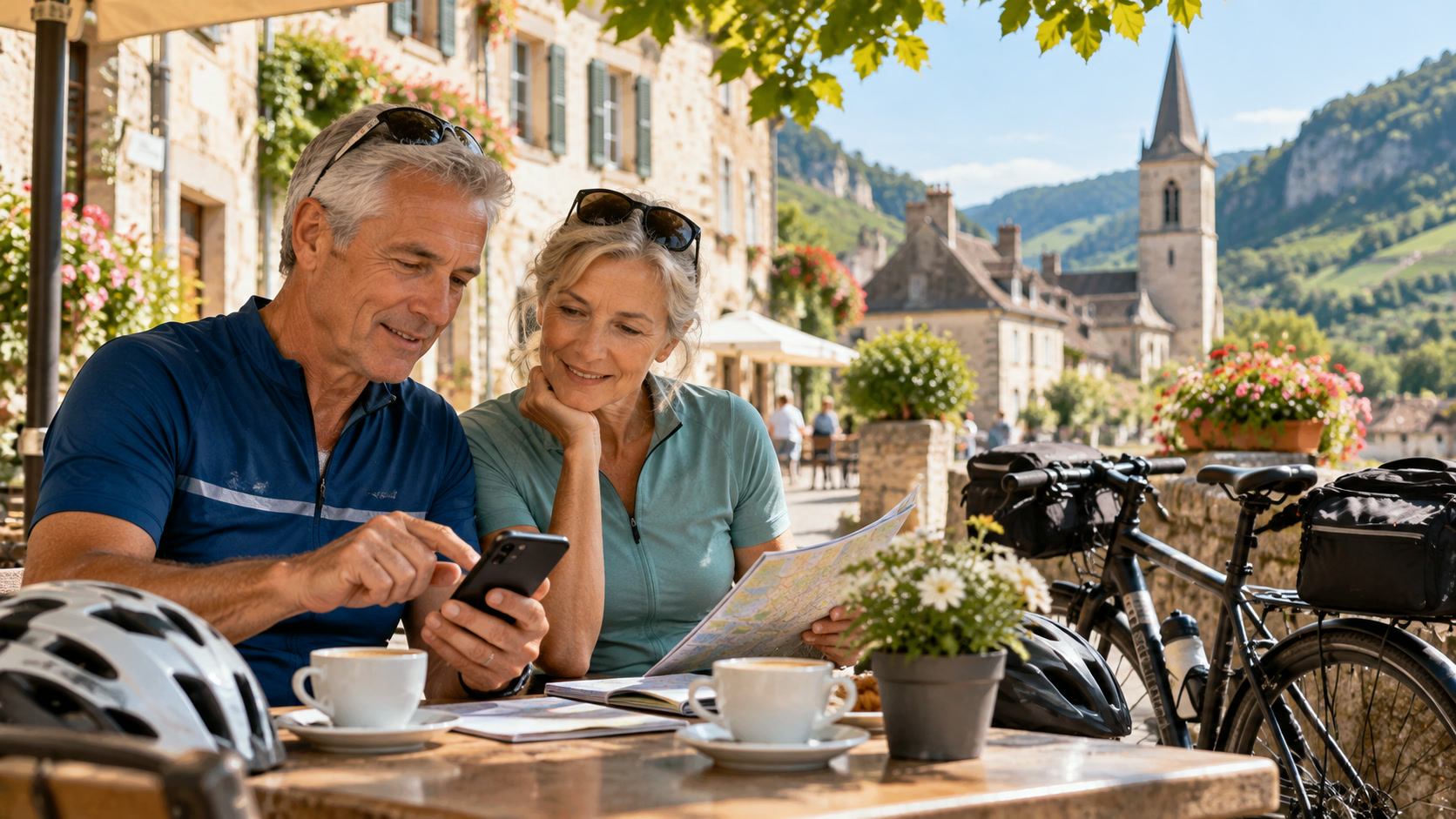
Imagine arriving in Europe for a cycling holiday you’ve been looking forward to for months.
Your bicycle is ready. The route takes you through beautiful countryside, charming villages, and quiet roads. You’ve chosen a trip that matches your fitness level, and you’re excited to begin.
You’ve also purchased travel insurance.
So you’re covered, right?
Maybe. But that depends on what your policy actually says.
Travel insurance can provide valuable protection, but not every policy covers every cycling activity, expense, or unexpected situation.
A fall from your bicycle, damage to a rental e-bike, a cancelled trip, and a medical emergency may all involve different types of coverage.
Understanding those differences before you travel can help you avoid unpleasant surprises.
§ i
Travel Insurance Isn’t One Single Type of Protection
When people say they have travel insurance, they may be referring to several different benefits.
Emergency medical insurance can help with eligible medical expenses if you become sick or injured while travelling.
Trip cancellation insurance may reimburse certain prepaid, non-refundable expenses when you cancel for a reason covered by the policy.
Trip interruption coverage may apply when an insured event disrupts your trip after departure.
Baggage coverage may provide limited protection for eligible lost, stolen, or damaged belongings.
And bicycle damage or liability protection may require entirely separate arrangements.
These benefits aren’t automatically included together.
For example, a policy might provide emergency medical coverage for a recreational cycling accident but exclude damage to the bicycle itself.
The important question isn’t simply whether you have travel insurance. It’s whether you have the right coverage for the trip you’re taking.
Understanding the Different Types of Protection
- Emergency medical
- What it may coverEligible medical treatment after an illness or injury
- Trip cancellation
- What it may coverCertain prepaid losses when cancellation occurs for a covered reason
- Trip interruption
- What it may coverEligible expenses after a covered disruption during travel
- Baggage
- What it may coverCertain lost, stolen, or damaged personal belongings, subject to exclusions
- Bicycle protection
- What it may coverBicycle damage or theft, when specifically covered
- Personal liability
- What it may coverCertain claims involving injury to others or damage to property, if included
| Protection | What it may cover |
|---|---|
| Emergency medical | Eligible medical treatment after an illness or injury |
| Trip cancellation | Certain prepaid losses when cancellation occurs for a covered reason |
| Trip interruption | Eligible expenses after a covered disruption during travel |
| Baggage | Certain lost, stolen, or damaged personal belongings, subject to exclusions |
| Bicycle protection | Bicycle damage or theft, when specifically covered |
| Personal liability | Certain claims involving injury to others or damage to property, if included |
This table describes potential types of protection, not guaranteed benefits under any particular policy.
§ ii
Does Ordinary Travel Insurance Cover Recreational Cycling?
Many Canadian travel insurance policies may cover recreational cycling, but the details matter.
A relaxed cycling tour through European villages is not necessarily treated the same way as downhill mountain biking, racing, or other higher-risk activities.
Insurance providers may distinguish between recreational activities, competitive sports, adventure activities, and activities involving particular equipment or conditions.
Even the word cycling may not tell you everything you need to know.
Before travelling, confirm that your policy applies to the specific activities included in your itinerary.
For example:
- Recreational road cycling
- Guided cycling tours
- Self-guided cycling holidays
- Gravel or unpaved routes
- Mountain biking
- Cycling events or competitions
Don’t assume that coverage for one type of cycling automatically extends to another.
If your itinerary includes different riding styles, describe them clearly when speaking with your insurer.
And if possible, obtain confirmation in writing.
§ iii
What About E-Bikes?
E-bikes have made cycling holidays accessible and enjoyable for many travellers.
They can help riders manage hills, longer distances, and differences in fitness levels within a group.
But insurance questions can become more complicated when electric assistance is involved.
An insurer may distinguish between a conventional pedal-assist bicycle, a higher-powered electric bicycle, and equipment legally classified as a motor vehicle.
The rules can depend on the bicycle’s specifications, how it’s operated, and the policy’s definitions.
Before booking an e-bike holiday, ask your insurer:
- Does my emergency medical coverage apply while riding this type of pedal-assist bicycle?
- Are there restrictions based on motor power, maximum assisted speed, or vehicle classification?
- Does the policy exclude certain types of riding or organized activities?
- If I damage the rented e-bike, is that covered separately?
It’s also worth asking your tour operator for the bicycle’s specifications and rental conditions.
An e-bike may make the riding easier, but it doesn’t eliminate the need to understand your insurance coverage.
§ iv
Medical Emergencies: What Happens If You Need Help?
Even experienced cyclists can encounter unexpected situations.
A fall, collision, sudden illness, or injury may require medical attention.
Depending on your location, the situation could involve an ambulance, hospital treatment, transportation to another medical facility, or assistance returning home.
Emergency medical travel insurance can be particularly important for Canadians travelling outside Canada because provincial health plans generally provide limited coverage for medical expenses abroad.
However, coverage depends on the policy.
Some plans require travellers to contact an emergency assistance provider before arranging certain services, except where immediate treatment makes that impractical.
Others may contain deductibles, coverage limits, activity exclusions, or restrictions related to medical history.
Before departure, confirm:
- The emergency medical coverage limit
- Whether recreational cycling and your planned activities are included
- How emergency assistance is contacted
- Whether ambulance services and medically necessary evacuation are covered
- Whether pre-authorization is required for certain services
- How claims and reimbursement are handled
Save your insurer’s emergency contact information somewhere accessible without relying entirely on your phone.
And make sure your travelling companion knows where to find it.
§ v
What If Your Rental Bicycle Is Damaged or Stolen?
This is one of the most easily misunderstood parts of cycling holiday protection.
Imagine renting an e-bike for a week.
During the trip, the bicycle is damaged in a fall.
Your emergency medical insurance may cover eligible treatment for your injuries, but that doesn’t mean it will pay to repair or replace the rented bicycle.
Bicycle damage may be governed by the rental agreement, a damage waiver, separate equipment insurance, or another policy.
Some operators include limited protection. Others may hold renters responsible for certain repair costs, theft, or damage.
Before accepting a rental bicycle, ask:
- What happens if the bicycle is accidentally damaged?
- Is theft covered?
- Is there a deductible or maximum financial responsibility?
- Does the protection apply to batteries and accessories?
- Are there conditions about locks, storage, or reporting incidents?
If you’re bringing your own bicycle, check whether your travel baggage insurance, home insurance, or specialized bicycle policy provides protection while travelling internationally.
Don’t assume your bicycle is covered simply because your luggage is insured.
§ vi
What About Liability if You Injure Someone Else?
Imagine accidentally colliding with another cyclist or pedestrian.
There may be questions about responsibility for injuries or property damage.
This is different from coverage for your own medical expenses.
Personal liability protection may be available through certain insurance policies, but the scope and exclusions vary.
Some travel insurance packages don’t include the type of liability coverage you might expect.
Other policies may exclude specific vehicles, activities, or circumstances.
If you’re travelling with a group or renting a bicycle, ask whether third-party liability protection is included and whether it applies to the activities you plan to undertake.
You may also want to ask whether your existing personal liability insurance extends to recreational cycling abroad.
A licensed insurance professional can help clarify the applicable coverage.
§ vii
Trip Cancellation and Interruption: Another Important Distinction
A cycling holiday often involves several prepaid expenses.
Flights, accommodation, tour deposits, bicycle rentals, transfers, and additional travel arrangements may all be booked well before departure.
But what happens if you need to cancel?
Trip cancellation insurance generally applies only when the reason for cancellation is covered by the policy.
Changing your mind or deciding you’re no longer comfortable with the trip may not qualify.
Trip interruption coverage can also have separate conditions and limits.
Before purchasing protection, examine the cancellation terms of your tour operator and the insurance policy together.
Ask whether your prepaid arrangements are eligible, what reasons are covered, and what documentation would be required to make a claim.
If you’re travelling with a spouse, partner, or group, also ask how coverage applies when one traveller cannot participate.
The earlier you understand these details, the easier it is to make informed booking decisions.
For a fuller picture of what a trip involves, see How Much Does a Cycling Holiday in Europe Cost in 2027?
§ viii
A Special Consideration for Active Travellers Over 50
One of the wonderful things about cycling is that people can continue enjoying it well into their 50s, 60s, 70s, and beyond.
Age alone doesn’t determine someone’s fitness or ability to enjoy a cycling holiday.
But insurance eligibility and policy conditions can change based on age, medical history, and other factors.
Some policies include questions about pre-existing medical conditions, recent treatment changes, or medical stability periods.
Being physically active doesn’t automatically remove those requirements.
If you have questions about a medical condition, medication, or recent treatment, speak with your insurer and, where appropriate, your healthcare professional before travelling.
The objective isn’t to discourage travel.
It’s to help you make plans with confidence.
§ ix
Your European Cycling Holiday Insurance Checklist
Before leaving Canada, make sure you can answer these seven questions.
- 1Cycling activities: Does my policy cover the exact type of cycling included in my itinerary?
- 2E-bike use: If I’m renting an e-bike, does the policy cover riding that specific type of bicycle?
- 3Medical emergencies: What are the limits, exclusions, and emergency assistance procedures?
- 4Bicycle protection: Who pays if my rental bicycle is damaged or stolen?
- 5Liability: What protection applies if I accidentally injure someone or damage property?
- 6Cancellation: Which prepaid expenses and cancellation reasons are covered?
- 7Medical conditions: Have I reviewed any applicable medical questionnaires, stability periods, or exclusions?
Keep copies of your policy documents, emergency contact numbers, rental agreement, and important travel information.
And when something is unclear, ask the insurer before departure rather than relying on assumptions.
If this is your first trip of its kind, read Your First Cycling Holiday in Europe: 15 Things to Know Before You Book, and if you’re still choosing a style of trip, see Guided vs. Self-Guided Cycling Holidays.
§ x
The Best Cycling Holidays Begin With Good Preparation
A European cycling holiday should be something to look forward to.
The quiet roads. The countryside. The cafés. The friendships. The feeling of discovering somewhere new under your own power.
Insurance may not be the most exciting part of planning that experience.
But understanding your coverage is one of the practical steps that can help you travel with greater confidence.
At PEDAL & PORT, we believe active travel should combine adventure with thoughtful preparation.
Whether you’re planning your first European cycling holiday or your next cycling adventure with friends, knowing the right questions to ask is part of making informed travel decisions.
The goal isn’t to worry about everything that could go wrong. It’s to prepare well enough to enjoy everything that could go right.