§ i
When the Douro Changes Colour
The Douro Valley is beautiful throughout the year, but autumn brings a completely different character to the landscape.
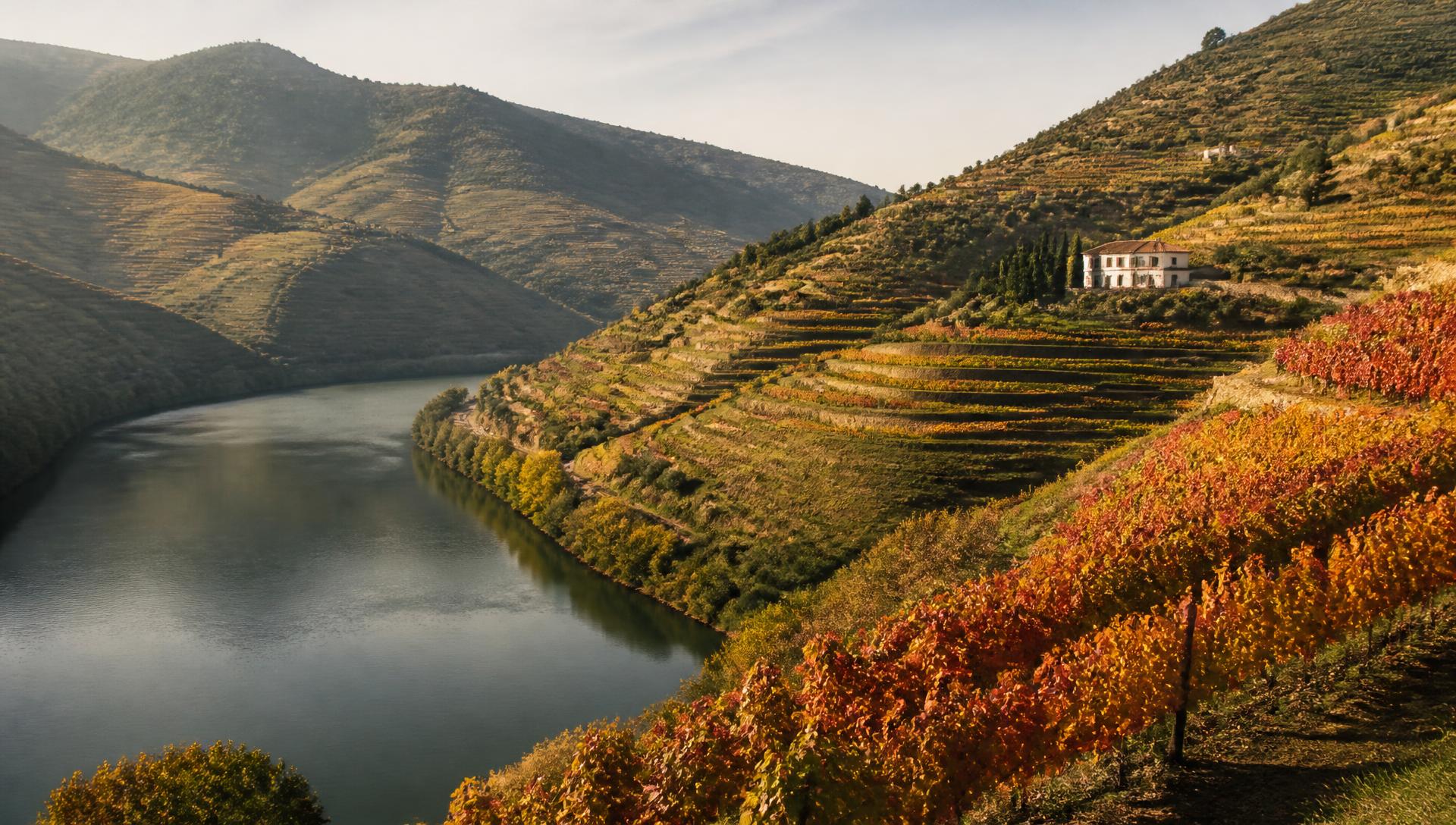
Vineyards climb extraordinarily steep hillsides above a river that twists through northern Portugal toward the Spanish border.
Generations of farmers have shaped these slopes into terraces, creating one of Europe’s great cultural landscapes.
In summer, those vineyards are predominantly green.
By autumn, the palette begins to change.
Yellow. Gold. Orange. Copper. Red.
The transformation doesn’t happen on a precise date. Nature rarely cooperates with travel calendars that neatly.
But autumn is when the Douro begins trading its summer colours for something warmer.
That alone changes the experience of travelling through the valley.
A viewpoint becomes somewhere to linger.
A walk through vineyard country feels different.
And from the river, entire hillsides can become part of the journey.
Portugal’s official tourism organization describes the vines of the Douro as green in summer and flame-coloured in autumn.
It’s difficult to imagine a more appropriate setting for slow travel.
§ ii
A Landscape Shaped by People
The Douro isn’t simply beautiful countryside.
It tells a human story.
The Alto Douro Wine Region has been shaped by centuries of wine production. Farmers transformed steep, rocky slopes into terraces where vines could grow, creating a landscape so culturally significant that the region is recognized as a UNESCO World Heritage cultural landscape.
That history is visible everywhere.
In the terraces.
In the quintas.
In the villages.
In the roads winding high above the river.
And, of course, in the wine culture for which the region became famous.
The Douro is often described as wine country.
It is.
But it’s also an extraordinary example of what happens when generations of people adapt themselves to a difficult landscape rather than simply replacing it.
The river and vineyards tell that story together.
§ iii
October Weather: Better for Exploring?
For an active traveller, this may be one of October’s greatest attractions.
The Douro has hot, dry summers, particularly as you travel farther inland.
October marks the transition away from those hotter conditions.
For someone whose ideal vacation includes walking through Porto, exploring historic towns, visiting vineyards, hiking to viewpoints or getting on a bicycle, cooler temperatures can be an advantage.
You’re not necessarily looking for beach weather.
You’re looking for exploring weather.
There is a difference.
A sunny 30-degree afternoon might sound wonderful from home, but it can feel very different halfway up a steep Portuguese street or several kilometres into a bicycle ride.
October can offer a more comfortable environment for being outside and moving.
§ iv
But What About Rain?
It would be misleading to talk about October in northern Portugal without mentioning rain.
October is a transition month, and the chance of wetter weather increases compared with Portugal’s dry summer months.
Some days may be beautiful.
Some may be cloudy.
An autumn shower is entirely possible.
And weather can vary considerably between coastal Porto and the more protected interior Douro Valley.
For me, that’s part of deciding whether October suits the way you like to travel.
If your perfect vacation requires guaranteed hot sunshine every day, October in northern Portugal may not be your first choice.
If you’re comfortable packing a light waterproof layer in exchange for cooler conditions, autumn landscapes and a different atmosphere, the equation changes considerably.
Travel isn’t always about finding perfect weather.
Sometimes it’s about finding the weather that suits what you want to do.
§ v
A River Where the Journey Matters
One of the things that makes the Douro different from many European river journeys is that the scenery between stops isn’t simply empty space.
It is part of the experience.
Portugal’s navigable Douro stretches approximately 208 kilometres from the Atlantic toward the Spanish border.
Along the way, the river passes close to remarkable cultural landscapes and historic places, including Porto and the Alto Douro Wine Region.
The farther inland you travel, the more dramatic the landscape becomes.
Hills rise sharply from the water.
Vineyards wrap around bends in the river.
Small communities appear along the banks.
Quintas sit above the valley.
This creates an unusual kind of travel.
You don’t necessarily need to be rushing toward the next destination.
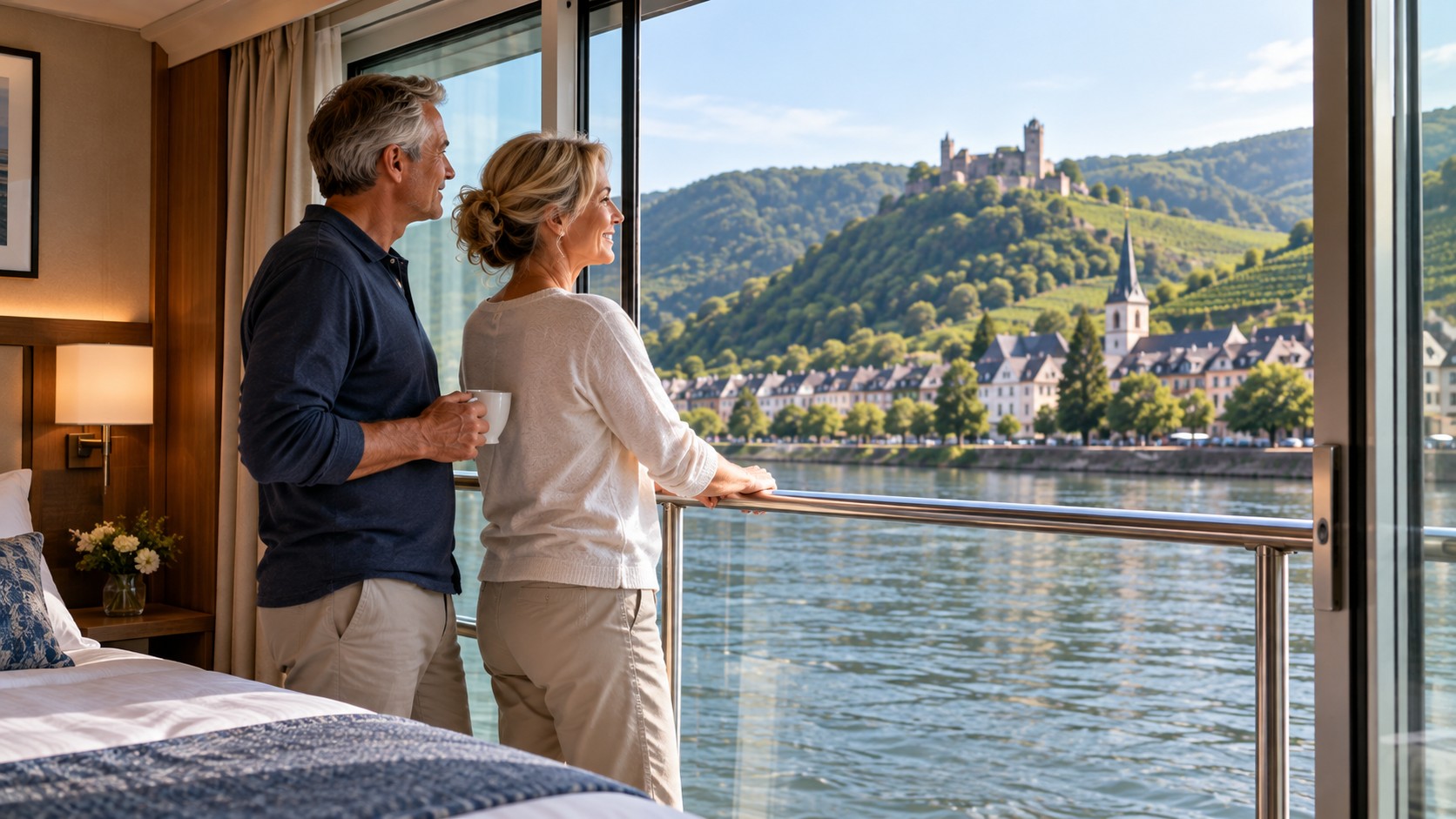
Sometimes the destination is already outside your window.
Did You Know?
The navigable Douro overcomes approximately 125 metres of elevation through five navigation locks.
Passing through them is a reminder that travelling the Douro is also an engineering journey.
The river isn’t simply something you’re looking at.
You’re moving through it.
§ vi
Wine Country After Summer
Wine and the Douro are inseparable.
The valley is one of the world’s great wine landscapes and the home of Port, alongside an increasingly recognized range of Douro table wines.
September and October can overlap with the grape harvest, and some estates offer seasonal harvest experiences.
But there’s an important qualification.
There is no single guaranteed harvest date.
Timing changes according to weather, grape variety, vineyard location, temperature and other conditions.
So I wouldn’t travel to the Douro in October assuming I’ll arrive precisely when grapes are being picked.
I’d go because this is a fascinating season to experience wine country whether the picking is happening that particular week or not.
The vineyards are changing.
The wineries and quintas remain part of the landscape.
The villages remain connected to generations of wine culture.
And understanding the Douro becomes about much more than tasting what’s in a glass.
It’s about understanding where it came from.
§ vii
Active by Choice
This may be the part of Portugal that interests me most.
I like travel that gives you opportunities to move.
Not because every vacation needs to become a workout.
It shouldn’t.
But walking somewhere lets you notice things you miss from a vehicle.
Cycling changes your relationship with distance.
A hike gives you a different perspective on a landscape.
And sometimes being active simply makes the long lunch afterward taste better.
The Douro lends itself naturally to this style of travel.
Walking.
Hiking.
Canoeing or kayaking.
Exploring villages.
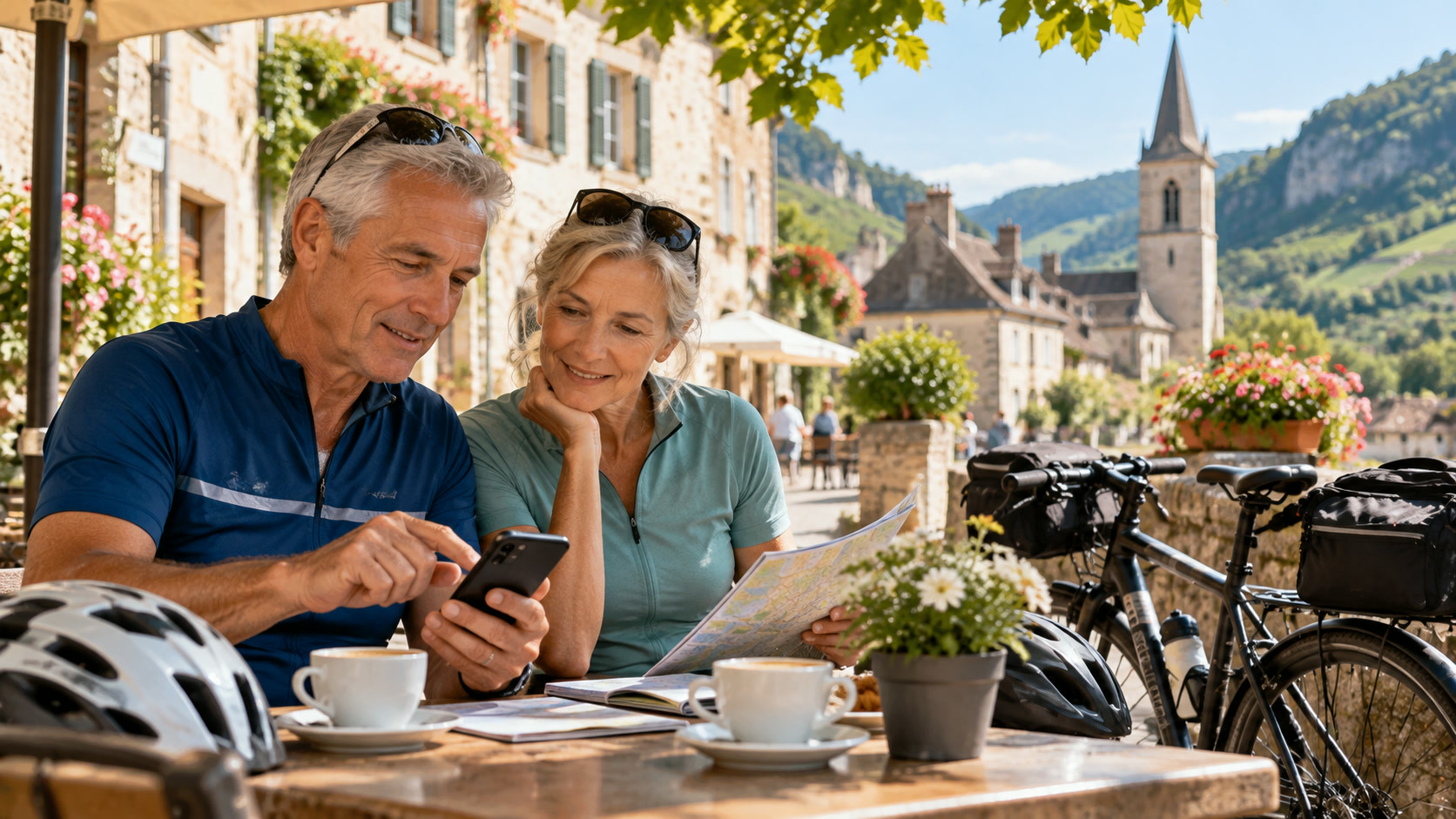
And, for those who want it, cycling.
§ viii
Do You Have to Be a Cyclist?
Absolutely not.
In fact, I think one of the most interesting things about active travel is giving people choices.
One traveller may want to cycle.
Someone else may prefer a vineyard walk.
Another person might choose a cultural excursion.
And someone else may decide that today’s activity consists of exploring a village and finding a good café.
All of those are legitimate ways to experience a destination.
The Douro’s terrain is also worth understanding before imagining a casual bicycle ride.
This is hilly country.
The roads climb away from the river and wind through vineyard-covered slopes.
For experienced cyclists, that’s part of the attraction.
For recreational riders, e-bikes can make the landscape considerably more accessible.
The goal doesn’t need to be speed or distance.
The goal can simply be seeing Portugal differently.
§ ix
Porto Is Part of the Story
A Douro journey naturally brings you to Porto.
And Porto deserves more than simply being treated as the place where the ship happens to depart.
The Douro reaches the Atlantic here.
Historic neighbourhoods climb above the river.
Port wine lodges sit across the water in Vila Nova de Gaia.
Bridges span the valley.
Restaurants, cafés, tiled buildings and narrow streets make the city particularly rewarding to explore on foot.
Porto provides an interesting contrast to the countryside upstream.
One day you’re surrounded by an energetic historic city.
Soon afterward, you’re looking across terraced vineyards and small villages.
The river connects both experiences.
§ x
And Then There’s Spain
Many Douro river itineraries travel toward the Spanish border, creating opportunities to visit Salamanca.
That adds another layer to the journey.
Portugal’s wine country suddenly becomes a doorway into Spain.
Salamanca brings grand plazas, historic architecture and one of Europe’s oldest university traditions into a trip otherwise shaped largely by Portuguese landscapes and culture.
One river journey can therefore contain remarkably different experiences.
Lisbon, if added before or after.
Porto.
The Douro Valley.
Portuguese wine country.
Small villages.
And Spain.
That’s a lot of variety without needing to constantly change hotels.
§ xi
Portugal Around the Table
There is another reason I like the idea of Portugal in autumn.
Food changes with seasons too.
Autumn in the Douro brings seasonal ingredients and heartier regional cooking. Chestnuts and mushrooms begin appearing alongside traditional dishes and the wines of the valley.
But what appeals to me isn’t a checklist of foods I need to try.
It’s the rhythm around them.
A walk in the morning.
A vineyard in the afternoon.
A table somewhere overlooking the valley.
Good food.
A conversation.
No particular reason to rush away.
Those moments often become the parts of travel we remember most.
Not because they were major attractions.
Because we were actually present for them.
§ xii
The Trade-Off
Every season has one.
Summer offers long days and reliable warmth, but also heat and peak-season demand.
Spring brings new growth and mild temperatures, but the vineyards haven’t yet reached their summer fullness.
Autumn brings changing landscapes and comfortable conditions for exploring, but also shorter days and a greater possibility of rain.
October isn’t a secret month when Portugal suddenly belongs only to you, either.
Lisbon and Porto remain popular destinations.
Shoulder-season travel has become increasingly attractive as more people look beyond the traditional European summer.
So I wouldn’t choose October because I expect empty streets.
I’d choose it because I like what the season does to the pace of the journey.
§ xiii
So, Is October the Best Time to Cruise the Douro?
I’m not sure there is one best month.
And that’s probably the wrong question anyway.
The better question is: What kind of experience are you looking for?
If you want intense summer warmth and the longest possible days, another month may suit you better.
But if you enjoy staying active, prefer comfortable exploring conditions to midsummer heat, appreciate changing landscapes and don’t mind packing a light rain jacket, October deserves serious consideration.
Especially on the Douro.
Because this is a river where getting somewhere isn’t simply the time between destinations.
The journey itself is part of what you’ve come to experience.
And in October, that journey looks a little different.
A little warmer in colour.
A little cooler in the air.
Perhaps a little slower.
Sometimes that’s exactly what travel needs.