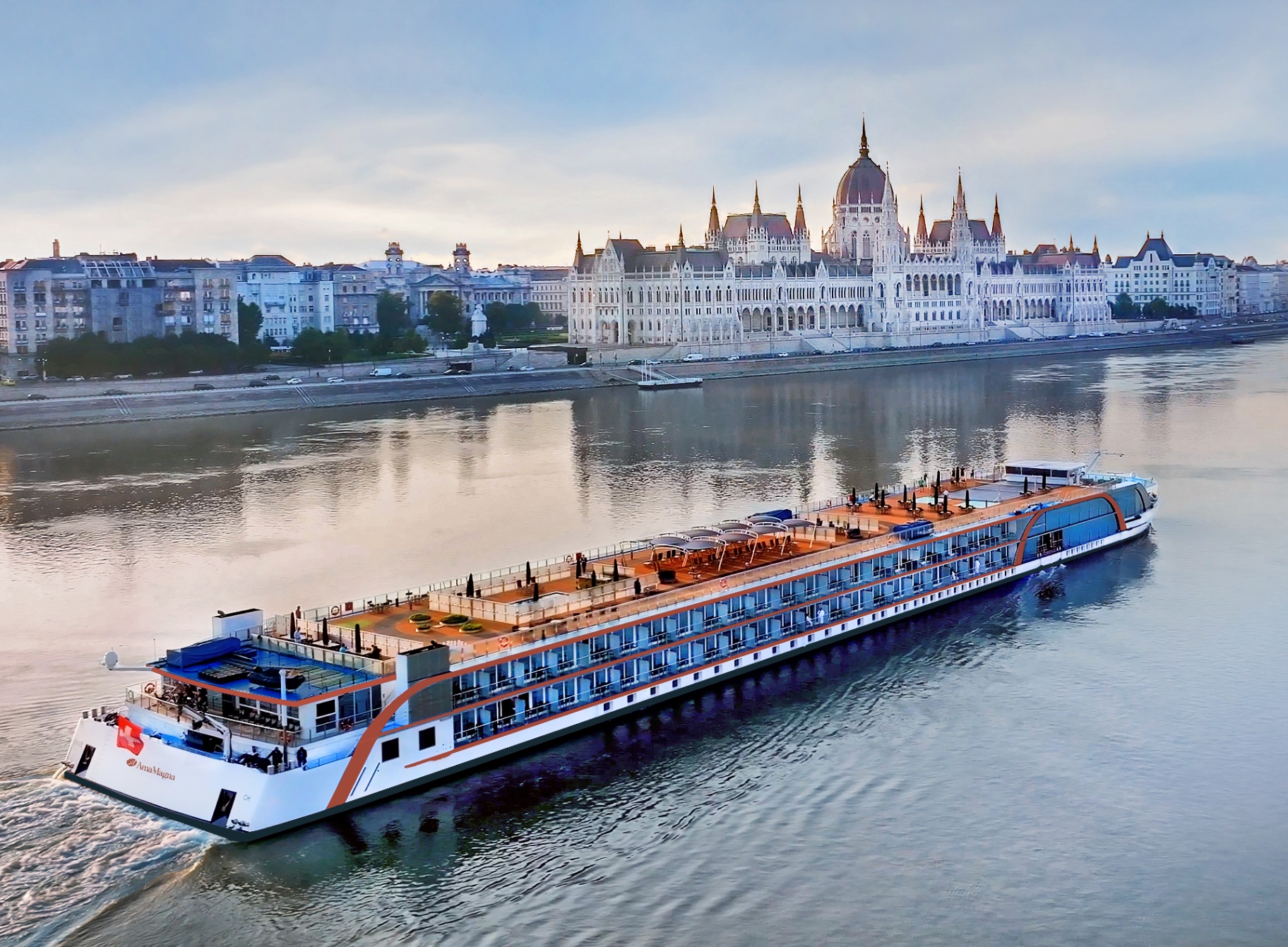
Most people picture a cycling holiday and a river cruise as two different kinds of trip. One is early mornings, warm legs and a route card. The other is a deck chair, a slow bend in the water and a city appearing at breakfast.
Spend a week doing both and you discover they were never opposites. River cruising and cycling fit together so naturally that it is difficult, afterwards, to think of them separately. The ship moves you between places while you sleep. The bicycle lets you understand those places once you arrive. Between the two, you see a great deal of Europe without ever feeling rushed.
This is a look at why that pairing works so well, and how to tell whether it suits the way you like to travel.
§ i
Why Europe’s great rivers matter
Long before highways and rail lines, Europe organized itself around moving water. Rivers were the first roads. Grain, salt, timber, wine and stone travelled by barge, and wherever a river was crossed, forded or defended, a settlement grew.
That is why so many of the continent’s great cities stand on riverbanks. Vienna, Budapest, Cologne, Lyon, Porto, Paris — each one grew because of the water beside it. Cathedrals, market squares, fortresses and vineyards were placed within reach of the current.
Follow a river today and you are following the oldest travel route on the continent. The cities still stand where the trade put them. The terraced vineyards still climb the slopes above. A European river cruise is, in effect, a journey along a line that history drew first.
§ ii
Why rivers are perfect for cycling
There is a simple geographic reason cyclists love river valleys: water finds the gentlest way through a landscape. Over thousands of years a river carves the flattest possible line between hills, and a path built alongside it inherits that grade.
You still get the scenery of a mountain region — cliffs, castles, terraced slopes — without the climbing that usually comes with it. Many of these paths are also separated from traffic, surfaced, well signed and flanked by villages every few kilometres, which is exactly what makes them comfortable for recreational riders rather than only for the very fit.
Europe’s best-known river routes include:
- The Danube Cycle Path
- The classic. Passau to Vienna to Budapest, largely flat, well signposted, and probably the most ridden long-distance cycle route in Europe.
- The Rhine
- Castles on the bluffs, riesling on the slopes, and a broad valley floor that keeps the riding easy between medieval river towns.
- The Douro
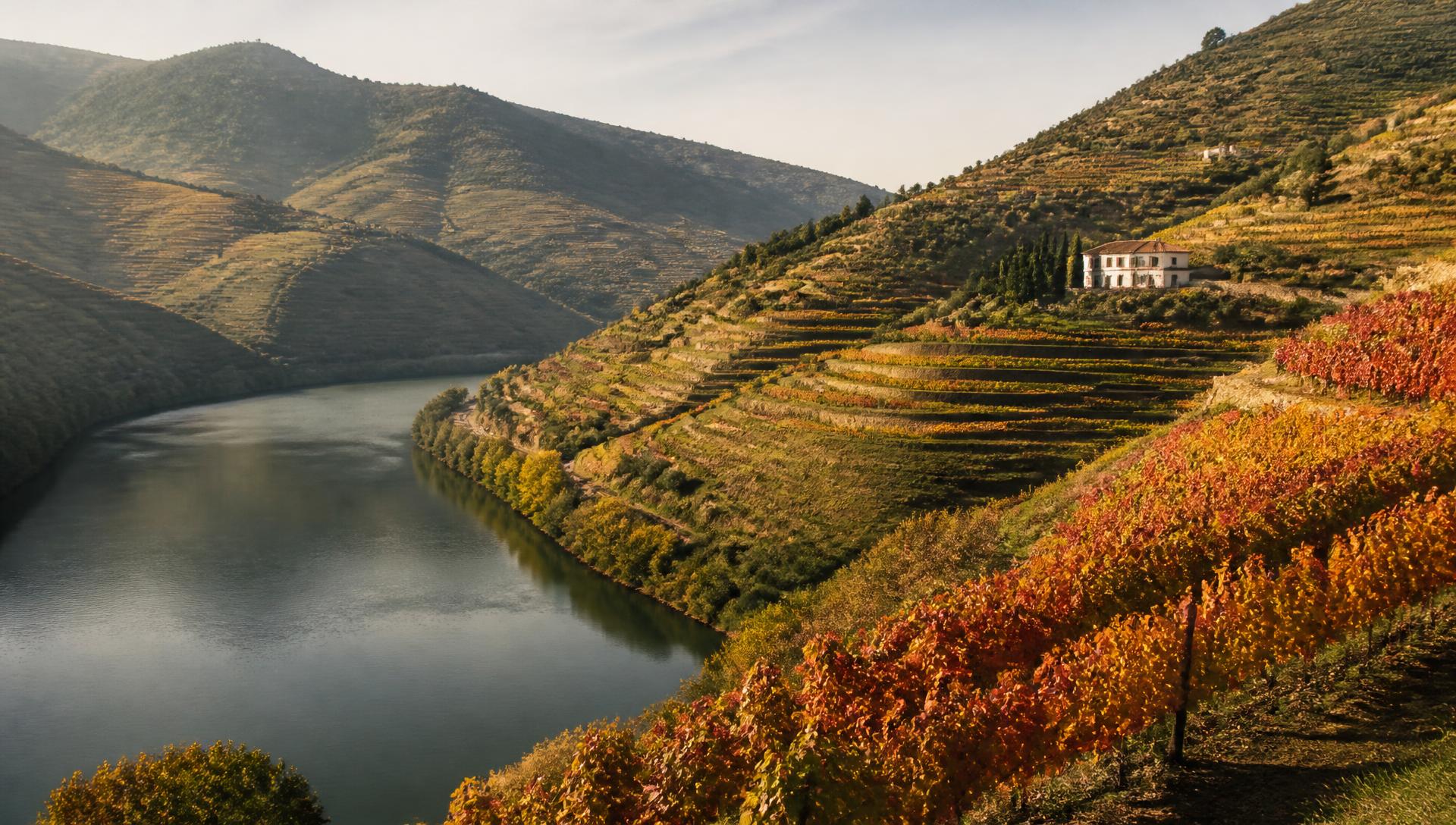
- Portugal’s wine river. The most dramatic scenery of the group, with terraced quintas rising from the water and rides that reward a little planning.
- The Moselle
- A quieter, prettier loop of a river. Steep vineyards above, a gentle path below, and small wine villages spaced perfectly for a coffee stop.
- The Rhône
- Provence and the Camargue, plane-tree avenues, Roman stonework, and light that photographers have chased for two centuries.
- The Seine
- Normandy’s orchards and cliffs, the villages the Impressionists painted, and flat, forgiving riding within reach of Paris.
These are the routes that make cycling vacations in Europe feel approachable. You are rarely far from a village, a bench, a bakery or a place to stop for the afternoon.
§ iii
Your hotel travels with you
The other half of the pairing solves the part of travel that tires people most: the logistics.
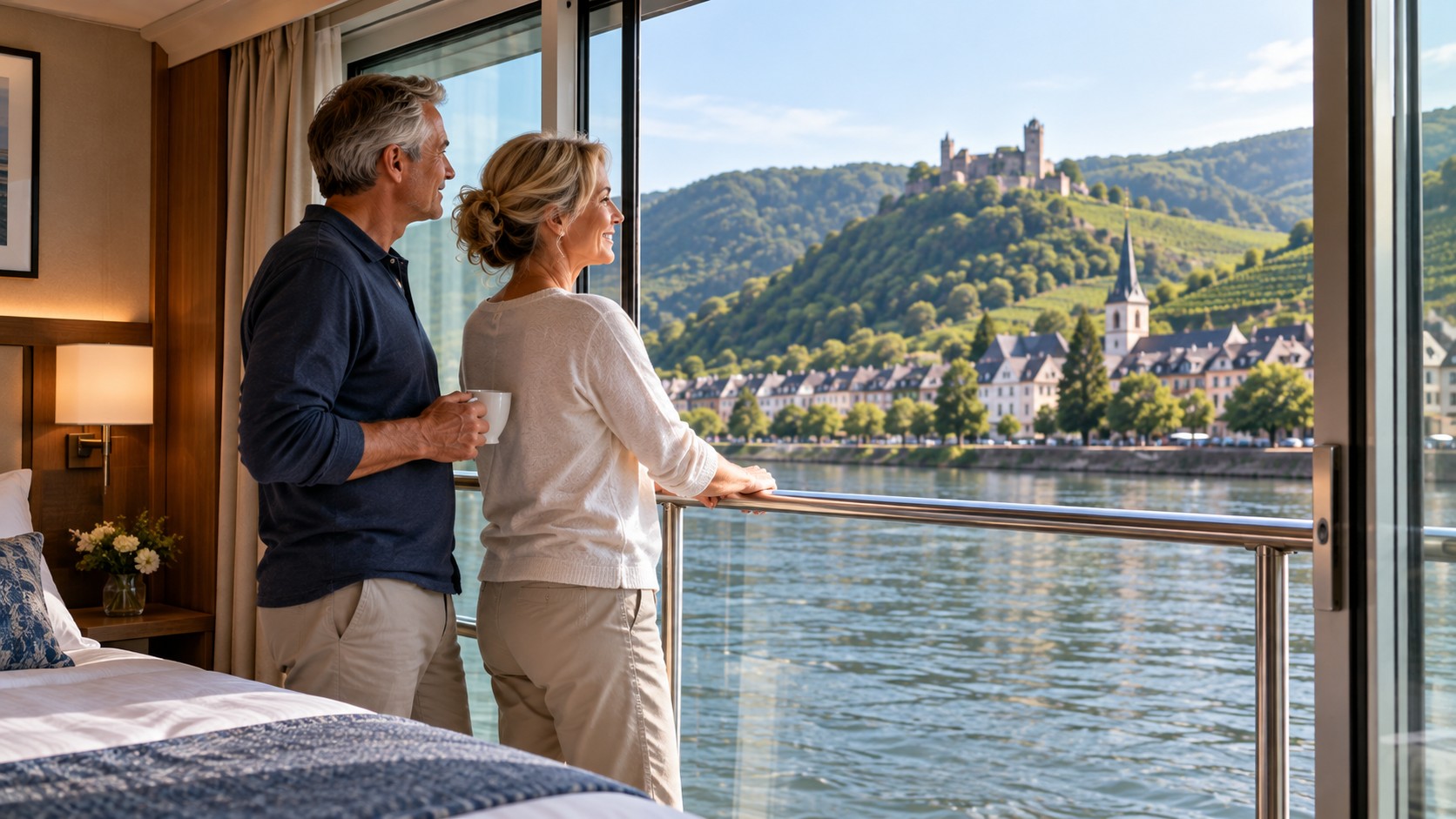
On a river cruise you unpack once. Your cabin is a small boutique hotel that quietly relocates overnight, so there are no transfers to catch, no bags to drag through a station, no checking in and out every second day. You go to sleep in one country and wake up somewhere new, often already moored within walking distance of the old town.
Ships are small, so the ports are central rather than industrial. The morning does not begin with a coach ride into a city; it begins at the edge of one. What that really buys you is time — hours that would have gone to transit instead go to riding, walking, looking and sitting somewhere pleasant.
It also removes the decision fatigue that comes with self-guided travel. Meals, routing and distance are handled. You are free to spend your attention on the place itself.
“The ship moves you between places. The bicycle lets you understand them.”
§ iv
Travel at a human pace
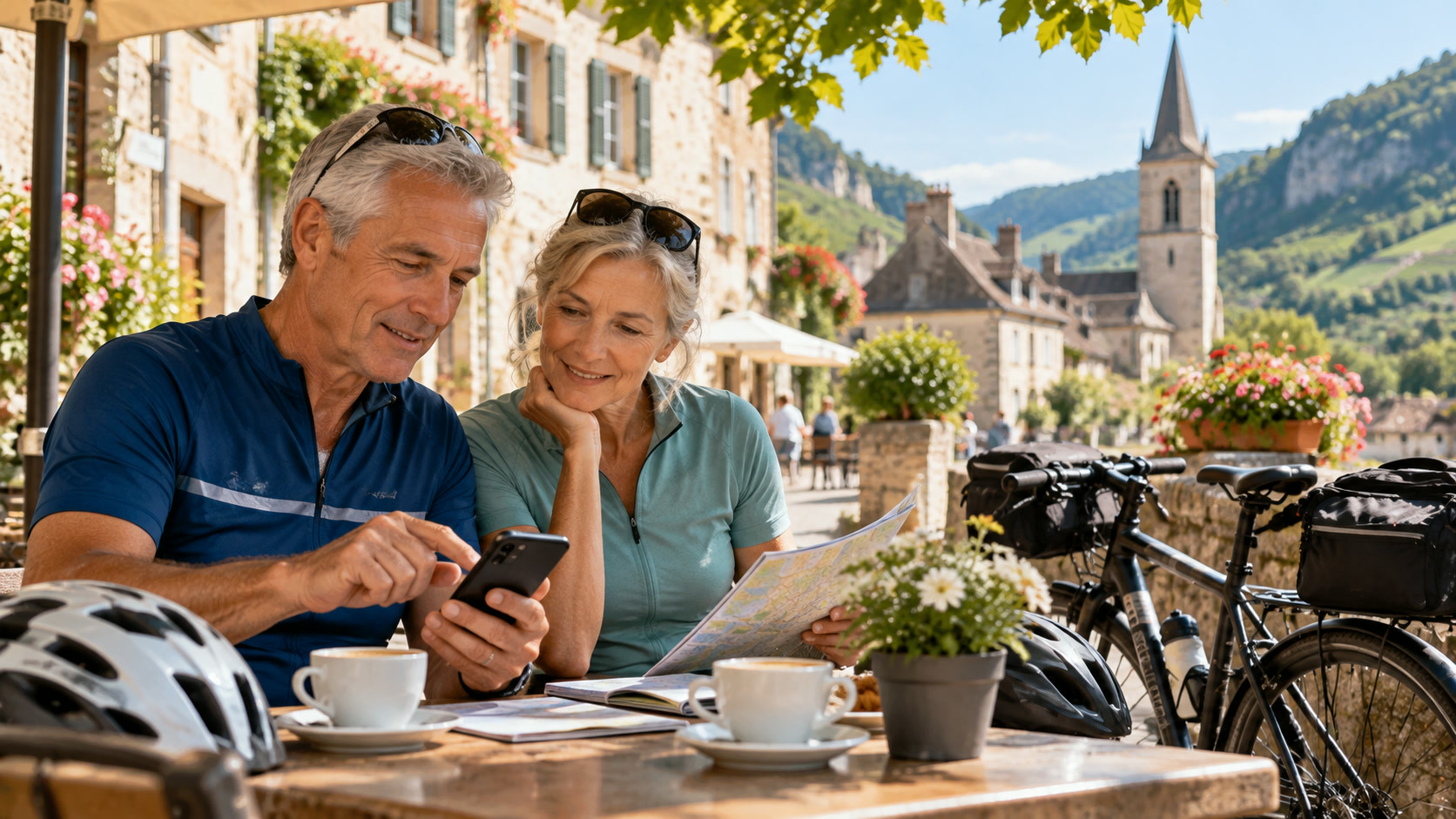
A bicycle changes your relationship with a destination. A coach passes through a landscape; a bicycle moves inside it. You are outside, at eye level, travelling slowly enough to notice things and quickly enough to cover real ground.
The result is a different kind of day. You smell the bakery before you see it. You stop at the village café because the square looked inviting, not because it was on an itinerary. You end up talking to a woman at a market stall about what is in season, or to a winemaker’s son about the slope behind the house, or to another cyclist at a crossing who tells you the prettier way round.
You take the quiet street instead of the main one. You find the bench with the view. None of these moments are on a schedule, and they are almost always the ones people describe first when they get home.
That is the difference between sightseeing and immersion. One is about arriving. The other is about being there.
§ v
More than exercise
It is easy to file active travel under fitness. That undersells it considerably.
Moving through a place on your own steam keeps you curious. You ask more questions when you have seen the countryside between two towns rather than skipped it. You learn the shape of a region — where the vineyards give way to orchards, where the language shifts, where an old border used to run.
It is also social in a way that is rare in adult life. Riding at a conversational pace all morning, then sharing the story of that morning over dinner, builds friendships quickly. A surprising number of people meet on trips like these and keep travelling together for years.
And there is confidence in it. Finishing a day you were slightly unsure about, in a country you had only read about, has a way of changing what you believe you are up for next. Those are the days that stay with you.
§ vi
Is this style of travel right for you?
The most common question I hear is some version of: am I fit enough for this? Usually the answer is yes, and more comfortably than people expect.
Guided rides are typically offered at more than one pace, with a leader setting a relaxed tempo and a support vehicle or a shorter option available. Nobody is dropped, and nobody is racing.
E-bikes have changed the picture entirely. Pedal assistance is not a shortcut so much as a leveller — it lets couples of different strengths ride together, turns a headwind into an inconvenience rather than an ordeal, and makes a hilly afternoon perfectly pleasant. Many riders who were unsure about a week of cycling find an e-bike removes the worry altogether.
Flexibility matters too. On any given day you can ride, walk the town, join a guided tour or stay aboard and read. Choosing not to ride is not a failure; it is part of the design.
This style of travel suits recreational cyclists who would rather discover Europe than race through it — people who like a good day out on a bike, a proper lunch afterwards, and the feeling of having actually understood where they have been. If that sounds like you, it will suit you.
§ vii
Eric’s perspective
I started riding to get a little healthier. That is the whole ambition I had. What I did not expect was how far a bicycle would take me — into new countries, into a community of friends, and eventually into building Pedal & Port.
The reason I keep coming back to river cruising and cycling is that it delivers the two things I care about most in one week. Active lifestyle: you move every day, at a pace you enjoy, in beautiful places. Shared adventures: you do it alongside people, and you talk about it afterwards over dinner.
That is really why Pedal & Port exists. Not to sell trips, but to help people find the kind of travel that leaves them healthier than they arrived, more curious than they were, and better connected than when they set out. When the riding, the river and the company all come together, that is exactly what happens.
If you would like to see how it looks in practice, the Bike & River Cruise and Cycling Adventures Collections are the closest expression of it. And if you enjoy the thinking behind it, why cycling is the best way to discover a destination covers the other half of the story.